Reply Wins Nvidia’s Physical AI Badge, Letting Factories Test Robots Before They Buy
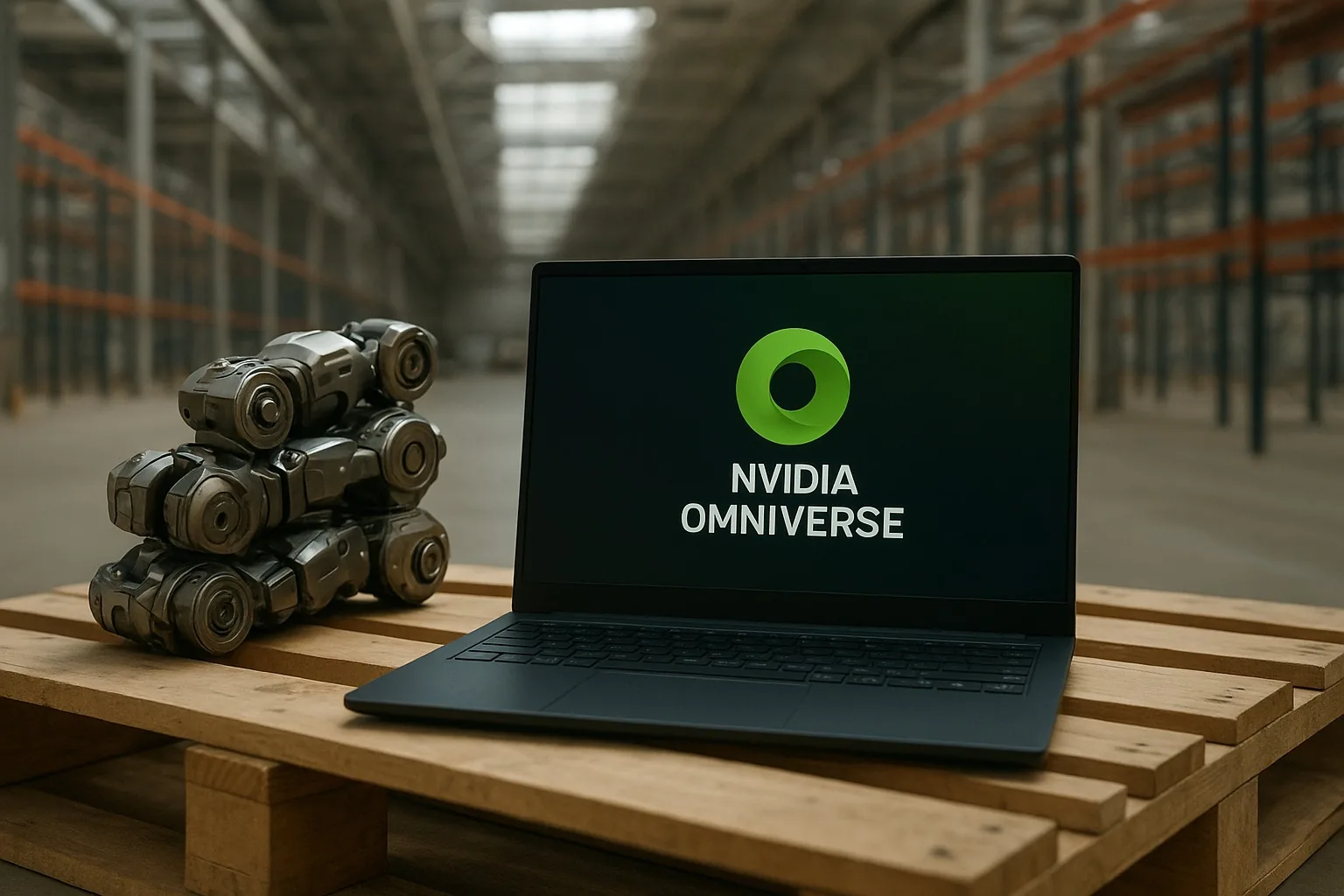
Reply earned NVIDIA‘s Physical AI Specialization on Monday, giving industrial customers a vetted route to test warehouse and factory automation and digital twins before buying hardware.
Key Takeaways
- Reply earned NVIDIA’s Physical AI Specialization, giving industrial customers a vetted route to test warehouse and factory automation and digital twins before buying hardware
- Reply uses NVIDIA Omniverse and Isaac to simulate warehouse layouts, robot systems and AI-driven workflows before deployment
- Reply is a European consulting and systems-integration group, so the designation reflects where NVIDIA wants enterprises to spend implementation budgets
- Reply did not announce availability, pricing, rate limits, regional coverage or tiered service programs tied to the badge
Reply said it uses NVIDIA Omniverse and Isaac to simulate warehouse layouts, robot systems and AI-driven workflows before deployment. The announcement accompanies Reply’s positioning as a systems integrator for NVIDIA’s stack.
Reply is a European consulting and systems-integration group, so the designation is less about a new product than where NVIDIA wants enterprises to spend implementation budgets. The company said those simulations let customers validate designs before installing equipment, which can cut one of industrial AI’s biggest costs, discovering too late that a robot path, shelf design or sensor placement fails in a live site.
Nvidia Pushes Physical AI Into Procurement
NVIDIA has been trying to move robotics and digital twins from demo material into normal enterprise purchasing.
A specialization badge helps because industrial buyers rarely buy warehouse bots the way software teams buy an API.
Reply now gets to sell itself as pre-vetted inside that channel. For customers, the label acts like a shortcut that suggests a partner has already aligned around NVIDIA’s preferred stack, including simulation tools and hardware assumptions.
That matters in a market where many proof-of-concept projects never reach production.
Simulations can reduce risk, but only if the digital model is close enough to the real environment to catch failure points early. Reply did not announce availability, pricing, rate limits, regional coverage or tiered service programs tied to the badge, so the specialization demonstrates capability without changing what customers can buy from Reply on an ordinary day.
How Simulation Became The Safer Robotics Sale
The newer pitch starts with the digital twin, a software model of a real warehouse, factory or workflow that lets engineers test changes before touching the physical site.
That shift reflects the high cost of post-installation fixes, conveyor bottlenecks, forklift route conflicts or sensor blind spots that create downtime, contractor costs and redesign work.
Over the past year, NVIDIA has been building a broader industrial software channel around Omniverse while partners and consultancies translate that stack into signed projects. Reply’s badge formalizes who can deliver the stack to buyers that lack deep in-house robotics teams.
Also Read: AMD's MI355X Takes On Nvidia In First Head-To-Head AI Agent Test
What Physical AI Means For Reply Customers
Physical AI is NVIDIA’s label for AI systems that perceive, reason and act in the real world through robots, cameras and industrial sensors.
Omniverse provides the shared 3D environment. Isaac provides robotics libraries, testing tools and reference workflows.
For Reply customers, that changes the buying sequence, instead of choosing hardware first, a company can model a site, compare layouts and test robot fleets under different assumptions, keeping mistakes digital until deployment.
The bigger question is whether the badge turns into revenue.
Many enterprise AI labels create marketing noise but little spending. The useful signal will be named customer projects, especially in logistics and manufacturing where downtime costs are measurable.
Why This Badge Matters To The Nvidia Stack
NVIDIA needs more than chip demand to keep its industrial strategy moving, it needs implementers that can turn Omniverse and Isaac into signed projects.
Specializations are intended to turn a software stack into a channel program. Reply benefits if buyers want one accountable contractor.
NVIDIA benefits if more industrial projects adopt its tools before rivals define the simulation layer.
Watch for two follow-ups by year-end, whether Reply names deployments in logistics or manufacturing, and whether NVIDIA expands the Physical AI program beyond specialist partners into larger global consultancies.
How Omniverse And Isaac Cut Costly Site Mistakes
NVIDIA Omniverse works as a shared simulation layer where a warehouse map, robot model and operating data can sit in one scene. NVIDIA Isaac adds robotics libraries, testing tools and reference workflows.
Reply is packaging those pieces for customers that need a working system rather than raw software.
Read Next: Samsung Targets AI Chip Tape-Out Delays With Synopsys Design Checks