Samsung Targets AI Chip Tape-Out Delays With Synopsys Design Checks
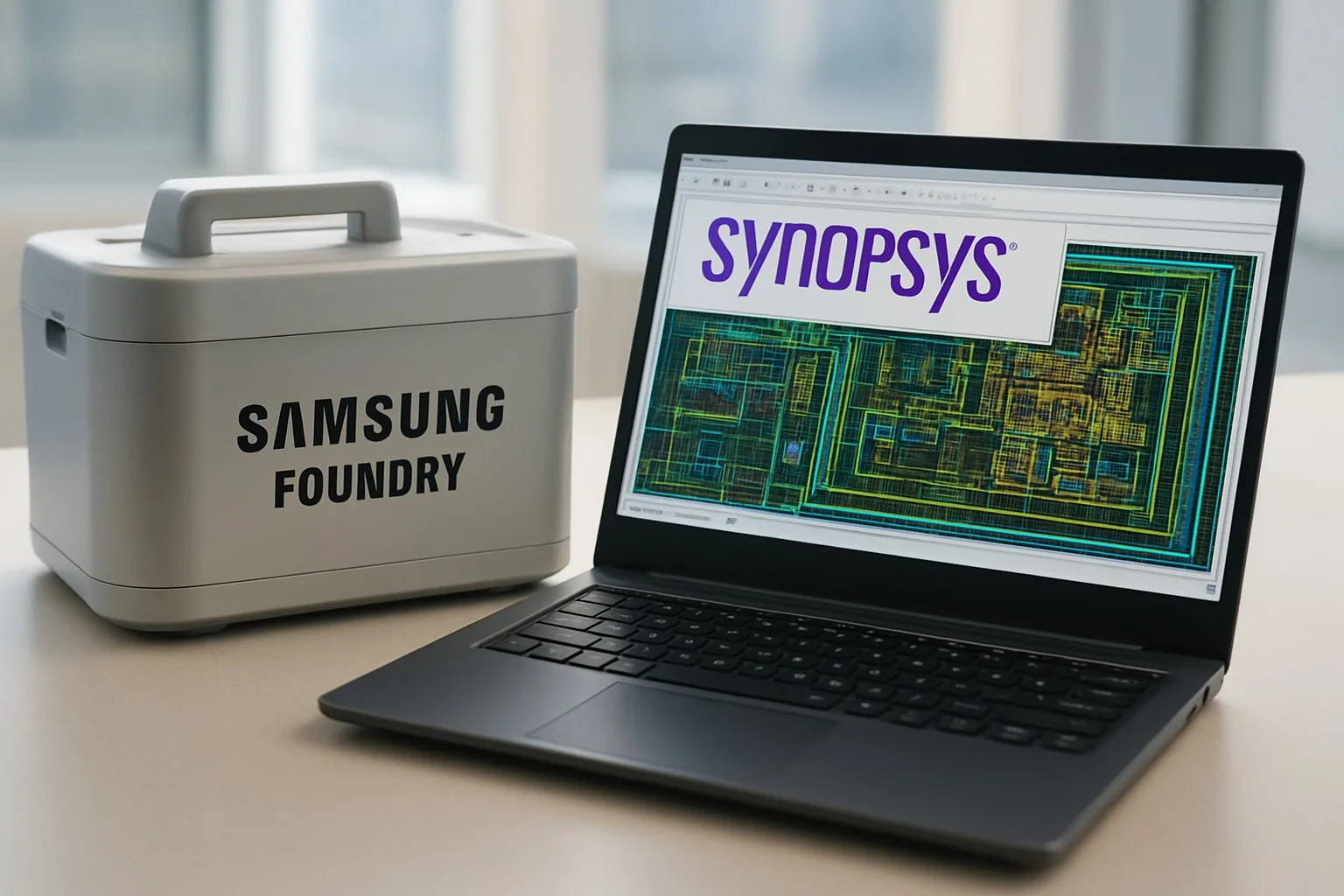
AI chip design got another push on Saturday as Synopsys and Samsung highlighted deeper collaboration around design and verification tools, a critical layer in getting complex AI processors from blueprint to manufacturable silicon.
Key Takeaways
- Synopsys and Samsung highlighted deeper collaboration around design and verification tools for AI chip design
- Synopsys posted partner material through a PR wire link and a separate release on IC Validator describing physical verification
- The announcement did not disclose a contract value or a named chip program but signaled ecosystem readiness
- Physical verification checks a design against the foundry’s manufacturing rules and looks for spacing violations, connectivity mistakes and density problems
A release describes physical verification as a key step before manufacturing, offering the clearest view into the specific design stage at issue.
The Synopsys and Samsung partner material points to alignment on those manufacturing checks: Samsung needs customers to use design flows that match its process rules, and Synopsys needs its software to support those rules well enough that chip teams trust the path to tape-out.
Synopsys And Samsung: AI Chip Design Is Now A Toolchain Race
AI chip design often gets discussed through GPUs and model benchmarks, but the decisive work starts much earlier in electronic design automation. That software checks whether a circuit can be placed, routed, powered, and manufactured without defects.
If those checks fail late, a tape-out can slip by months.
The Synopsys and Samsung partner material points to alignment on those manufacturing checks: Samsung needs customers to use design flows that match its process rules, and Synopsys needs its software to support those rules well enough that chip teams trust the path to tape-out. The announcement does not disclose a contract value or a named chip program, but it signals ecosystem readiness.
Also Read: AMD’s MI355X Takes On Nvidia In First Head-To-Head AI Agent Test
How The Industry Reached This Stage
Physical verification, checking a design against manufacturing rules, has risen from routine step to critical gate in the flow for high-performance AI chips.
Early gains came from adding cores and wider memory buses. Now every design mistake at advanced nodes is more expensive, and every month of delay matters when cloud buyers are placing multibillion-dollar infrastructure budgets.
What The Market Watches Next
The next signal is whether collaborations like this turn into named production wins on Samsung process nodes.
Without that, partner pages mostly show ecosystem readiness. With it, they become evidence that customers are choosing a specific foundry and software flow for AI chips.
A second marker is whether verification and signoff software start appearing more often in investor materials.
If they do, it will show that AI chip design is no longer judged only by architecture and supply, but by the toolchain that gets a design safely into manufacturing.
Why Physical Verification Matters For Samsung Customers
For Samsung customers, physical verification is the stage where a chip design gets checked against the foundry’s real manufacturing rules. Synopsys sells software for that job because modern layouts are too complex for manual review. The software looks for spacing violations, connectivity mistakes, density problems, and other flaws that could make a chip fail in production.
In plain terms, AI chip design is not finished when engineers define the math units.
It is finished when the foundry can build the chip repeatedly and at acceptable yield.
For Samsung, that means design partners must trust the process kit and the software stack together. For chip startups and cloud companies, it means the safest path to market may depend as much on verification maturity as on the chip idea itself.
Read Next: Visa Taps Inyo Global As First Stablecoin Provider For USDC Payouts