Samsung May Demand Trillion Won After Lam Leak Of Chip Secrets
Samsung may seek nearly ₩1 trillion from Lam Research Korea after alleged leaks of chipmaking instructions, a fight that could expose how closely suppliers can see the secrets behind AI chips.
Key Takeaways
- Lam Research faces potential damages near ₩1 trillion after South Korean reports said Samsung may take action over alleged etching data leaks
- Reports said Lam Research Korea allegedly received confidential etching recipe information outside the scope Samsung had approved
- Samsung identified the issue in the second half of this year
- The local report said Lam Research Korea’s chief executive was replaced on Nov. 6 and neither company had posted a detailed public response
The reports originated from Jukan Terminal posts linking to local coverage that said Lam Research Korea allegedly received confidential etching recipe information outside the scope Samsung had approved. One post reported the ₩1 trillion figure and an earlier post described how separate files carrying unapproved recipe information moved during equipment maintenance.
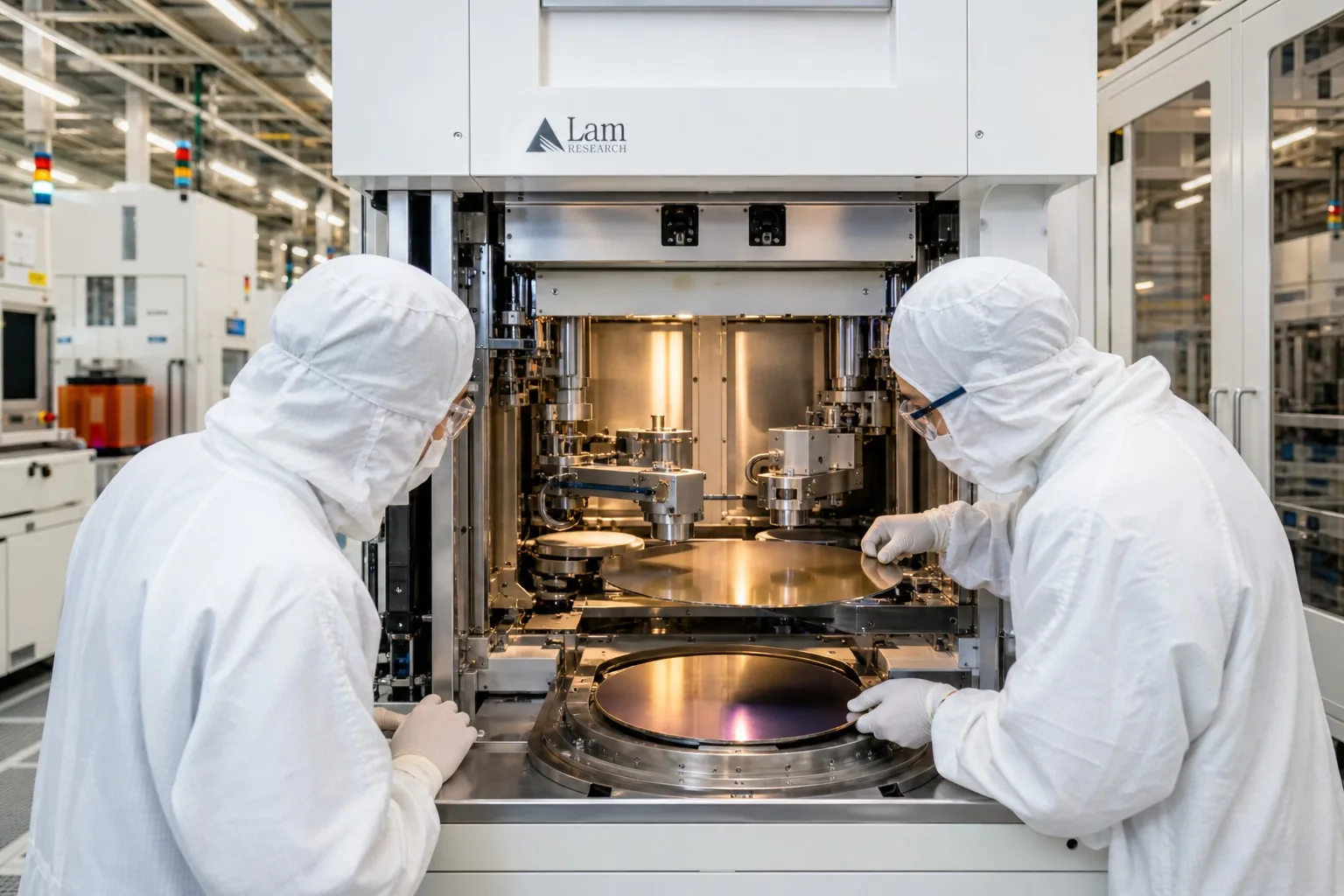
Lam makes wafer etch and deposition tools used in semiconductor fabs, and Samsung is one of its major customers.
Samsung is said to have identified the issue in the second half of this year.
Samsung Chip Leak Hits A Core AI Bottleneck
Etching recipes sit close to the heart of chip yields, as they are the exact mix of pressure, gas flow, temperature and time used in each manufacturing step, and small changes can alter whether a chip works, how fast it runs and how many usable dies come off a wafer. That technical proximity makes the dispute more than a supplier quarrel, because memory and logic lines used in AI servers depend on process tuning as much as raw equipment.
If customer process data is seen as unsafe inside a tool vendor, fabs can tighten data walls, slow remote support and audit vendor access more aggressively, steps that raise operating friction across an industry already balancing on narrow process windows.
Also Read: Amazon Adds Nvidia Chip Sharing To Cut AI Serving Costs
The local report also linked the issue to a leadership change at Lam Research Korea, saying the local chief executive was replaced on Nov. 6.
Neither Samsung nor Lam had publicly posted a detailed response in the material available during this window.
Lam Research Korea Tool Access Becomes Trade Secret Fight
Equipment vendors routinely collect machine telemetry during maintenance to detect drift, fix defects and improve uptime, but the legal and strategic boundary is whether service logs remain limited to machine behavior or stray into a customer’s process know-how. The Korean report referenced a Taiwan case involving TSMC and Tokyo Electron staff tied to process information, showing how similar disputes can escalate into criminal and civil cases, and why Samsung may view this as a trade secret issue with strategic value beyond a routine compliance lapse.
The AI angle is direct.
High bandwidth memory, advanced packaging and leading-edge logic depend on narrow process windows, and a leak in one etch or deposition step can potentially give rivals a shortcut they otherwise would spend years and billions to discover.
For Samsung, a recipe is accumulated know-how from trial runs, defect analysis and yield tuning across many wafers. For Lam, the boundary matters because equipment makers often need telemetry to keep tools running but customers do not want support access to become process visibility.
How Etching Recipes Shape AI Chips
In Samsung’s fabs, an etching recipe is the instruction set for removing tiny layers of material from a wafer, and Lam tools execute those instructions through settings such as gas chemistry, chamber pressure and exposure time.
Those settings decide whether a transistor gate lands at the right depth or whether a memory cell fails, which explains why Samsung treats recipe files as trade secrets rather than routine service paperwork.
The next developments to watch are whether Samsung files a civil claim, makes a criminal referral, or limits Lam support access at local fabs, any of which would affect how Samsung and other chipmakers handle vendor data inside AI chip lines.
Read Next: Nvidia Says 8,000 Institutions Now Use Its 6G Research Tools