Korea’s 200MW AI Factory Hides a Stunning $10 Billion Financing Play
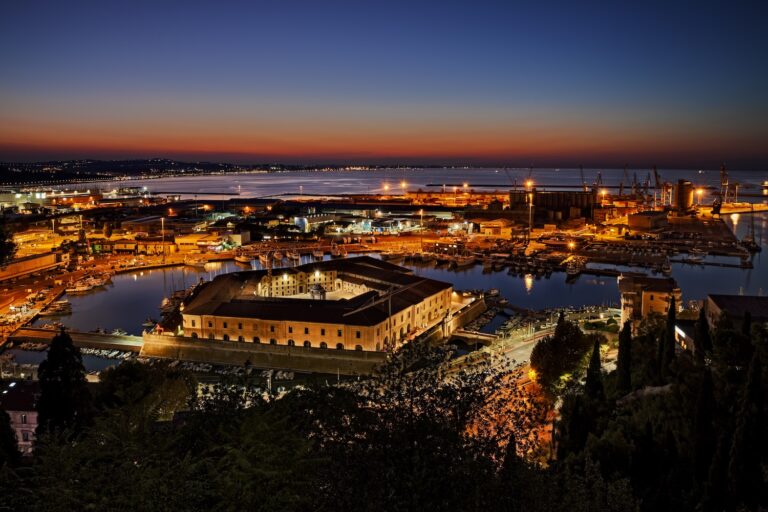
NAVER, Nvidia, and Brookfield Asset Management announced on July 24 a planned expansion of the NAVER NVIDIA DSX AI Factory at the GAK Sejong hyperscale data center in South Korea to 200 megawatts of capacity.
The tripling of the facility’s original footprint is the largest single sovereign AI infrastructure commitment in Northeast Asia this year.
Behind the megawatt headline sits an approximately $10 billion capital stack, assembled through a financing structure that most coverage has left unexplained.
The Korea AI Factory Gets 3 Times Bigger
The GAK Sejong site is a hyperscale campus operated by NAVER Cloud, the cloud-computing arm of South Korea’s dominant internet company. The original AI Factory at the site ran on Nvidia’s DSX platform, a turnkey deployment model that bundles GPU clusters, networking, and software into a pre-validated configuration.
The expansion to 200MW means the campus will eventually draw as much power as a small city, dedicated almost entirely to AI inference and training workloads.
Nvidia’s role goes beyond hardware supply. The DSX designation signals that Nvidia has co-engineered the facility’s compute architecture, giving the campus direct access to the company’s enterprise support and roadmap.
For South Korea, the deal is strategically important because it positions NAVER as the operator of a national AI compute reserve that domestic labs and enterprises can draw on without routing workloads through US-based hyperscalers.
Why the $10 Billion AI Factory Capital Stack Is The Real Story
The figures reported in wire coverage treat the $10 billion as a round-number headline. The more significant question is how that capital is structured.
Brookfield’s involvement is the critical detail. Brookfield is not a technology company; it is one of the world’s largest infrastructure asset managers, with a history of financing toll roads, pipelines, and renewable-energy projects through long-duration, yield-oriented vehicles.
When Brookfield backs an AI Factory, it is applying the same logic it uses for regulated utilities.
The infrastructure generates predictable cash flows from capacity contracts, which in turn support long-duration debt financing at lower cost of capital than a technology company could achieve alone. The result is that NAVER can expand to 200MW without putting the full capital burden on its own balance sheet.
Brookfield absorbs a large portion of the construction and financing risk, and recovers it through contracted payments over the life of the facility.
This structure has a name in infrastructure finance: a sale-leaseback or build-to-suit arrangement, though the precise mechanics have not been disclosed. What is clear is that Brookfield’s participation moves the Korea AI Factory from a corporate IT project into the same asset class as airports and power grids.
That matters for how sovereign AI infrastructure gets built globally.
From National Internet Champion To Sovereign Compute Operator
NAVER’s path to this deal reflects a decade of deliberate infrastructure investment. The company built GAK Sejong as a self-operated hyperscale campus starting in the mid-2010s, at a time when most Korean enterprises were content to lease capacity from Amazon Web Services or Microsoft Azure.
That decision to own rather than rent created the physical foundation for the current expansion.
Also Read: Anthropic Ends Fable Data Retention Flaw in 5.1 Release
South Korea’s government has pushed AI sovereignty as an explicit policy goal, recognizing that dependence on foreign cloud providers creates strategic exposure. The NAVER-Nvidia partnership fits directly into that framework.
Nvidia gets a flagship reference site in a strategically important US-allied market. NAVER gets the compute density and brand association that comes with a formal DSX designation.
Brookfield gets a long-duration infrastructure asset in a country with an investment-grade sovereign rating and stable energy policy.
The Nikkei Asia report on the broader $700 billion US-Korea AI investment push places this deal in a wider context. Samsung and SK Group are separately committing capital alongside Nvidia in memory and chip packaging.
The GAK Sejong expansion is, in effect, the data-center layer of a vertically integrated Korean AI stack being assembled in real time.
What 200MW Actually Means For AI Workloads
A megawatt of AI compute capacity is not the same as a megawatt powering a conventional server farm. Modern GPU clusters, particularly those built around Nvidia’s Blackwell architecture, draw between 60 and 120 kilowatts per rack.
A 200MW AI Factory operating at that density can house roughly 1,700 to 3,300 racks. At current Nvidia GB200 NVL72 pricing, the GPU hardware alone across that footprint represents $5 billion to $10 billion in equipment value, before construction, power infrastructure, or networking costs.
That calculation helps explain the $10 billion total figure.
It also illustrates why infrastructure partners like Brookfield are essential. No single technology company outside the US hyperscalers can self-fund a facility at this scale from operating cash flow.
The Brookfield model effectively industrializes AI compute the same way project finance industrialized offshore wind: it brings capital markets to bear on an asset class that previously required balance-sheet strength that only a handful of companies possessed.
Korea Sets A Template Other Governments Will Copy
The structure of this deal is likely to be studied and replicated. The combination of a national internet champion as operator, a frontier chip company as technology partner, and a global infrastructure fund as capital provider resolves the three hardest problems in sovereign AI infrastructure simultaneously.
The operator brings site rights and grid connections. The technology partner brings validated hardware and software stacks.
The capital partner brings financing at a cost of capital the operator could not achieve alone.
Governments in the Gulf, Southeast Asia, and Europe are watching. The Korea AI Factory at 200MW is not just a data point about megawatts.
It is a proof of concept for how mid-sized economies finance frontier compute without depending on US hyperscaler goodwill.
Read Next: Nvidia’s $500B SK Hynix Deal Targets AI’s Most Critical Bottleneck
Related: Anthropic’s $35 Billion Lambda Cloud Deal Reveals Nvidia’s Risky Financing Play