Markets
U.S. Backs Australian Scandium Mine, Shares Surge 29%
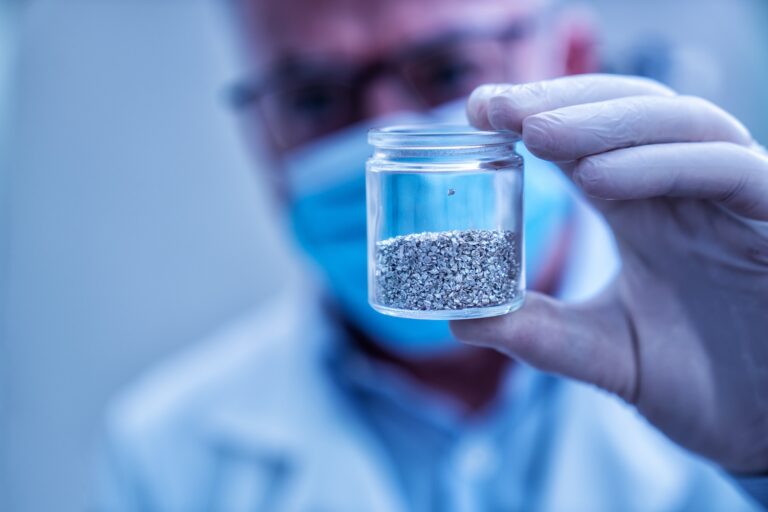
The U.S. Department of War backed an Australian scandium mine to break China's critical-minerals grip. Shares surged as much as 29% on August 10.


Daniela Kirova is a senior writer at Fathom, covering the business of AI. Her beat is the money: funding rounds and what the terms imply, valuations and what has to be true to justify them, earnings from the companies building and selling AI, acquisitions, IPOs and the market structure forming around all of it. She reports on the capital flowing into compute and data centres as the sector's clearest signal of intent, since infrastructure spending commits a company in a way a product roadmap does not. She is drawn to the arithmetic underneath an announcement, and to the distinction between revenue and the expectation of revenue, which she regards as the most frequently blurred line in technology coverage. Her stories generally start from a filing, a disclosure or a set of figures rather than from a statement about them.
The U.S. Department of War backed an Australian scandium mine to break China's critical-minerals grip. Shares surged as much as 29% on August 10.
OpenAI is resetting Codex rate limits twice in three days for all paid plans, giving developers a rare back-to-back window to build with the AI coding agent.
AMD has acquired Toronto-based Taalas, a startup building chips that run only one AI model.
AMD posted 50% revenue growth and doubled data center sales in Q2 2026, but shares fell after results only narrowly cleared Wall Street's lofty expectations.
ZK hardware contender Cysic rose 46% to $0.42, reaching a $68 million market cap as its ASIC roadmap faces rivals, with no tape-out.
Cosmos Hub's ATOM token surged 6% in 24 hours to a $703M market cap as renewed interest in interchain architecture lifted the broader IBC ecosystem.

BlackRock launches Tokenized Cash products BSTBL and BRSRV, bringing $15.34T in assets to on-chain money market settlement for institutional treasuries.

OpenAI's AI models solved 10 open problems in geometry, cryptography, and complexity theory. Here is what the breakthroughs are and why they matter for science.
Nvidia stock fell 5% after plans to help fund OpenAI's $250 billion buildout, raising investor concerns over circular financing risk.

JWST examined two stars flagged as Dyson sphere candidates after AI analysis of stellar data surfaced them. Here's what astronomers found and why it matters.