Solana’s Tokenized Stocks See 65% Of Trades Hit After Wall Street Goes Home
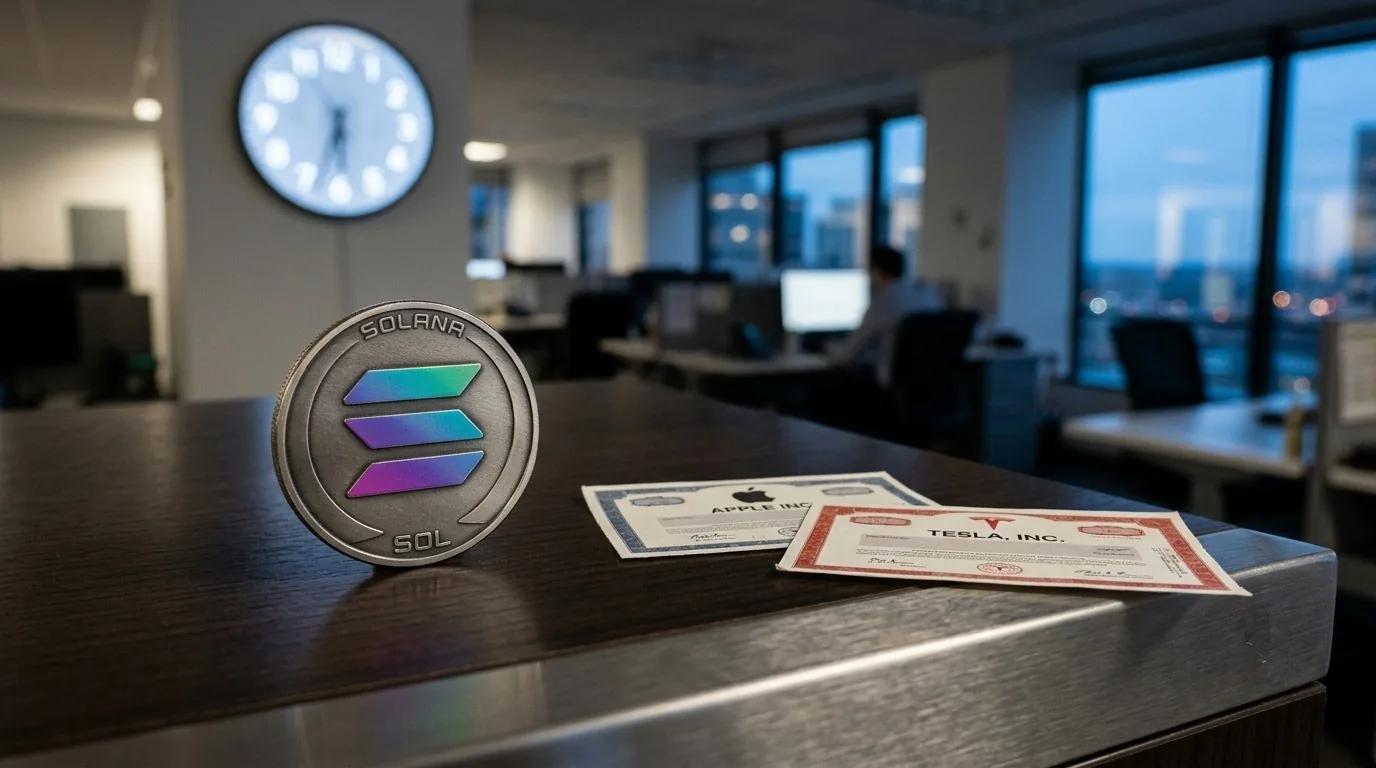
Solana said Thursday that 65% of tokenized-stock trading volume occurs outside standard US market hours, highlighting demand for round-the-clock equity exposure.
Key Takeaways
- 65% of tokenized-stock trading volume occurs outside standard US market hours, according to Solana’s official account
- Solana did not disclose total dollar volume, specific tokenized stock issuers, products, or the measurement time window
- Robinhood and Kraken-linked ventures have launched tokenized equity products on Solana over the past year
- Tokenized stocks are blockchain-based tokens designed to track real company share prices, including Apple or Tesla
The disclosure contains one key figure but no accompanying total dollar volume.
65% of tokenized-stock trading volume takes place outside standard US market hours.
Solana disclosed the statistic in a post on its official account without naming specific tokenized stock issuers.
Tokenized stocks are blockchain-based tokens designed to track the price of a real company share, letting holders trade exposure to equities like Apple or Tesla without going through a traditional brokerage. Solana, a blockchain network known for high transaction throughput and low fees that has become a hub for tokenized real-world assets, posted the statistic without citing a total dollar volume figure.
The disclosure arrives as several platforms, including Robinhood and Kraken-linked ventures, have launched tokenized equity products on Solana over the past year. Those products aim to let users trade stock-tracking tokens around the clock rather than only during the New York Stock Exchange‘s 9:30 a.m. to 4 p.m. session.
Why Trading Never Stops On A Blockchain
Traditional stock exchanges close overnight and on weekends, a structure built around when human traders and market makers historically operated.
A blockchain network like Solana has no such schedule, since smart contracts, self-executing code that settles trades automatically, continue processing transactions around the clock without needing a centralized operator to open or close a market.
Also Read: OpenAI Spent £2.3M Per UK Employee In 2025 As Revenue Hit £293M
That structural difference is what the 65% figure captures, demand for stock exposure does not pause just because Wall Street has gone home. For issuers of tokenized equities, the number is a selling point, evidence that round-the-clock access captures real trading demand rather than idle volume.
The figure also raises a harder question for regulators about how to supervise price discovery that happens entirely outside hours when the underlying company’s actual shares aren’t trading at all.
The disclosure does not establish whether that activity reflects broad investor demand, concentrated trading in particular tokens or automated activity in thin markets.
From Niche Experiment To Measurable Market
Tokenized stocks have moved from a speculative crypto-native experiment to a product category multiple regulated firms now offer, following moves by brokerages and exchanges to list stock-tracking tokens on Solana and other chains over the past 12 to 18 months. Interactive Brokers and other platforms have expanded into crypto-adjacent trading products as competition for retail trading volume intensifies.
The 65% after-hours figure is the first concrete usage data Solana’s own account has shared publicly breaking down when that trading actually happens. It is a measure of trading timing, not a disclosed measure of revenue or an expectation of revenue.
What Regulators Will Want To See Next
Solana did not disclose which specific tokenized stock products generated the data or over what time window it was measured.
Regulators including the SEC have signaled interest in how tokenized securities should be supervised, particularly around price discovery when the underlying real-world asset market is shut.
Whether Solana or token issuers release more granular data, broken out by individual stock or by issuing platform, will determine how useful the 65% figure is for assessing genuine demand versus automated trading bots exploiting thin after-hours liquidity. For any valuation based on this activity to make sense, the volume would need to reflect genuine demand rather than automated trading bots exploiting thin after-hours liquidity.
Read Next: Ripple Teams With DriveWealth As Evernorth Taps 473M XRP Reserve