AI Shopping Bots Pay In Digital Dollars After A 2-Step ID Check In Circle Fraud Demo
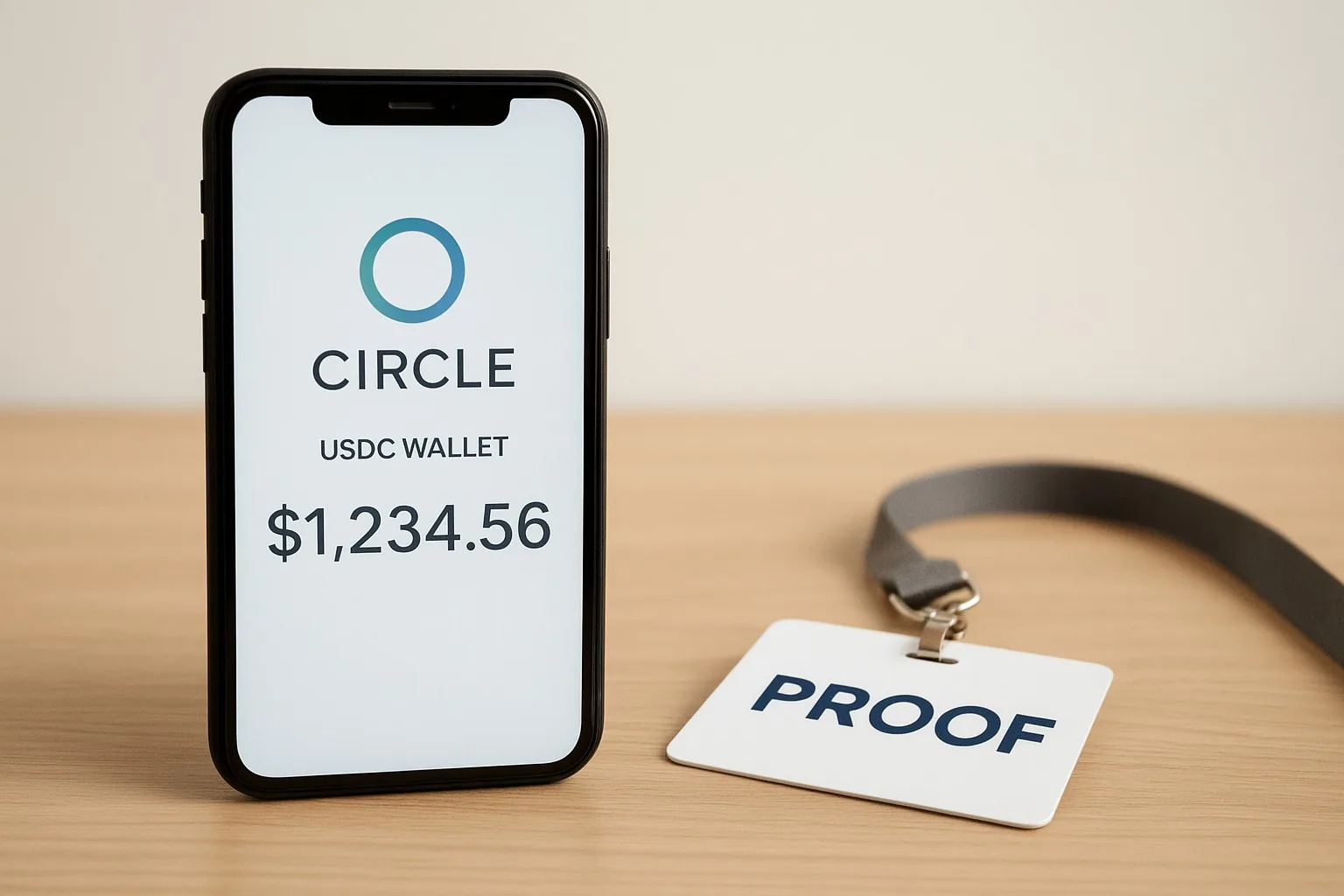
Circle, the company behind the USDC digital dollar, and identity company Proof showed how an AI shopping agent can prove who it works for and pay without card fraud or chargebacks.
Key Takeaways
- Proof and Circle demonstrated on Oct. 19, 2026 how AI agents can verify who they represent and settle transactions in USDC
- The setup combines Proof’s identity layer with Circle’s payment rails, according to the companies’ release
- Sellers need to know whether an agent acts for a real person or business and whether payment can settle without card fraud or chargebacks
- Proof’s badge can state an agent acts for a named company, has a spending limit and is allowed to perform specific tasks
Proof and Circle said the setup combines Proof’s identity layer with Circle’s payment rails. Circle issues USDC and runs infrastructure for internet-based dollar transfers, according to the companies’ release.
The problem they are trying to solve is simple.
If an AI agent books travel, shops, buys software or executes a workflow, the seller needs to know whether that agent acts for a real person or business, and whether the payment can settle without card fraud, chargebacks or manual review.
A release from Proof can only establish what Proof and Circle are presenting, not broader market adoption. Still, the pairing is notable because AI agent identity and money movement have often been treated as separate problems, even though autonomous software needs both at once.
Proof And Circle AI Agent Identity Meets Dollar Settlement
AI agent identity is the trust layer for AI shopping.
A seller needs some machine-readable proof that an agent is acting on behalf of a named company, approved employee or verified customer. USDC is the money layer.
Once the counterparty trusts the agent, a stablecoin can move dollars over blockchain rails at any hour without depending on card networks built for human checkout flows.
That combination matters for software buyers, marketplaces and back-office automation vendors. If agent identity remains weak, businesses will keep forcing human approval into the loop, which slows the main promise of agents.
Also Read: AI Is Coming For Your Checkout As Store Card Giant Synchrony Signs Up OpenAI
From Chatbots To AI Shopping Agents
The industry has spent the past year making AI agents better at reasoning and tool use.
It has spent far less time answering a harder operational question, which is how an autonomous system proves authority before it spends money.
That gap has become more visible as companies move from internal copilots to agents that contact vendors, request services and trigger payments. A stablecoin can settle value quickly, but it does not tell the receiver who approved the action.
Circle has been pushing USDC deeper into internet payments.
Proof is targeting the identity layer that many crypto payment stacks still treat as an off-chain afterthought. Monday’s demonstration joins those pieces into one workflow.
What Businesses Will Watch Next
The next test is integration, not theory.
Buyers will want to see whether Circle and Proof can connect AI agent identity to existing procurement systems, policy engines and audit logs. They will also want to know how revocation works.
If an employee leaves or an agent exceeds its permissions, the identity proof has to fail fast, before the next USDC payment clears.
In practical terms, Proof is trying to give an AI bot something like a digital work badge. That badge can state that an agent acts for a named company, has a spending limit and is allowed to perform specific tasks, and a counterparty can check the badge automatically before it accepts a request.
That matters for Circle because payment rails alone do not answer authorization.
USDC can settle in seconds or minutes, depending on the chain, but a fast payment is only useful if the payee trusts the payer’s software. AI agent identity lets businesses separate two checks that often get merged awkwardly today, who the agent is and whether the money is good.
Watch for pilots in procurement, software subscriptions and travel.
Those are repetitive categories where companies already know the policy rules and can measure whether autonomous payments reduce human review.
Read Next: One Task Can Take Hundreds Of AI Calls, So Here’s When An Agent Is Actually Worth It