OpenAI And Rockefeller Hand Cities $50M To Fix Slow Help Desks
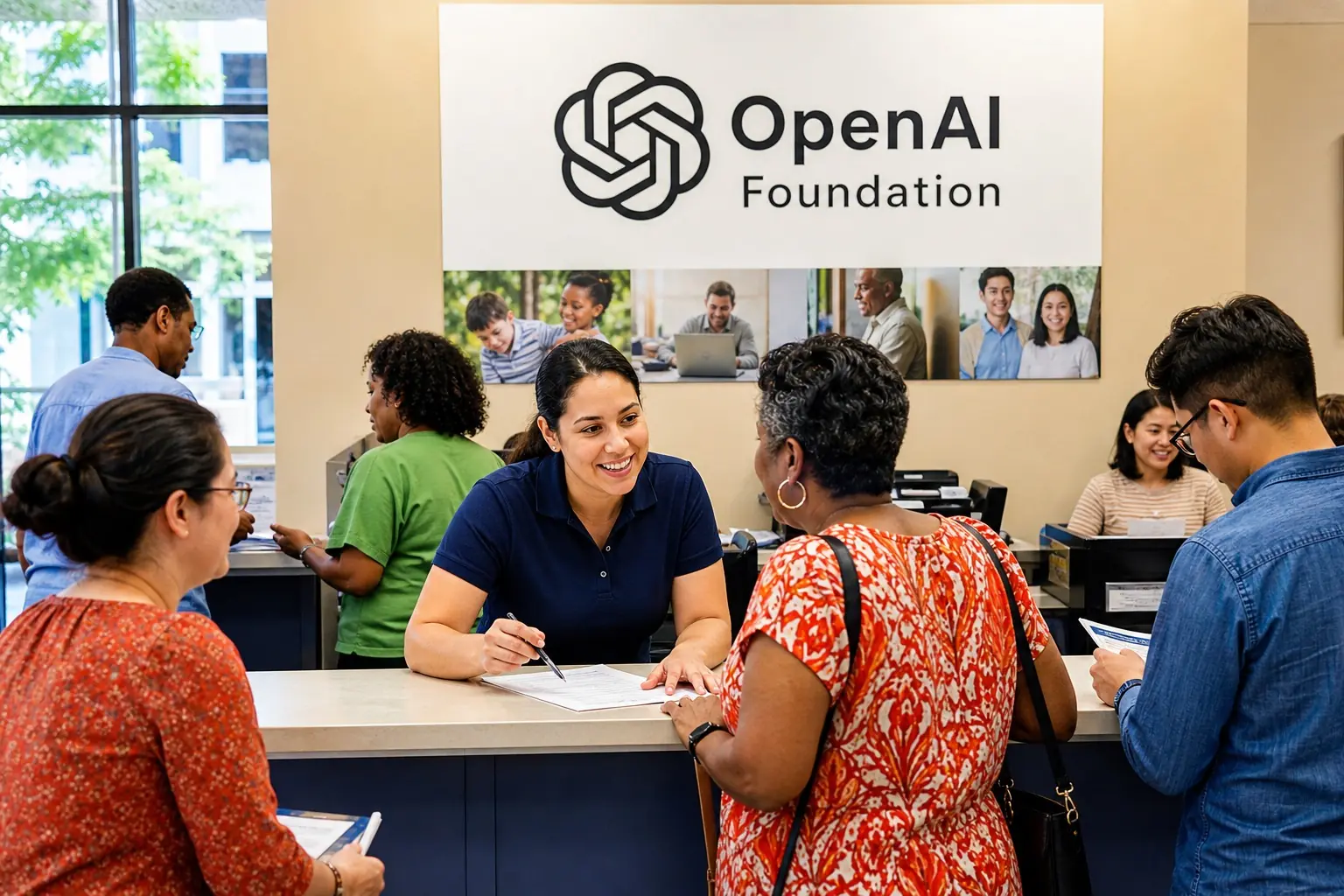
Rockefeller Foundation and OpenAI Foundation pledged $50 million in city AI funding to help cities hire workers and buy AI tools to speed up resident help desks and paperwork.
Key Takeaways
- Rockefeller Foundation and OpenAI Foundation committed $50 million to help cities buy tools, hire staff and stand up local AI programs for public services
- The release did not break out a city-by-city schedule or identify the first recipients
- The fund is framed around urban operations and aims at routine service layers like resident help desks and back-office triage
- The foundations said the money will support cities directly, helping mayors and local agencies adopt AI in day-to-day operations
The OpenAI Foundation is a philanthropic vehicle tied to the broader OpenAI ecosystem, while Rockefeller is one of the largest U.S. grantmakers in public health, climate and local development.
How City AI Funding Reaches City Hall
City AI funding matters because local governments usually do not fail on ideas first.
They fail on procurement, staffing and integration. A mayor can pilot a chatbot in weeks, but turning that pilot into a working permit desk or benefits workflow takes budget, policy approval and people who can maintain it.
The release did not break out a city-by-city schedule or identify the first recipients.
It did frame the program around urban operations rather than frontier research. That points the money toward routine service layers, including resident help desks, document handling and back-office triage, where AI can cut wait times without changing the law itself.
A second official post from OpenAI, published Friday, shows the operating model the group has been favoring with large customers.
It places engineers close to the buyer so models are tuned around real workflows, not sold as generic software.
Also Read: OpenAI And Anthropic Access Sought In New ETF Investment Filing
From Pilot Projects To Budget Lines
City AI funding has been moving in small, uneven steps for more than a year. Many local agencies tested vendor copilots or narrow chat tools, but most deployments stayed boxed inside one department because cities rarely had capital for shared data systems.
That matters here because grant money can do something subscription credits cannot.
It can pay for the unglamorous work. Cities need identity controls, records rules, procurement reviews and staff training before a model ever answers a resident.
Without that layer, pilots stay pilots.
The structure also differs from the recent U.K. model, where public money was paired with AI company credits for a national biosecurity lab. This fund is narrower and more local.
It puts city AI funding closer to service delivery than to national safety infrastructure.
What Cities Can Buy With $50M
The immediate question is how far $50 million goes once it is spread across multiple cities. For a large U.S. city, that sum would not remake the full technology stack.
It can still pay for several high-use systems if the money is focused.
A practical path is narrow deployment in workloads with heavy form intake. Housing offices, transit agencies and social service desks all process repetitive text, attachments and status requests.
Those are the cases where AI can classify, summarize and route work before a human makes the final call.
How Rockefeller And OpenAI Could Structure Grants
Rockefeller Foundation and OpenAI Foundation are not funding model research here. They are funding the machinery around adoption.
That usually means money moves through grants, city partnerships or matched programs rather than venture-style bets.
Before this commitment, many cities had only short pilots or vendor credits that expired before systems reached production. This fund can pay for connectors, case-management hooks and staff roles that survive procurement cycles.
Watch for the first named cities and whether the grants require shared standards for data use, audit logs and resident disclosure.
Read Next: OpenAI Locks Down AI Training As Stolen Models Cost Near Zero To Copy