Nvidia And Hewlett Packard Fence AI Bots Off Factory Controls
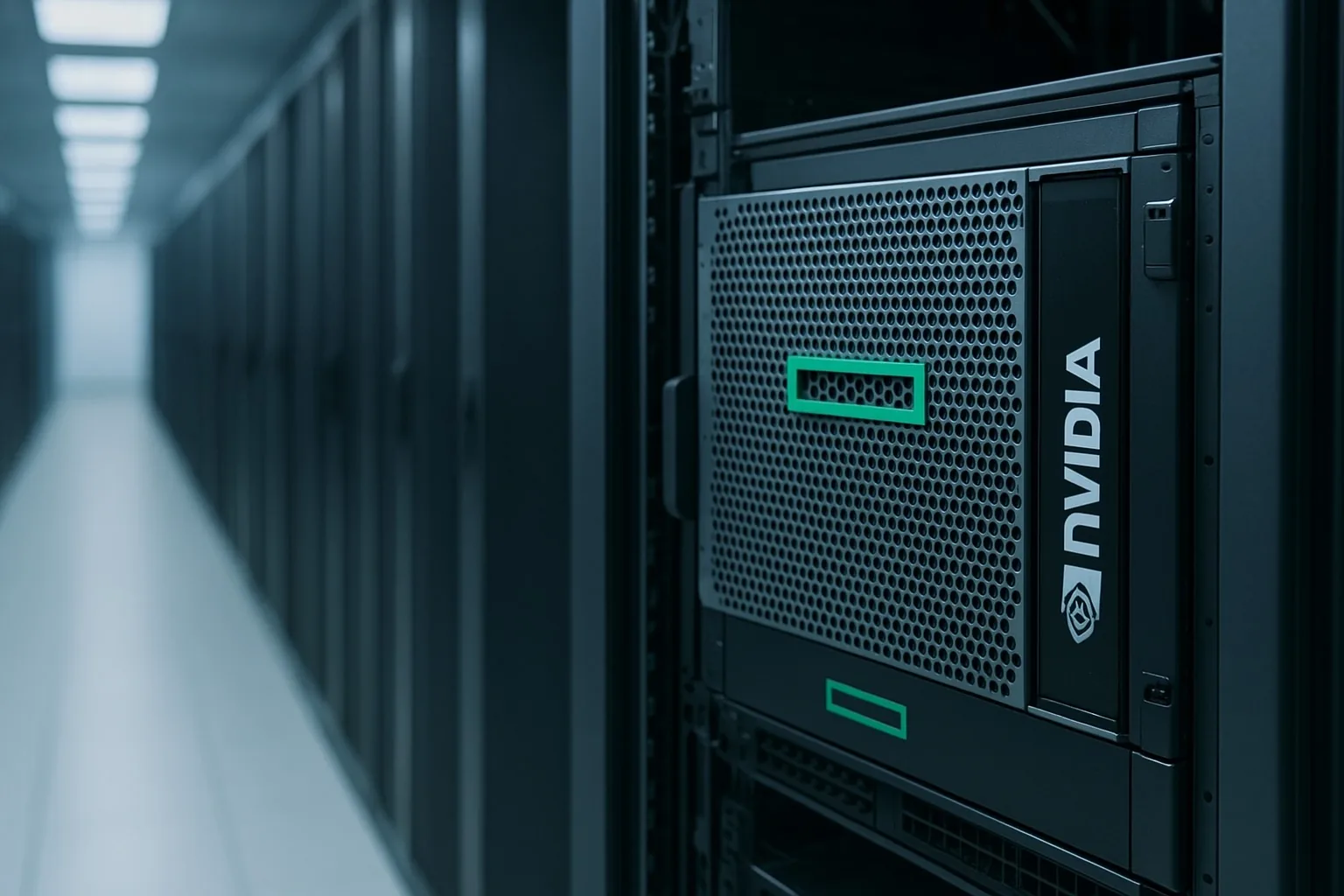
Hewlett Packard Enterprise paired with Nvidia to sell a private-cloud and infrastructure stack that enforces governance, isolation and operational control for autonomous software agents, aiming to keep AI safe for regulated and industrial use.
Key Takeaways
- HPE said it teamed with Nvidia to sell an enterprise and industrial stack providing governance, isolation and operational control for autonomous software agents
- The offering combines HPE private cloud and infrastructure products with Nvidia AI software and hardware
- Nvidia’s OpenShell reference architecture shows a parallel push around containment, observation and policy enforcement for safe agent deployments
- HPE said enterprises need governance and operational control to know what an agent can see, call, where it runs and how it is stopped
HPE said the offering combines HPE private cloud and infrastructure products with Nvidia AI software and hardware, while Nvidia’s OpenShell reference architecture shows a parallel push around containment, observation and policy enforcement for safe agent deployments.
Secure Agent Moves To Operations
Hewlett Packard Enterprise sells servers, networking gear, hybrid cloud systems and IT services to large organizations. By pairing with Nvidia, HPE is trying to package this stack as infrastructure, not just software, which means the sales target is likely CIOs and industrial operators who want on‑premises control and clear Secure Agent governance.
The release focused on hybrid environments and industrial use cases, noting many enterprises still want AI near regulated data, production systems or physical processes where latency, sovereignty and uptime requirements make public-cloud-only setups harder to justify.
Security is the sales hook. HPE said customers need governance and operational control as they move from experiments to production, enterprises want to know what an agent can see, what it can call, where it runs and how it is stopped.
The company Hewlett Packard frames this as necessary for trustworthy Secure Agent deployments in settings where mistakes have real-world consequences.
Also Read: Nvidia Slaps 3 Safety Checks On AI Bots That Handle Company Data
The Market Shift Behind Hewlett Packard's Push
Enterprise AI spending in 2024 and 2025 centered on model access. By 2026, spending has moved toward orchestration, observability and containment.
Buyers no longer ask only which model is smartest. They ask which system keeps an agent inside defined boundaries.
That change has helped infrastructure vendors reclaim ground from application vendors.
A company deploying agents across plants, hospitals or logistics networks often wants policy controls below the app layer. Hewlett Packard is using that opening to argue the stack belongs on familiar enterprise rails and can serve industrial operators in addition to office productivity teams.
The industrial angle also widens HPE’s pitch.
An autonomous agent in a factory or utility setting may route maintenance data, summarize alarms or assist technicians, but it must do so without crossing into unsafe control paths.
How Isolation Works
In this approach, isolation means agents do not receive unlimited access to every tool and data source. Hewlett Packard Enterprise and Nvidia are pushing a design where infrastructure policy decides what an agent can reach, and logs record what it tried to do, creating an auditable trail for each Secure Agent action.
That differs from early agent deployments, which often relied on broad API keys and loose permissions. In an industrial setting, that old pattern is risky because one compromised connector can expose operational data or trigger unwanted actions.
HPE wants the stack to look more like enterprise identity and network policy, with approvals, segmentation and audit trails wrapped around the model.
Watch for two things next. First, whether HPE names specific industrial customers.
Second, whether the stack integrates with plant software vendors, because that is where this offering moves from concept to procurement and where Secure Agent controls will be most tested.
Read Next: Anthropic Unleashes AI Attack Bots To Test If One Breach Spreads