Amazon’s Bee Wearables Record Your Whole Day After 2025 Startup Buyout
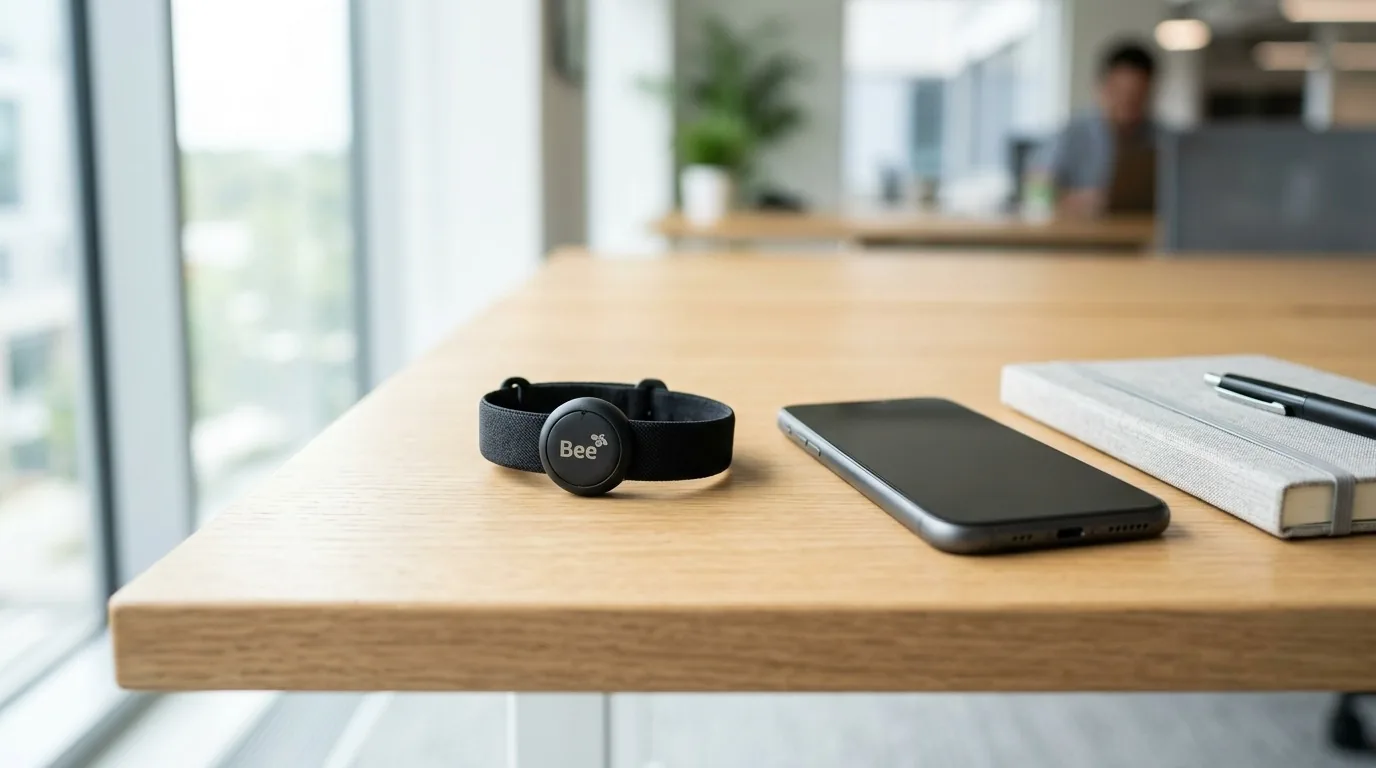
Amazon launched two AI wearables on Thursday that record and analyze a person’s day, the company’s first major move to reshape Bee, a startup it acquired in 2025 to compete in the ambient-AI hardware race.
Key Takeaways
- Amazon launched two Bee-branded AI wearables on Thursday that record and analyze a person’s day
- The wearables use microphones and onboard AI processing to generate summaries, reminders and task lists from ambient audio
- Amazon acquired Bee in 2025 and folded its recording and summarization technology into its devices group
- Amazon has not detailed pricing, recorded-audio storage duration, or integration with Alexa accounts and Prime subscriptions
Bloomberg reporter Mark Gurman said in a post on X that the devices mark the company’s attempt to push artificial intelligence hardware beyond the phone and into always-on, wearable form factors.
Gurman did not disclose pricing or a specific retail release date, but confirmed the hardware ships under the Bee name rather than a new Amazon-branded line.
The wearables use microphones and onboard AI processing to capture ambient audio throughout the day, then generate summaries, reminders and task lists without requiring the wearer to open an app or issue a voice command.
Bee originally built its business on a wristband that listened passively to conversations and turned them into searchable notes and action items, a category sometimes called ambient AI because the device works in the background rather than responding to a deliberate prompt. Amazon acquired the startup in 2025, folding its recording and summarization technology into Amazon’s devices group, the same division responsible for Echo speakers and Alexa software.
Why Ambient Recording Needs New Hardware, Not Just An App
Ambient AI wearables differ from voice assistants like Alexa because they listen continuously rather than waiting for a wake word.
That requires a device built around all-day battery life and low-power audio capture, which explains why Amazon kept Bee as a standalone hardware line instead of folding the feature into an existing Echo product.
The physical constraint is power, continuous audio capture and local inference consume battery capacity every minute. Capacity, supply and cost per unit of inference will determine whether all-day recording can work in a consumer device without pushing hardware costs beyond what buyers will accept.
The approach raises the stakes on data handling, too.
A device that records conversations by default needs on-device processing or clear consent flows to avoid the privacy backlash that hit earlier ambient-recording pilots from other hardware makers.
Cost per unit of inference matters here, because all-day summaries multiply processing demand. If Amazon shifts more of that workload to the cloud, it also has to account for recurring compute and power costs rather than just the device’s battery budget.
Also Read: Zenzap Raises $44M, Bets AI Agents Can Take On Slack And Teams
For Amazon, the wearables compete directly with Humane‘s now-defunct AI pin and with smart glasses from Meta, both of which struggled to make always-listening hardware feel less invasive than useful.
Watch for whether Amazon discloses unit sales or retention figures in its next quarterly filing, since wearable hardware lines have historically been volatile for the company, from the Fire Phone to earlier Echo spinoffs.
From Acqui-Hire To Flagship Hardware Line
Amazon’s purchase of Bee in 2025 was reported at the time as a talent and technology acquisition rather than a flagship product bet, with the startup’s small team absorbed into its devices organization.
Thursday’s launch marks the first time Amazon has put its own marketing weight behind two distinct Bee-branded products rather than treating the acquisition as a feature donor for Alexa. The move mirrors a broader pattern among big tech firms, including Meta and Google, of buying smaller ambient-AI startups and relaunching their technology under the parent brand within twelve to eighteen months.
What Amazon Still Has Not Said
Amazon has not detailed pricing, storage duration for recorded audio, or whether the wearables integrate with existing Alexa accounts and Prime subscriptions.
The missing terms are the operating constraints, storage capacity, power draw and cost per unit of inference. Those figures will show whether Bee is a durable hardware line or a compute-heavy feature whose economics deteriorate as recording time and summary volume rise.
Read Next: OpenAI’s 10,000 Agents Run 36 Hours Straight With Zero Human Checks