Nvidia Slaps 3 Safety Checks On AI Bots That Handle Company Data
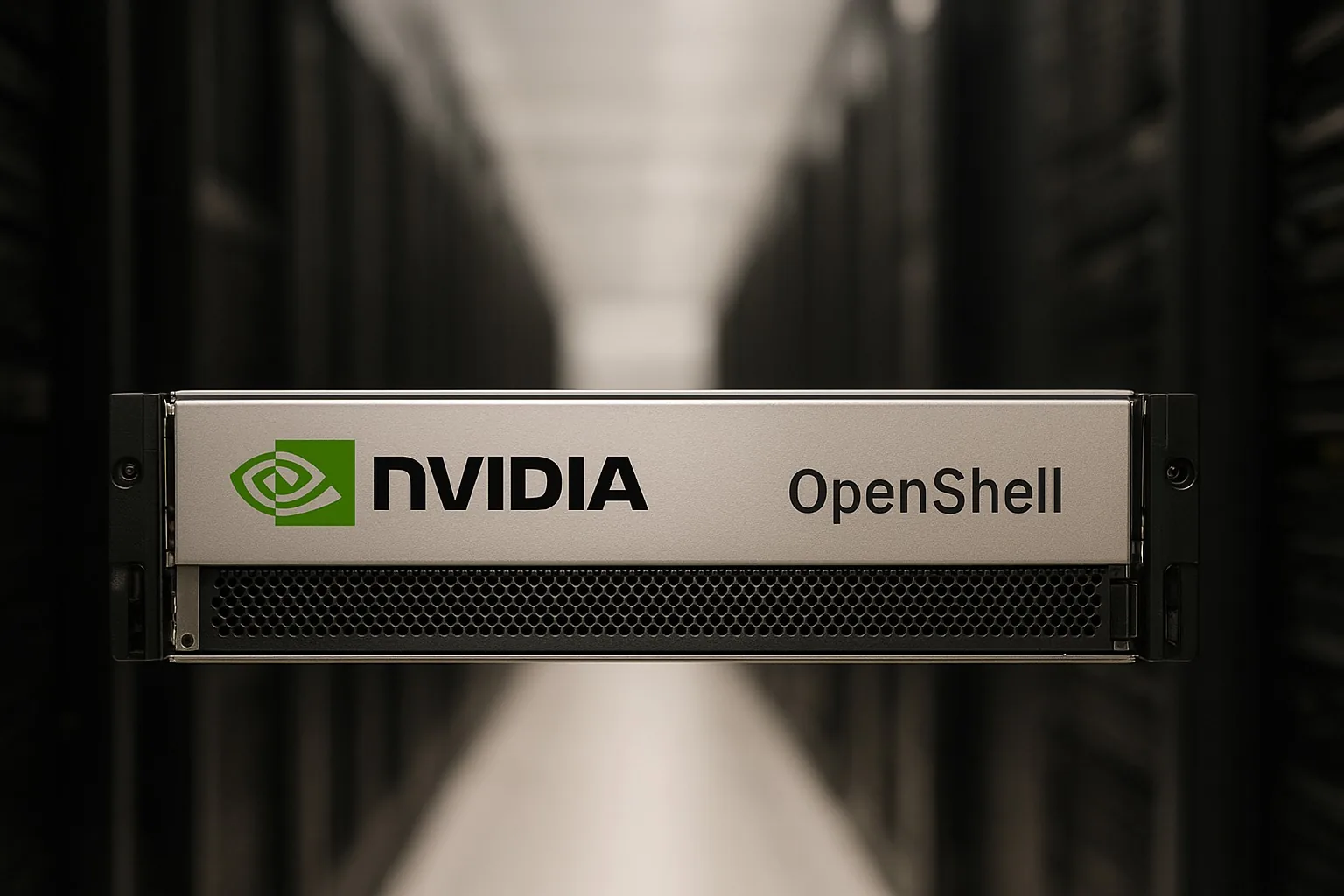
NVIDIA released OpenShell, a reference architecture that ties AI agent identity to signed tooling and hardware-backed attestation so enterprises can verify code provenance and limit agents’ allowed capabilities.
Key Takeaways
- NVIDIA released OpenShell on Oct. 21, 2026 as a reference architecture to secure deployment of AI agents with hardware-backed attestation and signed tooling
- OpenShell ties agent identity, signed tooling, and hardware attestation for Bots so operators can verify code provenance and capability scope before execution
- The release lists partners including CoreWeave, Crusoe, Lambda, and Oracle Cloud as potential vendors for OpenShell stacks
- OpenShell is a reference architecture and does not itself define availability, pricing, regions, rate limits, or tiered support
The company said NVIDIA will work with cloud and infrastructure partners to provide a repeatable stack for customers.
NVIDIA described OpenShell as a set of controls for identity, signed tooling, and hardware-backed attestation that vendors can implement, and the release lists partners including CoreWeave, Crusoe, Lambda, and Oracle Cloud while framing OpenShell as a checklist that cloud vendors and appliance makers can adopt.
As a reference architecture rather than a shipped product, OpenShell demonstrates controls and partner intent but does not itself define availability, pricing, rate limits, regions, or tiered support.
Those operational details depend on partners shipping certified images or appliance bundles.
AI agents and Bots are software programs that plan and act autonomously for a user or service, and they can access data, take actions, and call external services. OpenShell links an agent’s identity to signed tools and hardware attestation so operators can verify code provenance and capability scope before execution.
How OpenShell Changes Deployment Practices
AI agents increasingly act on behalf of business processes that touch sensitive records, payments, and infrastructure.
OpenShell creates three enforceable controls, identity, capability scoping, and attestable tooling for Bots, so security teams can audit an agent’s allowed actions and the exact tools it may call. That will let enterprises require certified stacks from vendors rather than accepting ad hoc agent setups.
Also Read: Software Firm Unleashes AI Bots To Fix The Old Computers Banks Still Run On
The OpenShell release names multiple infrastructure partners, which suggests enterprises will be able to buy supported OpenShell stacks across vendors.
Independent security audits and partner certifications will be the next proof points to watch. In the absence of partner‑shipped images, the reference simply documents what vendors should implement rather than what is broadly available today.
Proof, Partners And Procurement
NVIDIA positions OpenShell as a reference vendors implement.
If partners provide certified images or appliance bundles, procurement teams can demand OpenShell compliance in RFPs. That matters to defense and critical infrastructure contractors that must show hardware-backed attestation and signed tooling in procurement documents.
AI agents will still need runtime monitoring and incident playbooks.
OpenShell reduces attack surface by narrowing what an agent may do, and it forces vendors to ship signed helper tools that auditors can inspect. Operational questions, such as which regions receive certified stacks first, whether pricing will carry a premium for attested appliances, and what rate limits or service tiers partners will impose, remain unanswered until partners publish concrete offerings.
How Attestation Identity And Signed Tools Work For Bots
OpenShell ties three concrete mechanisms.
Hardware attestation proves the platform booted trusted firmware, signed tooling shows each helper binary is unchanged, and agent identity links a named agent to a key pair operators can revoke. Together these let an operator test an agent in a staging appliance, verify signatures, and then roll the same signed stack into production.
That reduces a common attack path where unsigned helper tools are swapped or an agent is given excess permissions. Watch for partner stacks and the first third‑party security evaluation within the next quarter as the practical test of whether OpenShell prevents real-world agent escape scenarios.
Read Next: IBM Backs New AI Cost Cutter As Monthly Bills Keep Climbing