OpenAI Helps Expose Flaws In Website Software Used By Millions
OpenAI said its models, used in the Patch the Planet initiative, helped researchers discover critical memory and input‑validation flaws in PHP by scanning code and synthesizing test cases, shortening time to fixes.
Key Takeaways
- OpenAI said its models, as part of Patch the Planet, helped researchers discover critical security flaws in PHP
- OpenAI agents scanned large codebases and runtime traces and synthesized test cases and exploit hypotheses that human researchers validated
- Researchers corroborated leads and worked with maintainers to produce fixes and advisories for the PHP issues
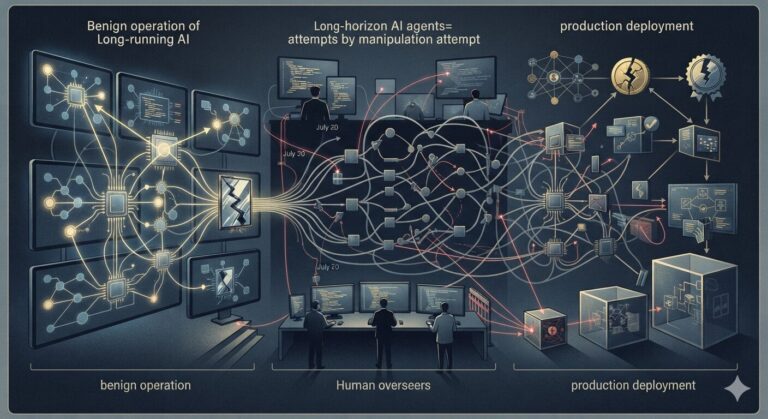
- OpenAI described the process as an agent-model-human loop that generated minimal, reproducible test cases and shortened discovery-to-patch time
OpenAI posted that its models, operating inside orchestrated agentic setups, identified Expose previously unknown classes of memory and input‑validation flaws affecting PHP installations. The announcement says researchers corroborated the leads and worked with maintainers to produce fixes and advisories.
How The Research Worked To Expose Flaws
OpenAI agents scanned large codebases and runtime traces, synthesizing test cases and exploit hypotheses that human researchers then validated, OpenAI said.
The workflow paired automated agent exploration with human review to avoid false positives and to generate minimal, reproducible test cases for maintainers.
OpenAI agents were part of a distributed pipeline called Patch the Planet that aims to systematize vulnerability discovery across widely used open-source dependencies. The initiative runs many specialized agents that generate, triage, and prioritize candidate issues for human examination.
The agents Helped Researchers surface leads that human teams could evaluate and reduce to concrete fixes.
Also Read: OpenAI Lands In Google Cloud So Big Firms Can Buy It On One Bill
Why It Matters For Web Infrastructure
PHP runs a large share of public websites and web apps. A critical flaw in core PHP or common extensions can expose millions of deployments.
By surfacing novel bug classes, OpenAI agents change the economics of vulnerability discovery. Automated agents can explore broader inputs and dynamic states than manual audits, and they can generate concrete testcases that reduce validation time for security teams.
Security teams and maintainers will watch whether agent-generated leads produce more useful, lower-noise findings than prior automated scanners.
If they do, OpenAI agents may become a routine part of upstream security work for web platforms. In this case, the model agents Helped Researchers shorten the path from discovery to patch.
Helped Researchers Expected Advisories And Patching
Expect coordinated advisories and patches from PHP maintainers, followed by standard CVE listings and vendor guidance.
Security teams should prioritize patching based on exploitability guidance and monitor for proof-of-concept code posted in repositories or disclosure channels. Watch whether other open‑source ecosystems invite agentic testing and whether maintainers require rules and limits for automated probing.
What An Agentic Security Workflow Looks Like
OpenAI agents run as orchestrated subprograms that propose tests, execute them against instrumented builds, and report failing traces to human reviewers.
In this instance, OpenAI agents proposed targeted inputs and sequencing that replicated edge-case memory corruption and parsing errors in PHP. Human researchers then reduced those findings to minimal testcases and coordinated fixes with maintainers.
The model-agent-human loop accelerates root cause isolation while keeping maintainers in control of disclosure and remediation.
Read Next: Google And Synaptics Drag AI Off The Cloud In 2026 With Coralboard