Google And Synaptics Drag AI Off The Cloud In 2026 With Coralboard
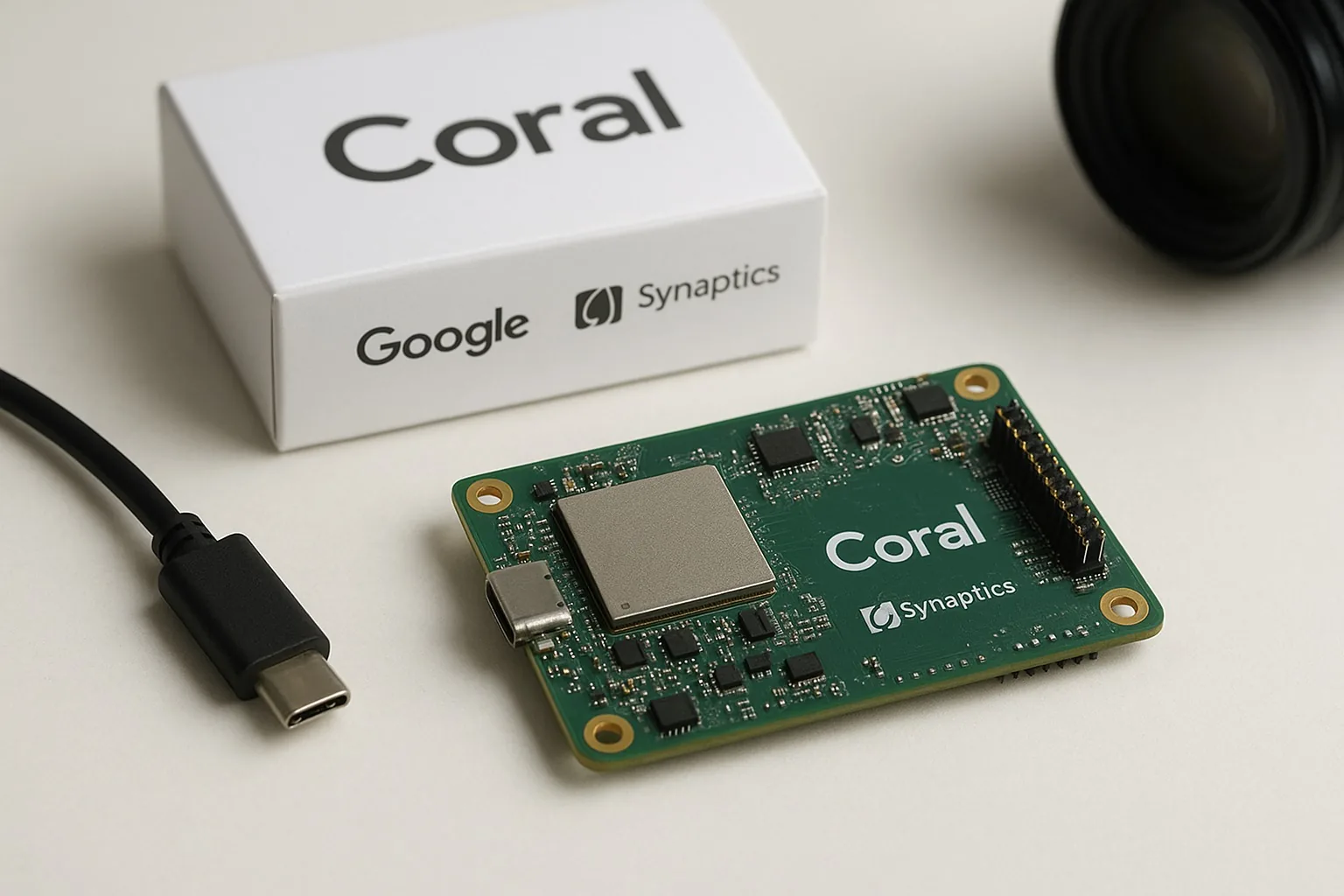
Synaptics and Google Research expanded the Coralboard ecosystem to add Gemma model support and broader hardware and software so developers can prototype and run AI on-device, reducing bandwidth cost, delay and privacy risks.
Key Takeaways
- Synaptics and Google Research expanded the Coralboard ecosystem to push Edge AI on-device and offer broader hardware and software support for running Gemma models
- The Coralboard ecosystem gives developers a shared starting point for edge AI work with Synaptics and ties the effort directly to Gemma model support
- A stronger Coralboard ecosystem aims to keep inference on local hardware near cameras, sensors or screens to reduce bandwidth cost, delay and privacy concerns
- The Coralboard ecosystem is a package of hardware, software and model support built with Synaptics to shorten the path from prototype to working device
Synaptics said the expanded Coralboard ecosystem gives developers a shared starting point for edge AI work, while a product quote in the same release tied the effort directly to Gemma model support.
Synaptics Coralboard Ecosystem Moves AI Off The Cloud
The practical aim is simple, put more useful AI on local hardware, closer to the camera, sensor or screen where data is produced, because cloud inference is not always the best fit for devices.
Sending every image, voice command or video stream to a remote server adds bandwidth cost, delay and privacy concerns, so a stronger Coralboard ecosystem gives developers a reference platform for testing what can stay on the device. By naming Gemma support, the companies are also tying edge hardware to an open model family that developers already know, reducing friction for teams moving from experiment to product.
Also Read: Starling Bank Trains AI On 15B Transactions, Skips Amazon And Google Cloud
From Cloud APIs To Device-Class Models
This update follows a wider change in AI development during 2026, when smaller, more efficient models have improved enough that many tasks no longer require a data center round trip.
That shift has revived the market for development boards, embedded toolkits and optimized runtimes, and the winners will be the vendors that make local AI feel approachable for developers, not just powerful on a spec sheet.
Earlier edge AI efforts often struggled because models were too large or too brittle for cheap hardware, but the new Coralboard ecosystem lands in a different moment, where compact model families and better optimization are making local deployment more realistic.
How The Coralboard Ecosystem Helps Edge AI
The Coralboard ecosystem is a package of hardware, software and model support built to shorten the path from prototype to working device. A developer board lets engineers test cameras, microphones, processors and AI runtimes together instead of stitching them from scratch.
For Synaptics, that can pull its silicon closer to the earliest design stage, when developers choose what hardware family to build around, and for Google Research, pairing Gemma with reference hardware can expand where those models run, especially in products that need quick responses or do not want constant cloud dependence.
The key difference from older edge AI kits is model readiness.
If Gemma runs well enough on the board and tools are clean, developers can start with a known model family instead of hunting for a custom one. Watch next for benchmark claims, partner board designs and real device launches built on the expanded setup.
The Next Fight Is Developer Habit
Edge AI hardware wins only if developers keep using it after the demo, which means documentation, model portability and tool support matter as much as processor specs.
The expanded Coralboard ecosystem is an attempt by Synaptics to make that habit stick.
If developers treat it as a common starting line for Gemma-based products, Synaptics and Google gain a foothold in the growing market for AI that runs on the device, not just in the cloud.
Read Next: U.S. Government Dumps DeepSeek From Every Civilian Agency In First 2026 AI Ban