Hidden AI Server Hacks Can Survive Reinstalls As Nvidia Fights Back
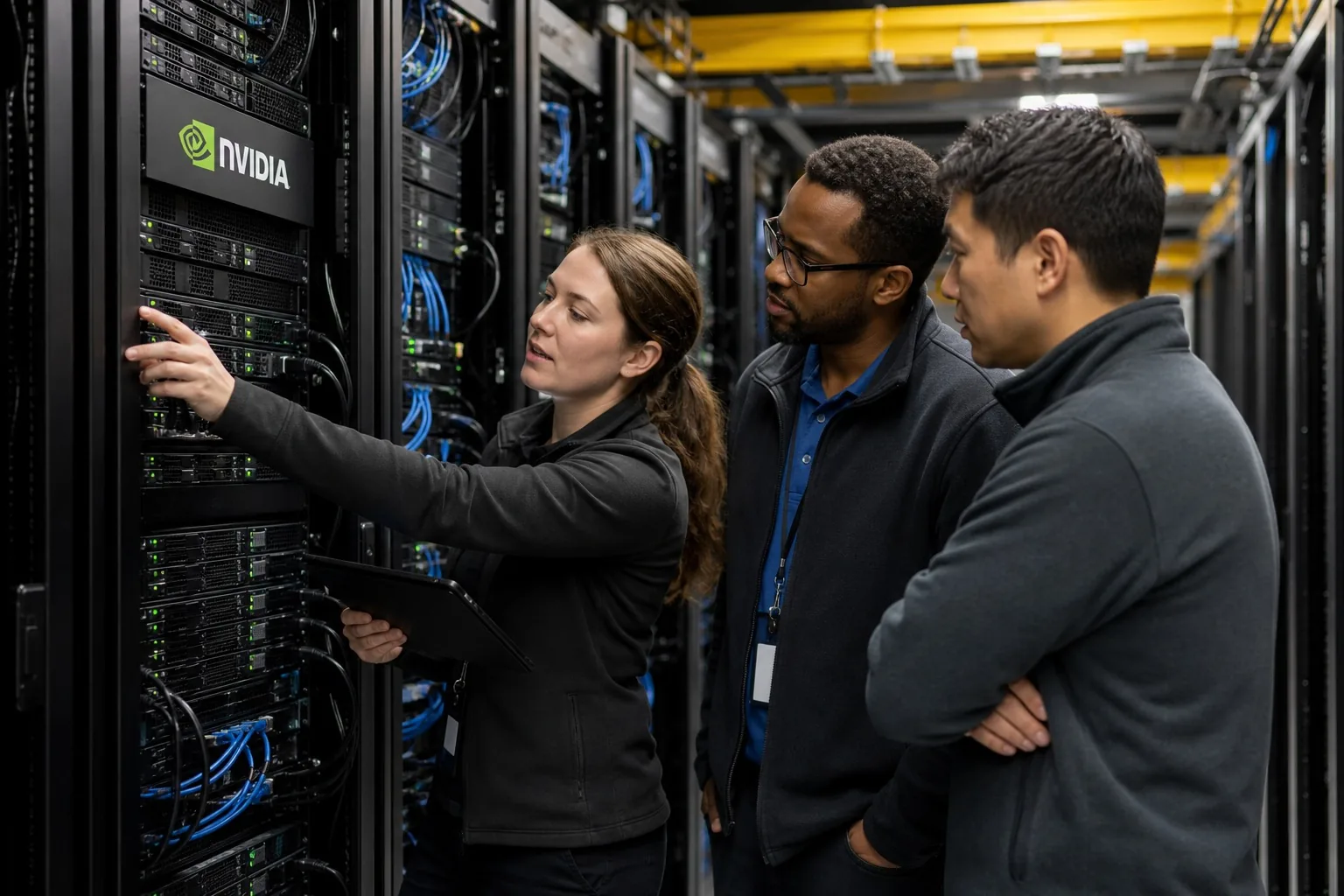
Security company Eclypsium And NVIDIA teamed up to lock down low-level software in AI servers so hackers cannot hide after a reset and steal data.
Key Takeaways
- Eclypsium And NVIDIA disclosed a collaboration to harden AI-server firmware and attack surfaces
- The collaboration focuses on firmware, baseboard controllers, accelerators and network interfaces because those components can give attackers persistent access
- The work targets layers below application-level protections like content filters and identity checks
- Thursday’s disclosure outlined the collaboration but did not provide a full control list, deployment scope or customer timeline
Eclypsium said it is working with NVIDIA (NVDA) on protections for emerging AI infrastructure risks. The release also said NVIDIA builds security into its platforms and works with researchers and security firms to protect customer environments.
Eclypsium And NVIDIA AI Infrastructure Security Moves Below The Model
Eclypsium And NVIDIA are focusing on firmware, baseboard controllers, accelerators and network interfaces because those components can give attackers persistent access to machines that run models.
Targeting Firmware And Interfaces
The companies’ collaboration aims to reduce risks where attackers could watch traffic, alter workloads or survive ordinary software reinstalls by reaching firmware or system management layers.
This work targets layers below application-level protections like content filters and identity checks. By addressing firmware and supply chain security, the partners are tackling a layer many corporate teams still inspect less often than cloud identity or endpoint software.
Much of the last year in AI security focused on application controls such as content filters, identity checks and tool permissions.
Those measures are useful but sit above the operating system.
This collaboration points lower, Eclypsium And NVIDIA are addressing firmware and supply chain security, a layer many corporate security teams still check less often than cloud identity or endpoint software, and that oversight becomes more costly as GPU servers grow more specialized and expensive.
Also Read: Anthropic Study Shows Hidden AI Advice Sways Experts 86% Of Time
Higher Stakes Per Rack
As AI data centers concentrate compute into fewer facilities, capacity and supply constraints mean each rack carries higher-value models and data, increasing the stakes of a single compromised training or inference cluster.
AI infrastructure security covers the trusted state of chips, server boards, firmware and management planes before a model even starts answering prompts. Firmware is low-level software that helps hardware boot and operate, and if it is altered a clean application layer may still sit on a compromised machine.
For NVIDIA, customer trust is no longer just about model speed, cloud providers and large enterprises want proof that accelerators and surrounding systems can be monitored for tampering.
For security firms like Eclypsium, AI turns an old firmware problem into a boardroom issue because the assets riding on those boxes are now much more valuable.
Missing Product Deployment Details
The next thing to watch is product detail.
Thursday’s disclosure laid out the collaboration but not a full control list, deployment scope or customer timeline, and buyers will want to know whether protections cover only GPU hosts or also the storage, networking and management layers that make an AI cluster work.
Analysis should weigh physical constraints, capacity, supply, power and cost per unit of inference, because these factors determine how rapidly customers can redeploy hardware to mitigate risks. When a company’s capital spending and public strategy diverge, the spending trajectory reflects a more reliable commitment to secure, scalable infrastructure.
Eclypsium And NVIDIA face the practical challenge of integrating firmware-level controls without imposing prohibitive power, latency or cost penalties that would slow adoption by cloud providers and hyperscalers.
Read Next: Nvidia Gives Banks And Hospitals More Control Over AI Transcripts