Tiny ESP32 Gadget Plays Air Traffic Tower With A Mac Nearby
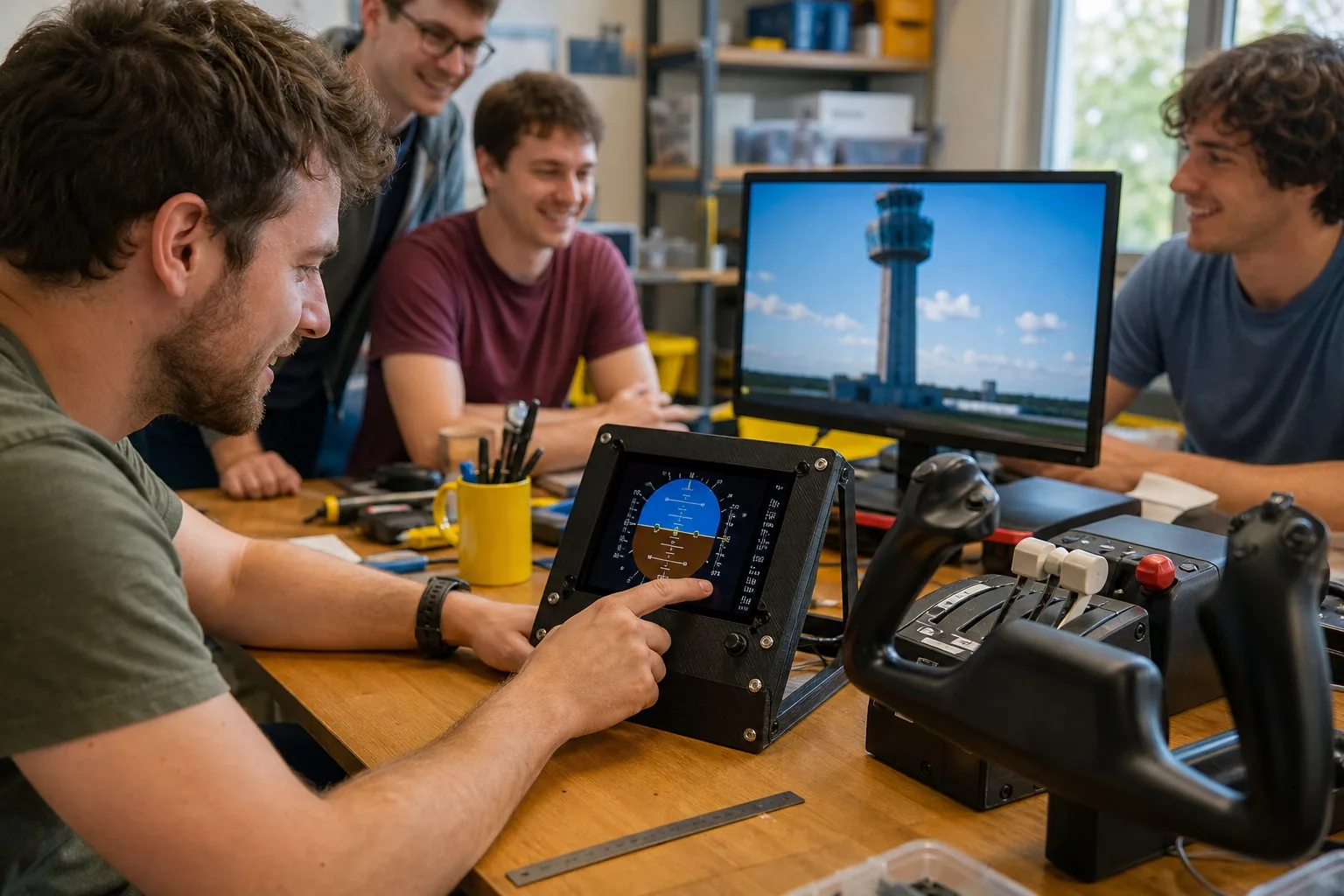
OpenBMB, the group behind free AI models, showed a tiny gadget that lets you talk to a fake airport control tower, with a nearby Mac doing the hard work.
Key Takeaways
- OpenBMB posted an AI tower demo pairing MiniCPM5-2B with VoxCPM2 to run real-time voice ATC interactions on an ESP32-S3
- The device sends audio to a Mac pipeline that runs speech recognition, injects altitude, speed and heading into prompts, then returns synthesized tower audio
- The ESP32-S3 handles display, touch and sensor input while the Mac handles model inference and audio generation
- Availability, pricing, rate limits, regions and commercial tiers are not provided in the GitHub repo or the post
OpenBMB posted that the system lets a user hold a button, request landing and hear an AI tower respond to a simulated flight state. The linked GitHub repository describes an ESP32-S3 touch AMOLED device, Wi‑Fi voice pipeline and cockpit-style attitude display tied to local sensors and a Mac-side speech stack.
The build combines a small language model, speech recognition and voice cloning in a loop that answers based on live flight telemetry, which is different from a chatbot because it must track numbers, state changes and radio-style replies without long delays.
openbmb Demo Architecture and Flow
The GitHub page says the device sends audio to a Mac pipeline, which runs speech recognition, injects current altitude, speed and heading into the prompt, then returns synthesized tower audio.
The result is not certified avionics.
It is a proof that low-cost hardware can host more of the interface while heavier inference runs close by. OpenBMB develops open models in the MiniCPM family, designed to run multimodal tasks with smaller parameter counts than frontier systems.
The demo matters because it turns a model release into a physical interface with microphones, speakers, sensor data and timing constraints that are harder to fake than a text benchmark.
OpenBMB has spent the last day showing MiniCPM in constrained settings, including speed and judging tasks.
Also Read: AI Firm Unleashes 2.8 Trillion Parameter Model For Big Code Jobs
Edge Hardware Constraints
This demo pushes from model cards into edge hardware, where memory, thermals and network jitter shape user experience as much as raw intelligence.
The broader trend is voice AI moving from general assistants on phones toward purpose-built devices for one job. A warehouse headset, a cockpit trainer and a field technician tool all need short replies, stable formatting and predictable latency more than broad creativity.
A 2 billion parameter model will not replace the largest assistants for research or coding, but it can be enough when the vocabulary is narrow and the workflow is tightly defined.
In OpenBMB’s design, the OpenBMB model does not carry the whole system alone.
The GitHub build routes audio from the ESP32-S3 device to a Mac, where speech recognition turns the pilot request into text, MiniCPM5-2B generates the tower reply and VoxCPM2 clones a radio-style voice for playback. That separation lowers the compute required on the handheld board.
For developers, that means an AI tower demo can feel device-native without requiring a server farm behind every click.
The ESP32-S3 handles display, touch and sensor input, while the Mac handles model inference and audio generation. Compared with a cloud-only assistant, OpenBMB’s layout cuts round trips and makes the interaction more deterministic.
AI Tower Demo, What Actually Ships Versus What The Demo Shows
Availability, pricing, rate limits, regions and commercial tiers are not provided in the GitHub repo or the post.
This is a demonstration and code release rather than a distributable product or hosted API.
The gap between the demo and a shipped product is substantive. The demo shows feasibility on hobby hardware and a local Mac pipeline, but does not address operational needs like certification, cloud hosting SLAs, pricing structures, regional deployment or sustained rate limits that govern production usage.
Those missing details matter for anyone evaluating the AI tower demo as a usable system outside a lab.
A local Mac pipeline and hobby hardware prove latency and function in controlled runs, but they do not guarantee the availability or predictable throughput that commercial users need, nor do they define per-request cost or regional compliance.
Developers testing this pattern will watch latency, hallucination control and audio reliability. If those metrics hold up in broader trials, small open models could be compelling in regulated or bandwidth-constrained settings where sending every interaction to a large remote assistant is too slow, too costly or too opaque.
Read Next: Insurers Can Now Ask Claude Whether A Home Has Been Hit By Hail