VSBLTY Arms Police With A 100 TOPS AI Box That Cuts The Cloud Out Of Surveillance
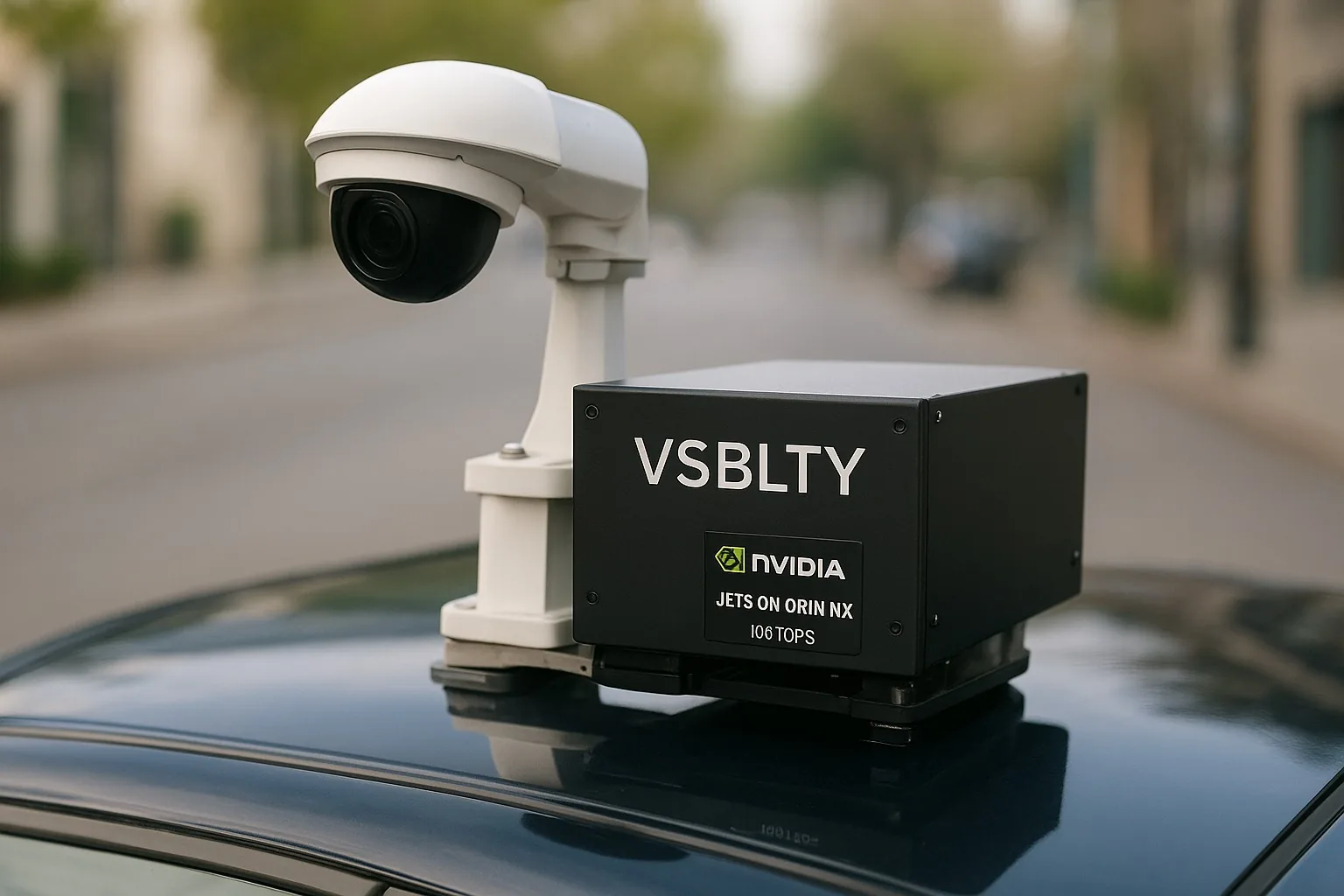
VSBLTY has built an edge box that lets police and defense teams run AI video analysis on-site with Nvidia Jetson chips, cutting the bandwidth and cloud costs of sending footage away.
Key Takeaways
- VSBLTY introduced a mesh-connected multi-pipeline edge device for law enforcement and defense using NVIDIA Jetson Orin NX hardware rated at 100 TOPS
- VSBLTY said the hardware will be sold inside its existing integrated systems and designed to process multiple AI pipelines near data capture
- Edge AI platforms let deployments run vision models on site and send only alerts or selected clips upstream to reduce bandwidth and cloud costs
- Procurement teams will want throughput, power draw and cost per unit of inference to map performance to operational needs and total cost of ownership
VSBLTY said the hardware will be sold inside its existing family of integrated systems and is designed to process multiple AI pipelines close to where data is captured. VSBLTY develops computer vision and security analytics systems, and this product pushes that work into more sensitive field settings.
The 100 TOPS figure refers to trillions of operations per second, a rough measure of how much AI work a chip can process.
Edge AI Cuts Bandwidth And Risk
In edge systems, that matters because sending every video stream back to a remote cloud can add delay, bandwidth costs and more points of failure. An edge AI platform moves that work closer to the camera or sensor, letting deployments run vision models on site and send only alerts or selected clips upstream to reduce bandwidth use, trim cloud spend and keep systems running when connections fail.
VSBLTY positions the product for camera-heavy security environments where local inference can limit how much footage crosses networks and reduce storage and egress charges.
Buyers in policing, transport and defense will weigh the device’s throughput, power draw and cost per unit of inference when comparing on-premises boxes to cloud-centric alternatives, because those factors determine supply needs, operational scale and total cost of ownership.
Mesh Scaling Across Sites
The company claims the mesh-connected, multi-pipeline design lets operators scale across a site without treating each box as an isolated device. VSBLTY can tune cameras, model pipelines and the compute envelope together rather than leaving hardware choices to customers.
That integrated approach matters in workloads with multiple streams or models, where a multi-pipeline system can run different tasks at once, such as object detection, event classification and alert routing.
Also Read: Reply Wins Nvidia's Physical AI Badge, Letting Factories Test Robots Before They Buy
TOPS is not a consumer-friendly metric, but it signals whether a box has headroom to run several AI tasks at once. In VSBLTY’s case, the platform targets settings where one device may need to inspect multiple feeds without handing them all to a remote data center.
Procurement teams will want concrete throughput numbers to map performance to operational needs.
For law enforcement and defense buyers, latency and reliability matter as much as raw model accuracy. A local device can continue making detections when network links fail.
For NVIDIA, Jetson Orin NX extends AI demand beyond giant data centers into thousands of smaller field deployments.
Procurement teams will watch whether VSBLTY discloses how many streams or models the unit can handle in real conditions, because that operational throughput, and the device’s power draw and cost per unit of inference, will determine real-world supply needs and total cost of ownership.
Read Next: Intel Bets Xeon 6 Can Run 205 AI Agents At Once, No Nvidia GPUs Needed