Apple’s Best Selling Laptop Is Waiting on Memory, and Data Centers Are Not Sharing
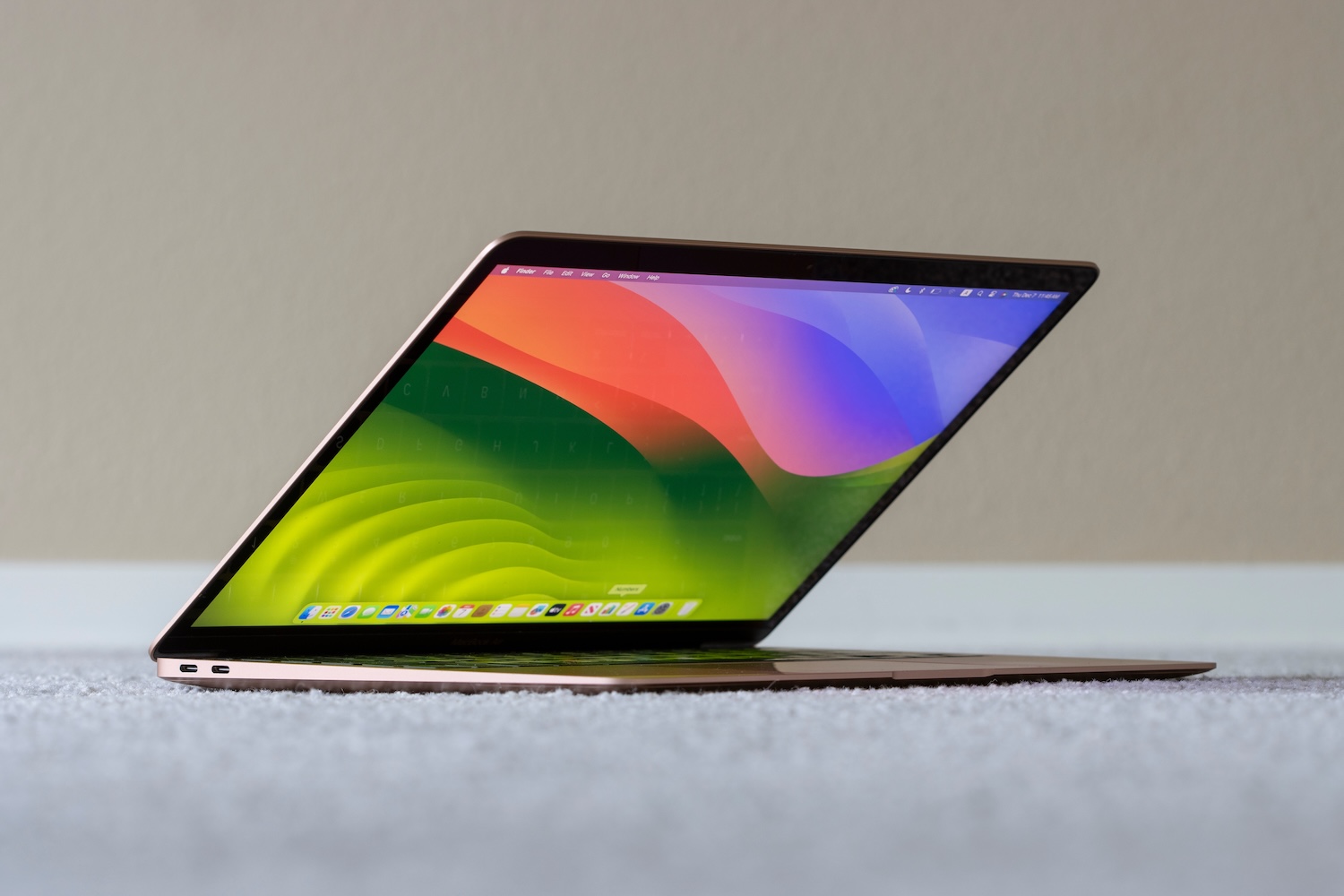
The global memory shortage has reached Apple‘s most popular laptop line. Lead times on MacBook Air configurations have stretched as DRAM supply tightens across the industry, with AI infrastructure buildouts absorbing chipmaker output that would normally flow to consumer devices.
The disruption illustrates how the AI compute race is reshaping supply chains far beyond data centers.
Key Takeaways
- Samsung, SK Hynix, and Micron together control roughly 95% of global DRAM production
- Apple’s M5 chip requires LPDDR5X memory, a low-power DRAM variant constrained by upstream wafer supply
- The MacBook Air’s base configuration ships with 16 gigabytes of unified memory, the tier most affected
- SK Hynix has committed the majority of its HBM3e output through the end of this year to Nvidia
TechCrunch reported on August 2 that availability constraints on the MacBook Air are visible across major retail channels, with certain configurations showing extended delivery windows. This crunch is not unique to Apple (AAPL), but the MacBook Air’s position as the world’s best-selling individual laptop model makes its supply strain a visible signal of broader market pressure.
How AI Infrastructure Is Consuming The World’s Memory Supply
Memory chips fall into two broad families.
DRAM, or dynamic random-access memory, is the fast working memory inside every laptop, server, and smartphone. HBM, or high-bandwidth memory, is a stacked variant of DRAM engineered for extreme data throughput and sits directly on AI accelerator chips like Nvidia’s H100 and B200 series.
Both come from the same foundries. Samsung, SK Hynix, and Micron Technology (MU) together control roughly 95% of global DRAM production.
When hyperscalers order HBM by the gigawatt-hour of training capacity, those same fabs have fewer wafer starts available for standard DRAM. The consumer market absorbs whatever is left.
AI servers require extraordinary amounts of memory per compute unit.
A single Nvidia H100 node carries 80 gigabytes of HBM2e. A rack of eight H100s therefore consumes 640 gigabytes of high-end memory before a single enterprise laptop ships.
Hyperscalers are ordering tens of thousands of such nodes each quarter.
The Memory Shortage Puts The MacBook Air At The End Of A Very Long Queue
The MacBook Air runs Apple’s own M-series silicon. Apple’s M5 chip, which powers this year’s Air, requires LPDDR5X memory, a low-power DRAM variant distinct from HBM but manufactured on overlapping equipment and constrained by the same upstream wafer supply.
Apple has historically insulated itself through long-term supply contracts and early production reservations.
That insulation is eroding. Semiconductor analyst forecasts published earlier this year projected DRAM prices rising 15% to 20% through the second half of this year, driven by HBM allocation crowding out commodity DRAM.
Also Read: Public Opposition to AI Data Centers: Three Reasons Why Americans Are Vehemently Against Them
A Mashable review of the MacBook Air M5 published on August 3 rated the machine a 4.6 out of 5, calling it “too powerful for its own good” on performance grounds while the supply crunch limits who can actually buy one.
The Air’s base configuration ships with 16 gigabytes of unified memory. That is the tier most affected by the constraint.
Buyers upgrading to 24 or 32 gigabytes are paying a premium that reflects real spot-market pressure, not just Apple’s traditional margin capture.
A Memory Shortage 54 Hours In The Making For Fathom Readers
The memory crunch is not a sudden development. Fathom covered the broader AI memory shortage trajectory and its projected path through 2027 in detail two days ago, tracing how HBM allocation decisions made at the foundry level propagate outward into consumer supply chains over a lag of roughly two to four quarters.
The MacBook Air disruption is that lag becoming visible in a mainstream consumer product.
The Air is the first tier-one consumer device with verifiable shelf shortages attributable directly to AI memory reallocation. Gaming laptops and Windows ultrabooks face the same upstream pressure, but Apple’s unified memory architecture makes the constraint unusually legible because Apple does not offer discrete GPU options that would allow buyers to work around memory tiers.
What Comes Next For Buyers And The Broader Market
Memory prices are unlikely to ease before early next year at the earliest.
SK Hynix has committed the majority of its HBM3e output through the end of this year to Nvidia. Samsung is ramping HBM4 production to meet next-generation AI chip demand.
Micron, the only US-based major DRAM producer, is expanding its Idaho fab but new capacity will not contribute meaningfully to supply until mid-next year.
For consumers, the practical implication is that MacBook Air availability will remain patchy through the holiday season. Configurations with higher memory tiers will carry larger-than-usual premiums driven by the ongoing memory shortage.
Buyers who need a machine this quarter should order early or accept longer wait times. For the broader semiconductor market, the MacBook Air situation serves as a reminder that AI infrastructure spending does not stay contained inside data centers.
It competes directly with consumer electronics for the same foundry capacity, and right now, the data center is winning.
Read Next: Samsung Says AI Memory Shortage Runs Through 2027, Relief May Wait Until 2028