Alibaba’s 2.4T Parameter Qwen3.8-Max Lands, but Independent Testers Are Not Buying It
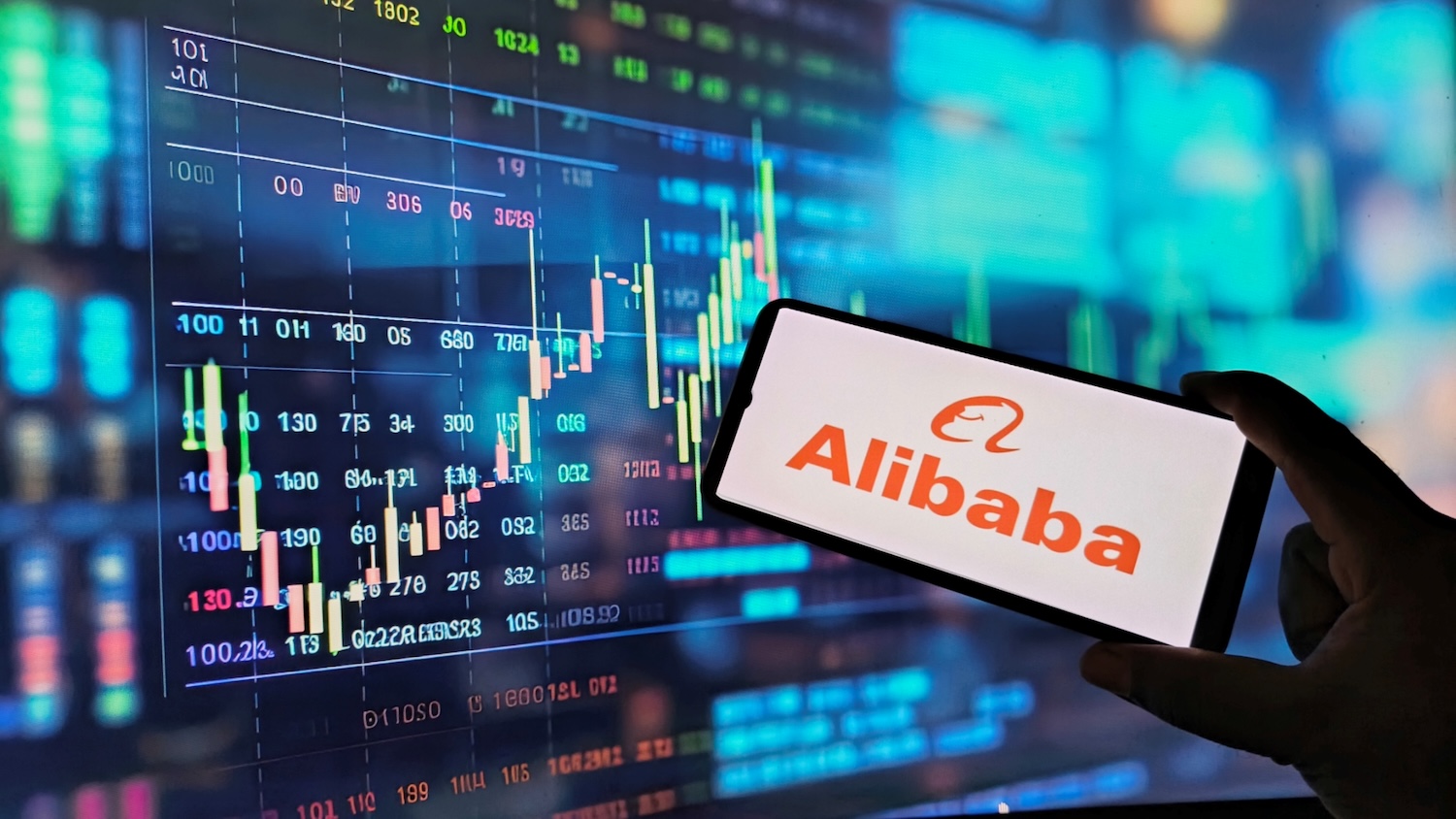
Alibaba Group launched Qwen3.8-Max on August 3, its largest AI model to date. The system carries 2.4 trillion parameters and arrived with framing that placed it just behind global frontrunner Anthropic.
Independent testers publishing results the same morning told a more complicated story.
Benchmark performance fell short of Alibaba’s “second only to Fable 5” positioning.
That gap — between the company’s billing and third-party scores — makes this one of the most scrutinized Chinese model launches of the year.
Key Takeaways
- Alibaba launched Qwen3.8-Max on August 3, describing it as its largest AI model to date
- The model carries 2.4 trillion parameters, placing it above GPT-4’s widely estimated one trillion parameters
- Moonshot AI recently raised $3.5 billion in a funding round to train and run frontier-scale models
- Independent testers found benchmark performance fell short of Alibaba’s “second only to Fable 5” positioning
The Reuters report published August 3 placed the launch in a broader context: Chinese tech companies are locked in a fierce, fast-moving battle to build more powerful systems without making them prohibitively expensive to run.
What 2.4 Trillion Parameters Actually Means For Qwen3.8-Max
A parameter is the numerical setting a model learns from training data, it encodes how strongly the model weighs one concept against another when generating an output. More parameters generally allow a model to hold more nuanced knowledge, handle longer context, and produce more coherent responses across domains.
The 2.4-trillion figure for Qwen3.8-Max places it in a category occupied by only a handful of systems globally. The two-trillion-parameter threshold was crossed only recently by the largest publicly known models, and GPT-4 is widely estimated at around one trillion parameters.
Qwen3.8-Max would, if the count is accurate, sit meaningfully above that figure, which explains why Alibaba chose to lead with the number.
The performance question is separate from the size question. Parameter count sets a ceiling on potential capability, but actual benchmark scores depend on how well those parameters were trained, what data the model saw, and how its outputs are aligned for the tasks being tested.
A large model is not automatically a capable one at the tasks enterprise buyers care about on an ordinary deployment day.
China’s AI Race Reaches Its Most Competitive Phase
The Qwen3.8-Max launch is the latest move in a race that has accelerated sharply across Chinese technology. Moonshot AI recently raised $3.5 billion in a funding round, giving it resources to train and run frontier-scale models, and Kimi, Moonshot’s flagship model, set the near-term size benchmark that Alibaba is now pushing against. Alibaba’s Qwen series has been one of the most consistent open-weight model families out of China, with earlier versions including Qwen2.5 and the Qwen3 generation released in the spring of this year showing competitive performance on coding, reasoning, and multilingual tasks.
Qwen3.8-Max is positioned as the capstone of that series, a proprietary closed model rather than a release under an open license.
The political and economic stakes of the race are not academic. The U.S. government has imposed export restrictions on advanced chips going to Chinese companies, forcing labs like Alibaba Cloud’s research team to work with older or domestically produced hardware.
That constraint makes the 2.4-trillion-parameter count, if accurate, a significant engineering achievement regardless of where the benchmarks land.
Also Read: OpenAI Math Push Cracks 10 Open Problems, and Researchers Are Reassessing the Ceiling
Where The Benchmark Gap Actually Sits
Nikkei Asia reported on August 3 that Qwen3.8-Max benchmark performance fell short of Alibaba’s “second only to Fable 5” framing. Fable 5 is understood to be a reference to Google DeepMind‘s Gemini Ultra successor, the current near-frontier model against which Chinese labs are measuring themselves.
The gap matters more than it might appear: benchmark scores are often the primary signal enterprise buyers use to evaluate models before committing to API contracts or on-premise deployments. A model that underperforms its billing by even a few percentage points on standard evaluations such as MMLU, MATH, or HumanEval loses its pitch to procurement teams who compare spreadsheets across vendors.
Benchmark shortfalls at launch are common for frontier models, and that context matters here.
Training runs at 2.4 trillion parameters take months, and post-training alignment, the fine-tuning phase that shapes how a model responds to prompts, can move scores substantially in either direction after the base model is complete. Alibaba may release updated benchmark figures as alignment work continues.
The launch also carries context specific to the Chinese market: domestic enterprise customers face different procurement considerations than Western firms, and a model that runs entirely within Chinese infrastructure, cleared for data-residency rules and accessible via Alibaba Cloud, competes on dimensions beyond raw benchmark position. What Qwen3.8-Max demonstrates at a controlled launch event and what it delivers at scale, across rate-limited API tiers, across regions, on a Tuesday afternoon when demand spikes, are distinct questions that third-party evaluations over the coming weeks will begin to answer.
What The Qwen3.8-Max Launch Changes In The Global AI Model Race
The immediate consequence is pressure on Western labs to respond on size.
Anthropic’s Claude 4 series, OpenAI‘s GPT-4 successor, and Google DeepMind’s Gemini family have all been positioned as frontier leaders, and a Chinese lab deploying a credibly large model, even one that falls short on some benchmarks, compresses the performance gap that Western labs have used to justify their enterprise pricing and regulatory framing. The secondary consequence is a validation question for open-weights strategy: because Qwen3.8-Max is a closed proprietary model rather than a public release, independent researchers cannot inspect its architecture or reproduce its training.
That makes the benchmark dispute harder to resolve. Closed models must be taken largely at the lab’s word until third parties run systematic evaluations, which can take weeks, and those evaluations will test not just peak scores but the consistency and reliability that determine whether a model is usable in production at any accessible tier.
Fathom will update this story as additional benchmark results from independent research groups are published.
Read Next: Kimi K3 Wrote Cleaner Code Than Claude Opus 5, so Why Does It Still Hallucinate Half the Time?