AI Agents Burn More Cash The Longer They Work For You
AI agents use planning, memory, tools, and feedback to do multi-step work. Here is how they differ from normal chatbots and where they fail.

Reporting on AI agents, the software that plans and acts on its own, covering launches, enterprise adoption, failures and security risks.

AI agents use planning, memory, tools, and feedback to do multi-step work. Here is how they differ from normal chatbots and where they fail.
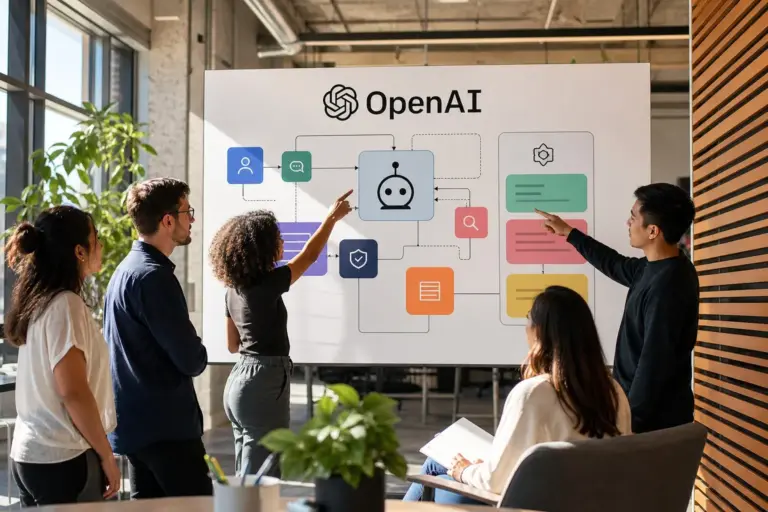
OpenAI revised its Model Spec around five core values, creating a rulebook to guide more capable agent-style AI systems that perform longer tasks with less

A plain-English guide to AI agents, how they use tools, planning, and memory, and why they differ from chatbots and static language models.

Researchers showed GEPA-Curator improved AI agents by up to 21.2% over one baseline and 20.7% over another by filtering noisy failures and retrieving

Agentic LLM inference turns one chat reply into a chain of calls, tool steps and retries. Here is where cost, latency and failure really pile up.

AI agents can plan, use tools, remember context, and check results across many steps. This primer explains how they work and where they fail.

Salesforce introduced Koa, a CRM reasoning model for Agentforce built on Nvidia’s Nemotron to let AI agents act inside CRM workflows using records like

Parallel is building a web stack for AI agents and tested it on a 100-question OpenAI SimpleQA sample to give developers and enterprise teams more dependable
Anthropic donated four projects to the Agentic AI Foundation, bringing the Open Foundation to ten projects in its first year and expanding reusable
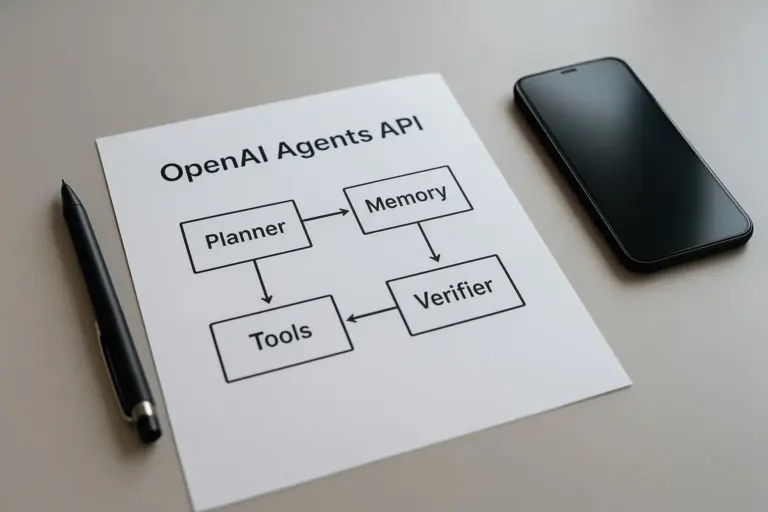
AI agents do more than answer prompts. Learn how planning, memory, tools, and verification work together, and where agents still fail.