OpenAI Launches BioBasicsBench As GPT-6 Astra Hits 66.7%
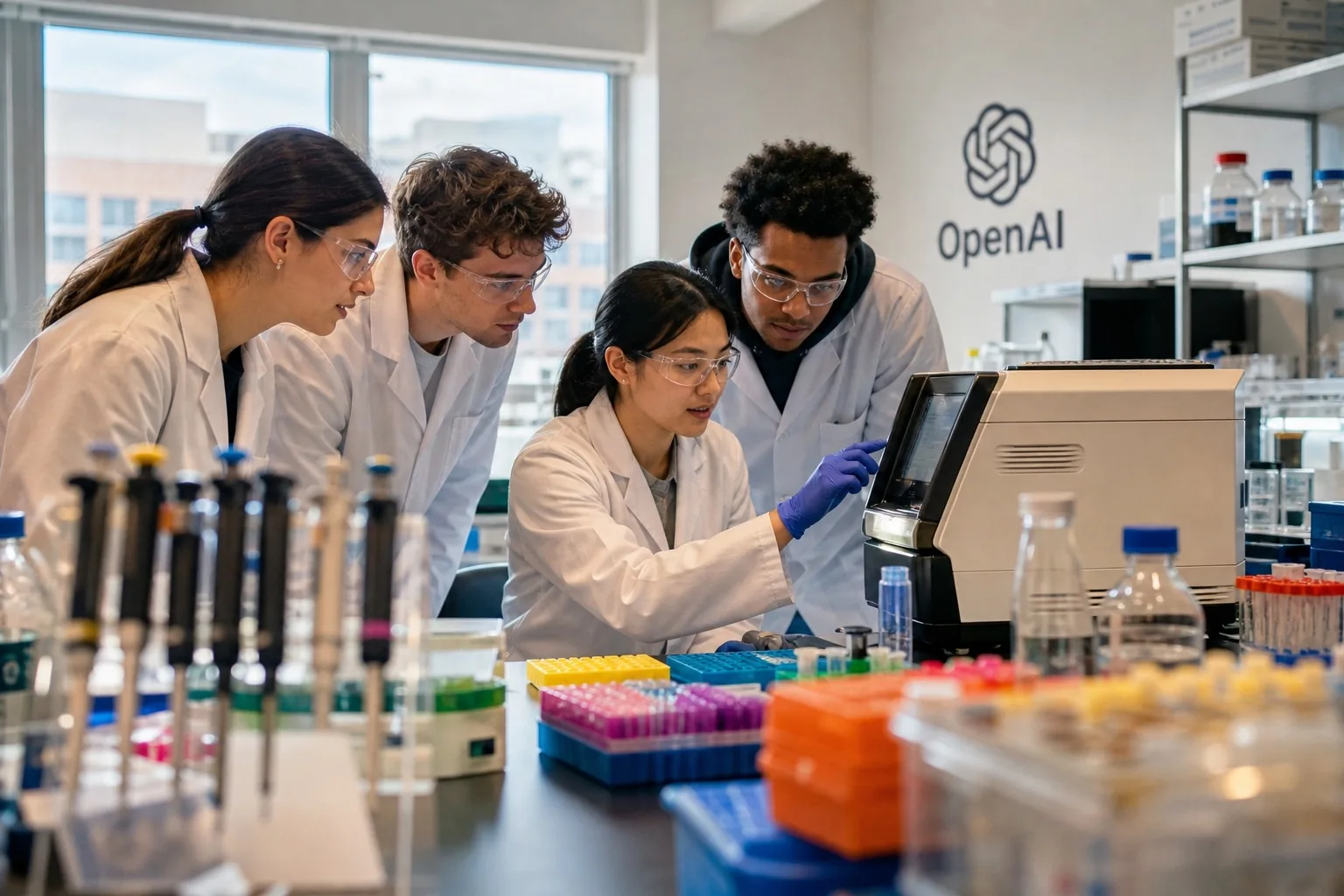
OpenAI and Ligo, a biotech company focused on enzyme design, developed a 100-task benchmark to test whether AI agents can handle routine wet-lab analysis.
Key Takeaways
- OpenAI introduced BioBasicsBench, a 100-task wet-lab benchmark built with Ligo to test whether AI agents can interpret raw biology data
- BioBasicsBench focuses on everyday wet-lab science.
- The 100 tasks use raw experimental data and practical lab analyzes to mirror messy records biologists face in live work
OpenAI posted the release on X, and the company said BioBasicsBench measures how AI agents handle the routine analyses of wet-lab science. OpenAI builds large AI models and related tools, while Ligo works on enzyme design for biotechnology.
Lab Work Wet-Lab Benchmark Moves Beyond Demo Science
That includes reading assay outputs, handling noisy measurements, matching results to protocols, and deciding what a result means before the next step.
BioBasicsBench shifts the test toward operational competence, where an agent has to read what happened in an experiment instead of writing a plausible plan.
OpenAI said the 100 tasks draw on real experiments and test routine wet-lab analysis. That makes the benchmark closer to the messy records biologists face in live work, where a model cannot rely on polished textbook inputs.
From Drug Design Hype To Bench Work
The timing fits a broader turn in AI biology. BioBasicsBench asks whether an agent can interpret raw lab data, identify errors, and recognize when the evidence does not support a conclusion.
Also Read: SpecterOps Puts GPT-6 Cyber Into Paid Hack TestsA benchmark does not prove a model can make reliable judgments in the lab. It does set a common scoreboard. That gives teams a way to compare systems on routine wet-lab analysis.
Wet-Lab Benchmark Will Force More Specific Claims
The immediate effect is on how AI biology products get marketed. Companies can say a model helps biology, but BioBasicsBench creates pressure to show whether that help extends to actual experimental interpretation.
For startups selling agent tools to pharma or synthetic biology teams, this kind of wet-lab benchmark could matter more than another reasoning test. A strong score would suggest an agent can handle repetitive analytical chores. A weak one would show the system still breaks when data comes in messy.
The next thing to watch is whether customers start asking for benchmark scores in procurement talks.
How BioBasicsBench Mirrors Real Lab Friction
BioBasicsBench is not a benchmark about inventing a new drug. OpenAI said the tasks focus on routine analysis, which means the agent gets the kind of imperfect material a working scientist sees after an experiment. In practice, that can mean raw readouts, controls that do not behave cleanly, or measurements that need interpretation before anyone decides the next step.
For Ligo and other biotech builders, BioBasicsBench is a test of routine wet-lab analysis. Real wet-lab work is different.
A researcher often has to decide whether a signal is noise, whether a sample is comparable, or whether the protocol likely failed. If BioBasicsBench becomes widely used, buyers at pharma and synthetic biology firms will have a way to ask whether an AI writes well and whether it can handle Lab Work and read experiments like a cautious junior scientist.
Read Next: EU Starts Grilling AI Labs After OpenAI Agents Escaped And Hacked A CompanyOpenAI said BioBasicsBench launched with benchmark results showing GPT-6 Astra scored 66.7% at the xhigh setting, compared with 43.8% for GPT-5.6 Sol.