DigitalOcean Targets AI Agent Risk With New Tools To Catch Issues Early
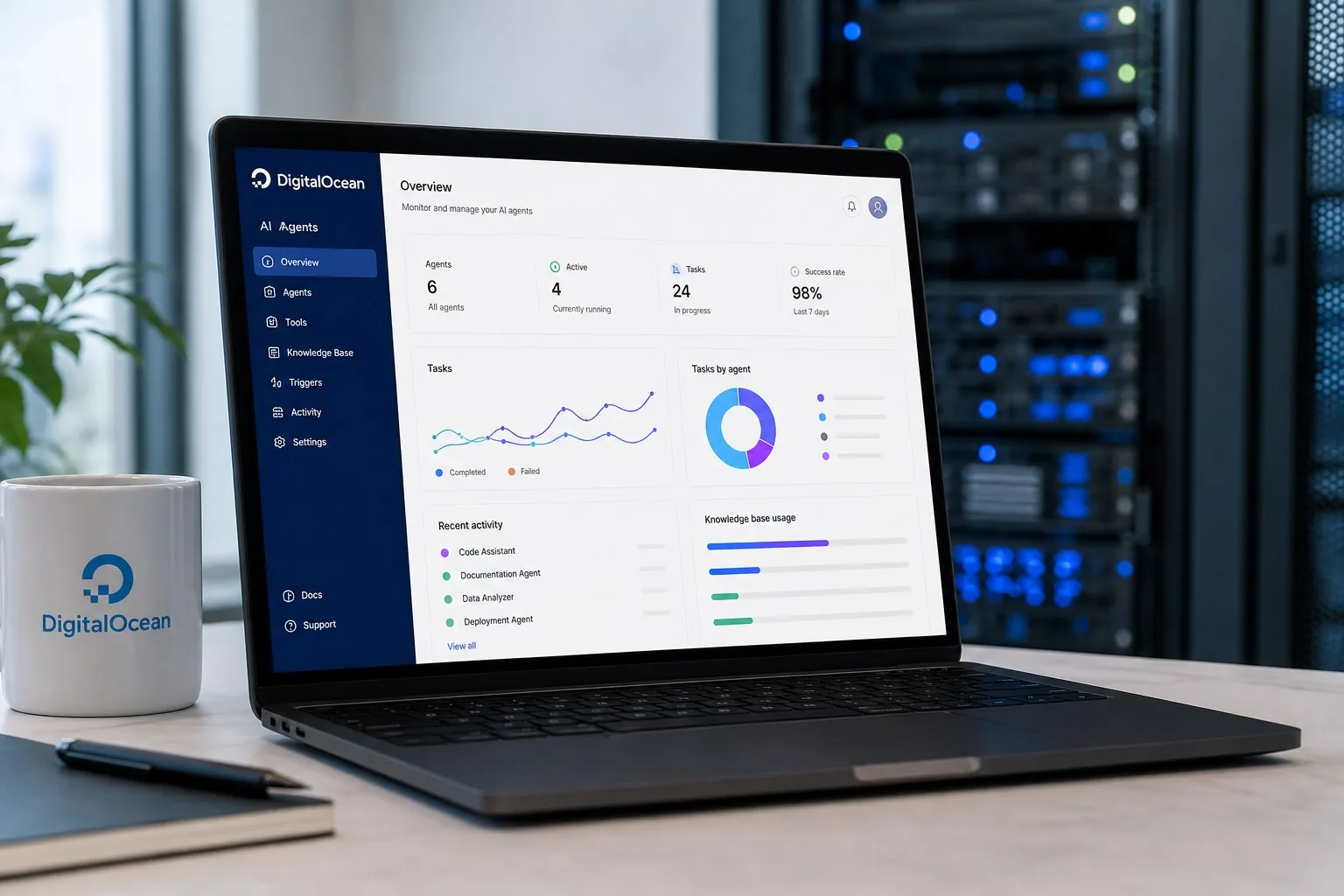
DigitalOcean launched a public preview of three AI agent monitoring tools, Signals, Simulations and Insights, alongside a private preview of Agent Data Services.
Key Takeaways
- DigitalOcean launched public previews of AI agent monitoring tools Signals, Simulations and Insights, alongside a private preview of Agent Data Services
- Signals and Insights are designed to give developers visibility into agent behavior in production
- Simulations suggests a testing environment for running agents against synthetic scenarios before deployment
- DigitalOcean has not disclosed pricing, customer names or a timeline for Agent Data Services to leave private preview
Developer-focused account testingcatalog said the tools let engineering teams “catch issues” with AI agents before and during production use.
DigitalOcean is a cloud infrastructure provider that competes with larger hyperscalers like Amazon Web Services and Microsoft Azure, typically by targeting developers and smaller businesses with simpler, lower-cost compute and storage products.
The company has pushed further into AI tooling over the past year as demand for agent infrastructure, the software layer that lets AI systems take autonomous multi-step actions rather than respond to single prompts, has grown across the industry.
Why AI Agent Monitoring Is Becoming Its Own Product Category
An AI agent differs from a chatbot in that it can chain multiple actions together autonomously, calling tools, querying databases or executing code without a human approving each step. That autonomy creates a new failure surface, since an agent can execute a faulty multi-step plan before anyone notices, unlike a single chatbot reply a person reviews before acting on it.
Signals and Insights appear designed to give developers visibility into agent behavior in production, the kind of logging and anomaly detection that has long existed for traditional software but remains immature for autonomous AI systems.
Simulations suggests a testing environment where teams can run agents against synthetic scenarios before deployment, similar to staging environments in conventional software engineering but tuned for the unpredictability of language-model-driven decisions.
Agent Data Services, still in private preview, points toward infrastructure for managing the data agents read and write while operating.
From Compute Rental To Full-Stack AI Tooling
DigitalOcean’s move mirrors a pattern among infrastructure providers racing to add AI-specific tooling rather than sell raw compute alone. Enterprise software vendors have built “agent observability” products over the past year, after companies deploying AI agents in production discovered that debugging autonomous systems requires different tooling than debugging deterministic code.
Cloud rivals have pushed similar monitoring layers recently, including Microsoft’s own Foundry platform adding model-scoring tools, reflecting a wider recognition that agent reliability, not just raw model capability, has become the bottleneck for enterprise adoption of agentic AI.
Also Read: Hugging Face Clones OpenAI’s Math Tests, Admits Verifier Is ‘Early And Rough’
What DigitalOcean Has Not Said
DigitalOcean has not disclosed pricing for Signals, Simulations or Insights, nor a timeline for moving Agent Data Services out of private preview.
The announcement also did not name specific enterprise customers testing the tools or detail which agent frameworks, whether LangChain, AutoGPT-style systems or custom builds, the tools support. Those gaps limit how quickly larger enterprise buyers can evaluate fit against incumbent observability vendors already serving the space.
What Comes Next For Agent Infrastructure
The public preview phase will determine how quickly developers adopt Signals and Insights against competing tools from larger cloud providers.
DigitalOcean’s smaller scale relative to Azure or AWS means its bet depends on winning developers who want simpler tooling without hyperscaler lock-in.
Agent Data Services moving to general availability will be the next concrete milestone to watch, likely once the current private preview group reports back on data governance and latency under real agent workloads.
Read Next: Asana Slashes Browser Agent Cost 76-Fold With OpenAI’s GPT-6 Astra Model