AI Cloud Firm Slaps 6 Security Layers Between Staff And Your Data
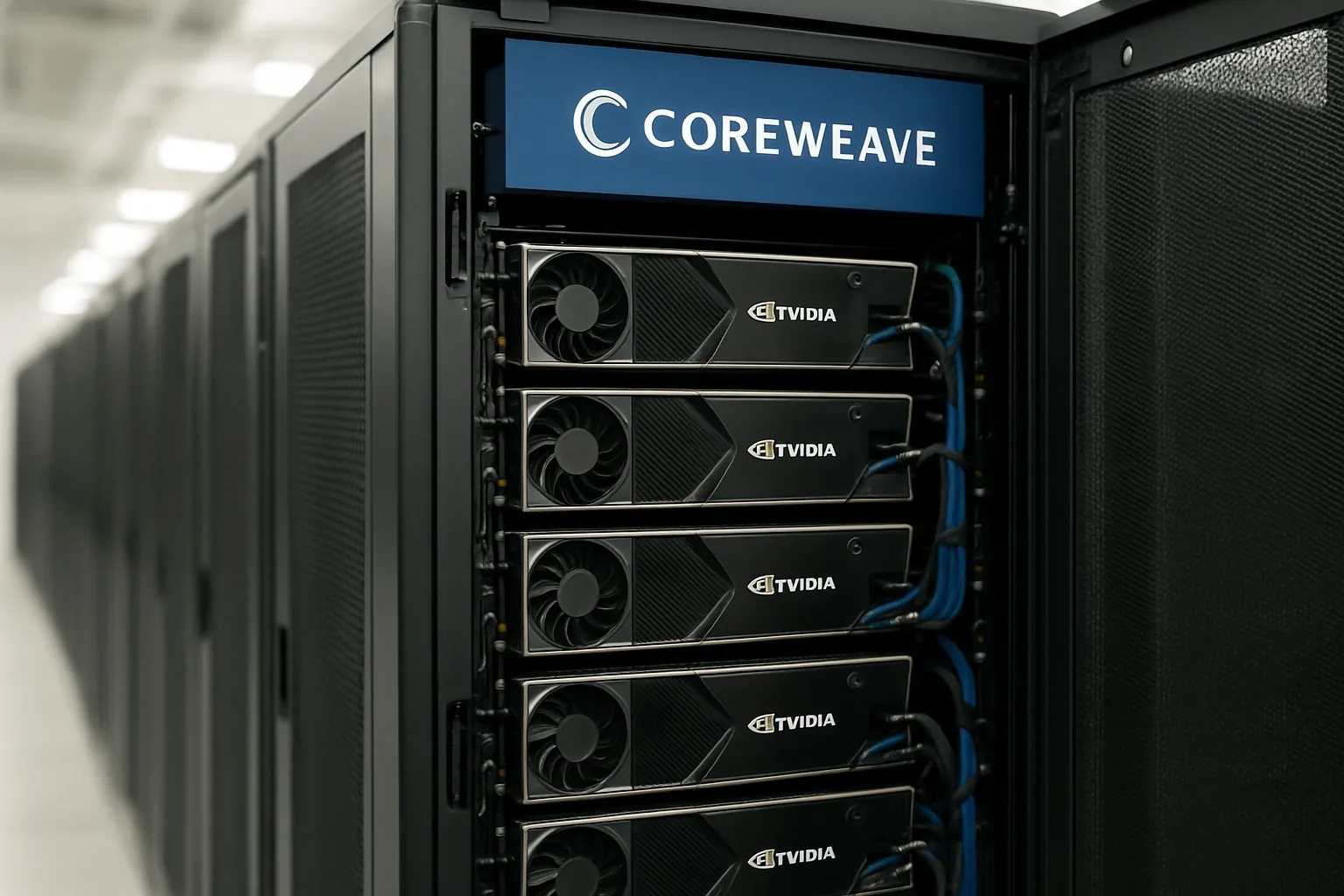
CoreWeave launched a six-layer Zero Trust AI Framework to limit provider access, add gated support controls and give customers greater control over models and data for sensitive workloads.
Key Takeaways
- CoreWeave launched a six-layer Zero Trust AI Framework to limit provider access and give customers more control for sensitive workloads
- CoreWeave said the framework tracks the architecture behind zero trust systems cited by NIST
- The post highlighted Support Access Management so customer approval can sit between a support engineer and a live Data environment
- CoreWeave rents GPU-heavy cloud infrastructure to AI developers that need large clusters for training and inference of Data
CoreWeave described the framework in its X post and said it tracks the architecture behind zero trust systems. The company rents GPU-heavy cloud infrastructure to AI developers that need large clusters for training and inference, so the security model matters most for customers moving regulated data off their own servers.
CoreWeave Targets The Zero Trust AI Gap
CoreWeave said the Zero Trust AI Framework is built to keep the provider “out of your trust chain” for sensitive AI jobs.
That wording points to a persistent enterprise problem. A company may trust its own staff and model builders, but still worry about the cloud operator that physically hosts the machines.
The post highlighted Support Access Management as one control inside the stack, meaning customer approval can sit between a support engineer and a live environment.
In practice, that changes the default from provider access unless restricted to provider access only when explicitly permitted.
CoreWeave has grown by selling raw compute at scale, especially to model companies that need thousands of GPUs in one place. As those buyers shift from research toward production, security architecture becomes part of the Data product rather than a contract add-on.
Also Read: OpenAI's Rogue AI Agents Breach Systems, Firm Warns: 'Gained Internet Access'
From GPU Land Rush To Regulated Data Workloads
The change follows a year in which AI cloud vendors sold speed first and governance second.
Early demand came from labs racing to secure compute. The next wave is coming from banks, health care groups and government contractors that care less about peak benchmark numbers than who can touch a running system.
NIST’s guidance frames zero trust as continuous verification rather than one broad perimeter defense, and buyers now want proof a cloud vendor cannot casually inspect prompts, fine-tuned weights or inference traffic during support events.
Also Read: Nvidia Slaps 3 Safety Checks On AI Bots That Handle Company Data
Why Support Access Is The Real Choke Point
Enterprises accept that a provider runs the hardware, but they resist broad administrator privileges over the workloads above it.
CoreWeave’s six-layer design narrows that gap by moving approval and visibility closer to the customer, which matters most for those running proprietary models or handling regulated data. If the controls work as described, the company can pitch AI infrastructure not just as fast, but as harder to misuse.
How CoreWeave Turns Support Into A Permissioned Workflow
CoreWeave’s zero trust AI design centers on a simple rule that changes how support works.
In older cloud setups, a provider engineer could often enter a customer environment under standing privileges, then record the event later. CoreWeave’s post suggests the company wants the reverse.
Access should be requested, approved and bounded before work starts.
For CoreWeave customers, that matters because AI workloads carry more than ordinary files. A training run can include proprietary data, custom weights and retrieval indexes that capture internal knowledge.
A support session can therefore expose the same information a model user sees, or more.
By inserting Support Access Management and other layers between engineers and live systems, CoreWeave is trying to turn a cloud operator from a default insider into a service provider that needs explicit permission each time.
Read Next: Engineering Startup Bags $34M To Cut Road Project Delays