Chai Discovery Wins GSK Deal After Passing Real Wet-Lab Drug Test
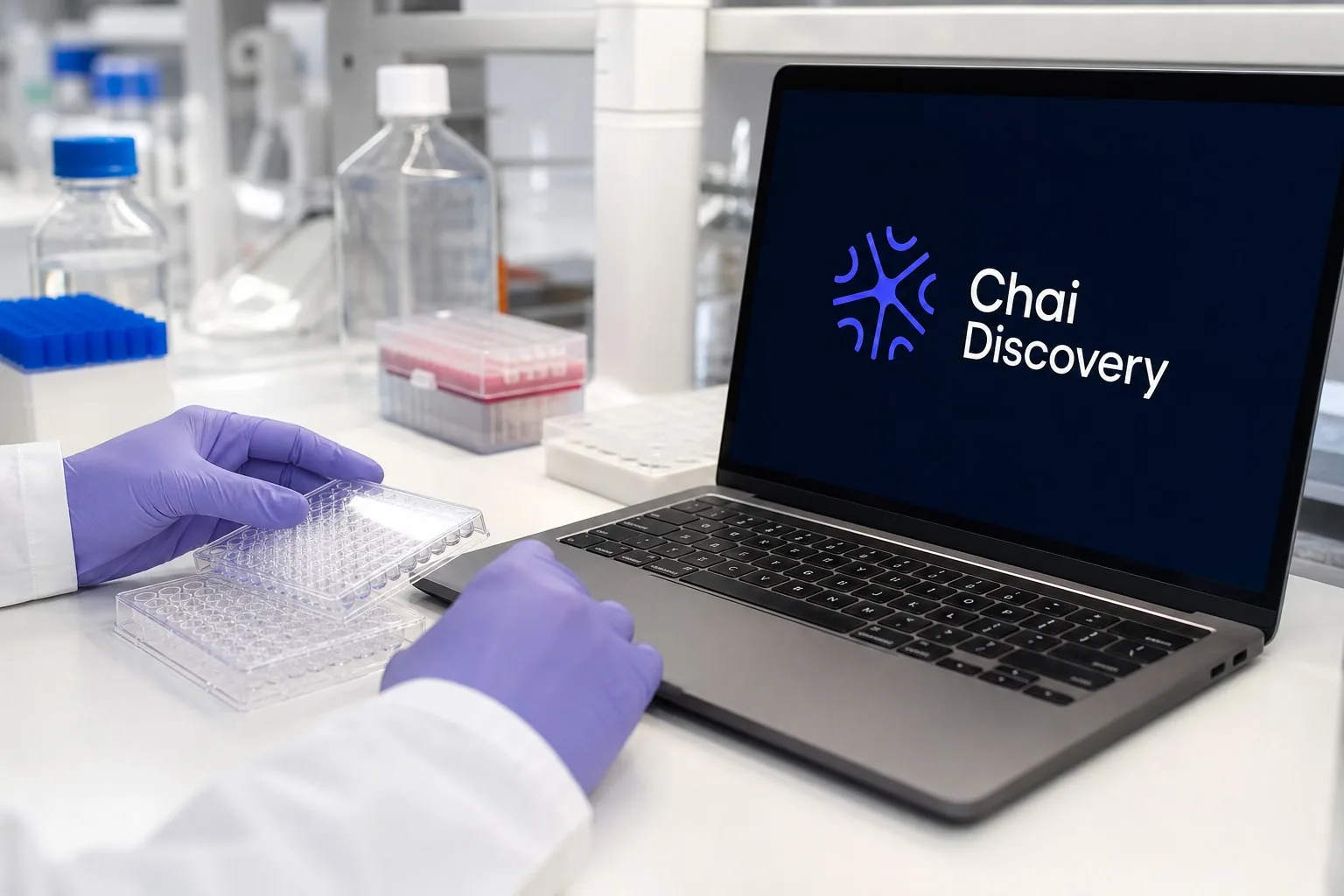
Chai Discovery announced an Oct. 9 collaboration with GSK after its AI model passed an independently run wet-lab evaluation, providing external validation of its drug-molecule predictions.
Key Takeaways
- Chai Discovery announced an Oct. 9 collaboration with GSK after its AI model passed an independently run wet-lab evaluation
- GSK tested Chai’s model against real laboratory results before committing to the arrangement
- Neither company disclosed deal terms or which disease areas the collaboration targets first
- Chai’s next marker is whether its predictions hold across a larger, independent set of GSK’s compounds
The companies said the arrangement follows GSK testing Chai’s model against real laboratory results rather than relying on the startup’s own benchmarks. Chai builds AI systems that predict molecular structure and binding behavior, aiming to cut the time and lab cost required before a drug candidate reaches human trials.
Its investors include Index Ventures, Sequoia Capital, Kleiner Perkins and OpenAI, alongside Thrive, General Catalyst, Dimension and Oak HC/FT.
Why Wet-Lab Validation Is The Real Chai Discovery GSK Test
AI models predicting molecular structure, often using architectures descended from DeepMind‘s AlphaFold work, are measured on computational benchmarks and in physical experiments. Benchmarks compare predictions with known structures in public databases, while wet-lab work tests whether chemists can synthesize a molecule and run assays using liquids, reagents and living tissue.
GSK’s own evaluation before committing to a deal shows it sought proof beyond a leaderboard score.
The Rush Of Pharma Into AI-Native Drug Pipelines
Large pharmaceutical companies have spent the past two years signing deals with AI-native biotech startups rather than building comparable models in-house, mirroring a build-versus-buy pattern seen across cloud computing a decade earlier. GSK joins drugmakers testing AI-first discovery platforms before committing larger budgets, a cautious approach shaped by years of models that performed well on paper but failed when chemists reproduced results in physical experiments.
Also Read: NIH, Google And META Commit $1.8B To AI Biology Data
What A Validated Model Means Next
Neither company disclosed deal terms or which disease areas the collaboration targets first. The next marker is whether Chai’s predictions hold up across a larger, independent set of GSK’s compounds, since one successful wet-lab round does not guarantee consistent accuracy at scale.
Read Next: Claude Science Completes First Full UV Sky Map, Closing Decades-Old Gap