Bitmine Soars To 6.04M ETH, Turning Miner Into A $15.1B Ethereum Bet
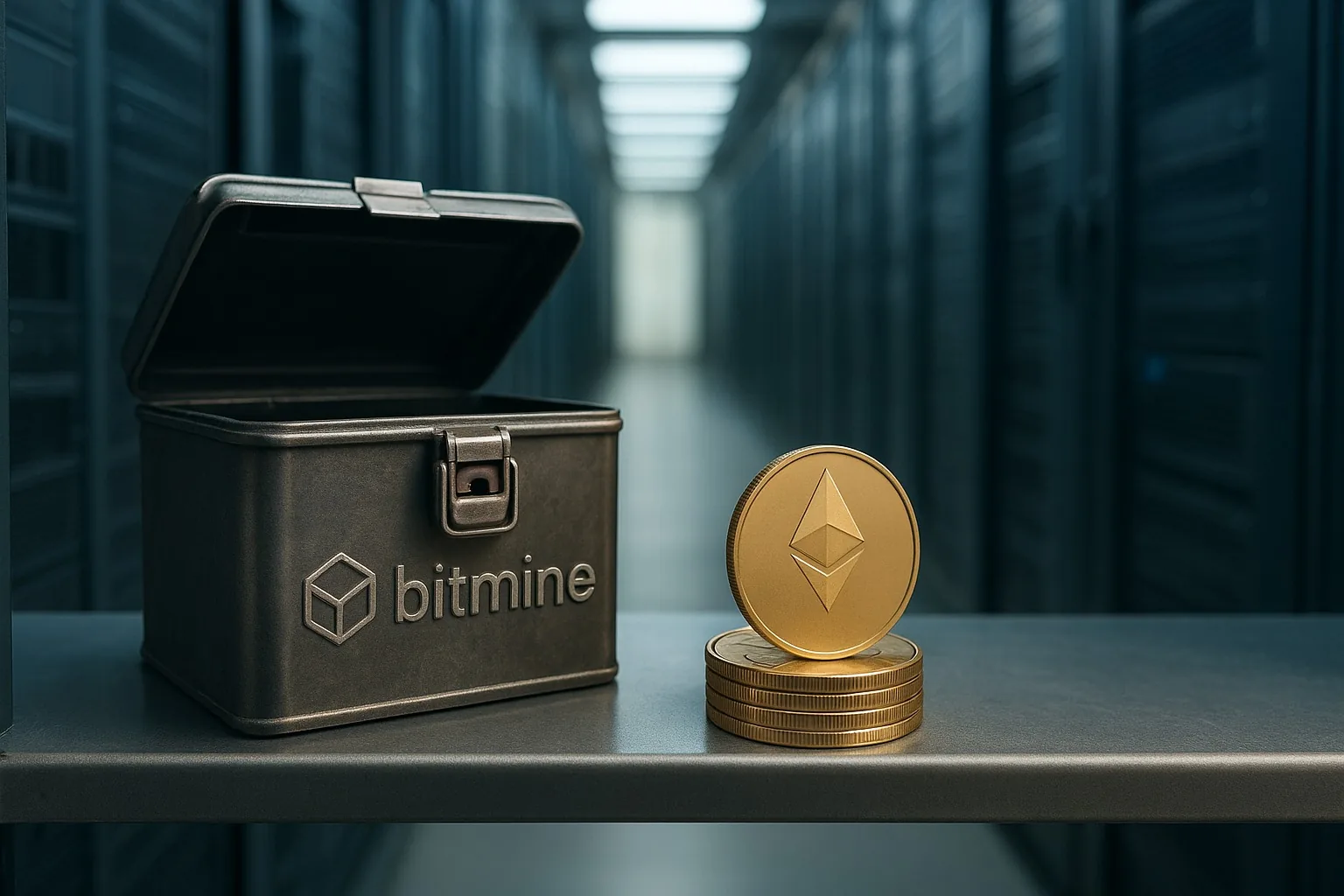
Bitmine Immersion Technologies (BMNR) said Monday its ETH treasury reached 6.04 million Ethereum tokens, and total cryptocurrency, cash and marketable securities climbed to $15.1 billion.
Key Takeaways
- Bitmine’s ETH treasury reached 6.04 million tokens
- Bitmine reported total cryptocurrency, cash and marketable securities holdings of $15.1 billion
- The company said the figures cover only assets on its balance sheet, excluding third‑party client assets and off‑balance‑sheet exposures
- Ether in Bitmine’s treasury can be staked to earn rewards, making part of the holding income‑producing
Bitmine said the figures include only assets on its balance sheet, not third‑party client assets or off‑balance‑sheet exposures.
ETH Treasury Scale Keeps Expanding
The filing‑style update matters because Bitmine is no longer trading as a simple mining equity.
Its ETH treasury now functions more like a listed holding vehicle whose value rises and falls with Ethereum, treasury financing and capital market access.
That changes how investors should read the company. A miner earns coins from computing power, while a balance‑sheet buyer raises capital, acquires tokens in size and hopes the stock trades at a premium to net asset value so it can fund further purchases.
Public market enthusiasm for such vehicles widened in 2026 as investors sought leveraged ways to own large digital asset balances without holding tokens directly.
For Bitmine, the bet is tighter than for a diversified exchange or broker, because if Ethereum appreciates the equity can amplify gains, and if financing tightens the structure can reverse quickly.
Also Read: BIS Warns Stablecoin Adoption Slows As U.S. Banks Raise Rates And Keep Cash Home
From Mining Model To Balance Sheet Bet
Bitmine’s update follows a year in which several listed companies shifted from operating businesses toward treasury‑led equity stories. Some used Bitcoin (BTC).
Bitmine chose Ethereum, which carries different mechanics because ETH can also be staked for yield.
Staking lets holders lock ETH to help secure the network and earn rewards, so an ETH treasury can hold a reserve asset while producing blockchain income from the same coins. A bitcoin treasury lacks that native yield option.
The backdrop also matters.
Ether’s corporate appeal rose as listed vehicles searched for alternatives to crowded bitcoin treasury trades and as U.S. investors grew more comfortable with Ethereum exposure through funds and public equities.
What 6.04 Million ETH Really Means
At 6.04 million ETH, Bitmine controls a balance large enough to matter to equity investors and crypto market watchers tracking concentrated ownership. Ethereum’s broader market value still dwarfs that position, as market data shows, but a single public company’s holding can influence sentiment around liquidity, staking and future issuance.
The key risk is that this strategy is simple only on the surface.
Investors are buying token price exposure, corporate execution, funding risk and whatever discount or premium the stock market assigns to the balance sheet.
Those layers can diverge. If Bitmine keeps adding ETH, watchers will look at whether purchases are funded with equity, debt or operating cash, and whether management moves more coins into staking, improving yield but reducing liquidity.
How Bitmine’s ETH Treasury Differs From Bitcoin Holders
An ETH‑focused public company is not just warehousing tokens.
Staking can turn part of the holding into an income stream, making the reserve closer to an income‑producing asset than a passive hoard. That matters for equity investors because staking yield can offset carrying costs, and for traders because millions of staked coins can reduce liquid supply.
The tradeoff is that staked ETH usually needs time to exit, limiting immediate convertibility.
Watch next for three figures from Bitmine, namely how much of the 6.04 million ETH is staked, whether the company adds debt or fresh equity to buy more, and whether the stock keeps trading on a premium big enough to finance further accumulation.
Read Next: Nebius Gives Away $10M In GPU Credits To Win Over Europe’s AI Builders