BIS Warns Stablecoin Adoption Slows As U.S. Banks Raise Rates And Keep Cash Home
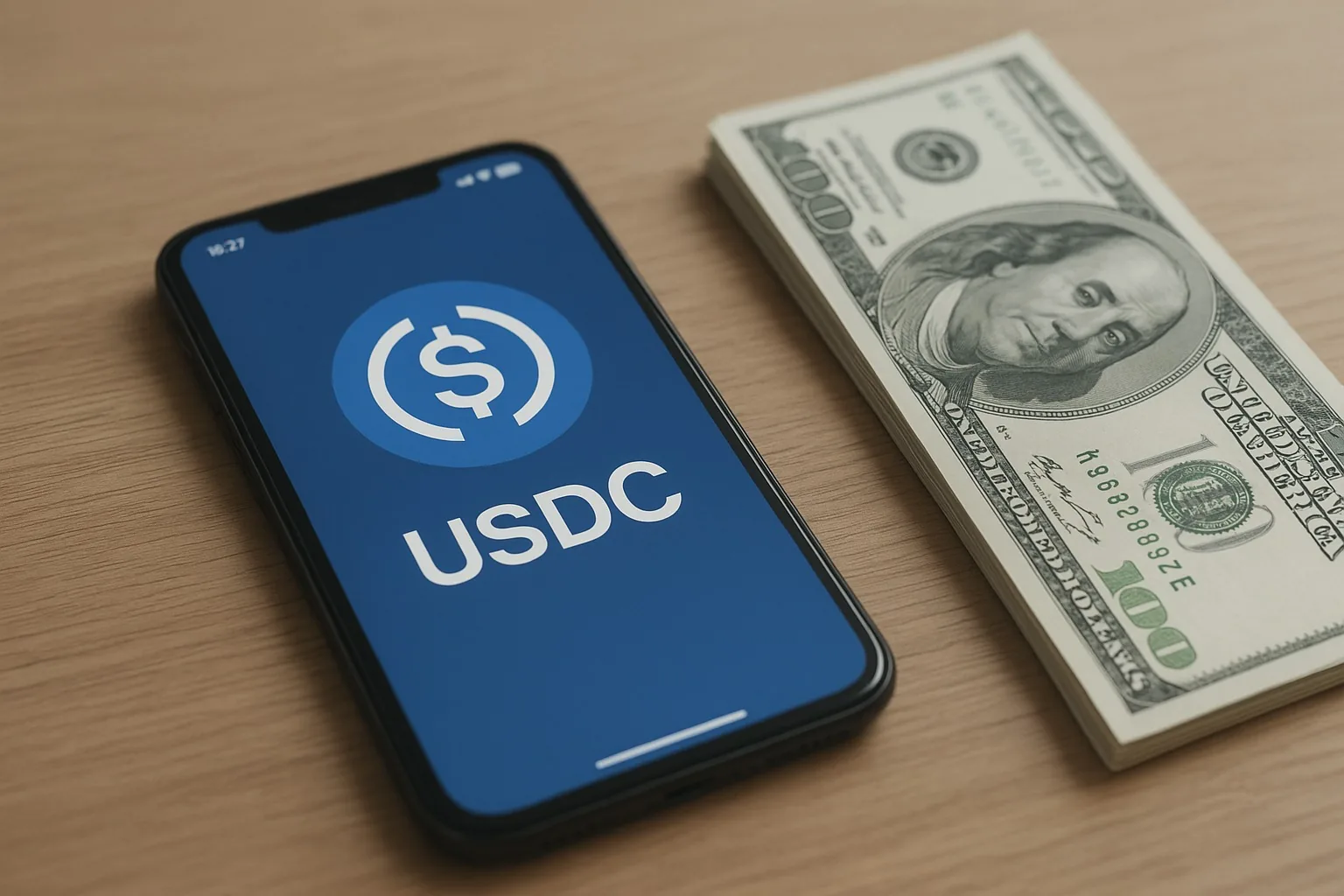
The Bank for International Settlements found in a new working paper that stablecoin adoption slows when U.S. banks raise deposit rates, suggesting dollar tokens compete with ordinary bank cash rather than replacing it outright.
Key Takeaways
- The Bank for International Settlements found stablecoin adoption slows when U.S. banks raise deposit rates
- The paper found the clearest substitution effect in Circle’s USDC
- Circle redeems USDC for dollars and keeps reserves in cash and short-term Treasurys
- The BIS sample showed a stronger response in USDC than in Tether’s USDT
The BIS paper studied whether stablecoin growth tracks shifts in traditional banking conditions and found the clearest substitution effect in Circle’s USDC, a dollar-backed stablecoin used across cryptocurrency trading and on-chain payments.
Stablecoin Adoption Meets Bank Competition
The result matters because one of the strongest industry claims is that stablecoin adoption will keep rising on its own, even as banks improve yields. BIS economists argue the opposite.
When banks pay more to depositors, some demand that might have moved into stablecoins stays inside the banking system.
That does not mean stablecoins stop growing. It means their growth still depends on relative convenience, yield and access.
A stablecoin is a cryptocurrency designed to hold a fixed value, usually one U.S. dollar, by backing each token with cash or short-term government securities. Users hold and move it on blockchains instead of through bank ledgers.
The paper singles out USDC as the most rate-sensitive token in the sample.
That fits its user base. USDC has long been marketed as a regulated, dollar-linked settlement asset for exchanges, fintechs and businesses, not only for speculative trading.
Market data shows USDC remains one of the largest dollar tokens by circulation.
From Yield Shock To Stablecoin Adoption Test
The new BIS result lands after two years in which stablecoins moved from trading collateral toward payments and treasury functions. Friday’s debate was not whether tokens work on-chain.
It was whether they can pull deposits away from banks at scale.
That question sharpened after higher interest rates made ordinary savings accounts and money market products more competitive. A depositor choosing between a 0% token wallet and a higher-yield bank account faces a simple trade.
Convenience and transfer speed matter, but so does foregone interest. Earlier research and market episodes already hinted at this tension.
Stablecoin issuers earn reserve income from Treasury bills and bank cash, while users usually do not receive that yield directly.
That structure gives issuers revenue, but it can weaken stablecoin adoption when banks pass more yield back to households and businesses.
How USDC Differs From Tether In This Test
The BIS sample found a stronger response in USDC than in Tether’s USDT. One likely reason is user mix.
USDT remains dominant in offshore trading and cross-exchange liquidity, where speed and market access can matter more than incremental bank yield.
USDC sits closer to regulated financial plumbing, making its demand more sensitive to the same customers banks are trying to keep. For fintechs, brokers and treasurers, stablecoin adoption is less a referendum on blockchain ideology than a cost comparison between token rails and deposit rails.
That helps explain why banks and stablecoin issuers are converging instead of splitting.
Some banks now test tokenized deposits, while stablecoin firms pitch themselves as settlement layers for internet-native dollars.
What Changes For Circle And Banks
For Circle, the paper is a reminder that distribution will matter as much as regulation. If USDC wants durable stablecoin adoption, it needs uses that bank deposits cannot match, including round-the-clock settlement, programmable transfers and direct compatibility with on-chain applications.
For banks, the paper suggests deposit pricing still works as a defense.
Raising rates can slow leakage into tokenized dollars, at least for some users, giving banks more bargaining power in any future fight over digital cash even if blockchains keep gaining ground in payments infrastructure.
Why USDC Reacts Faster To Bank Rates
USDC is issued by Circle, which redeems tokens for dollars and keeps reserves in cash and short-term Treasurys. When a business or trader mints USDC, dollars enter that reserve pool.
When tokens are redeemed, dollars leave it. That process makes USDC behave like a portable dollar balance that lives on blockchains and moves without bank hours.
The BIS paper focuses on what happens before minting starts.
A user deciding between a bank account and USDC is comparing two forms of dollar exposure. Banks can raise deposit rates and pass yield back to customers.
Circle usually does not pay holders directly for keeping USDC in a wallet.
That means USDC has to win on utility instead, by offering faster settlement, easier access to exchanges, or compatibility with DeFi products that bank balances cannot reach. For fintechs that use USDC for global transfers, this trade-off is different from a household savings choice.
A treasury team may accept lower yield if USDC cuts settlement delays, counterparty friction or weekend payment gaps.
That is the next test to watch, whether stablecoin adoption comes from users chasing convenience, not just dollar exposure.
Read Next: Bittensor Pays For Proof, Not Hype, As AI Token Rivals Ride Branding Alone