Crypto Bank Gives AI Agent Real Money But Checks Every Move
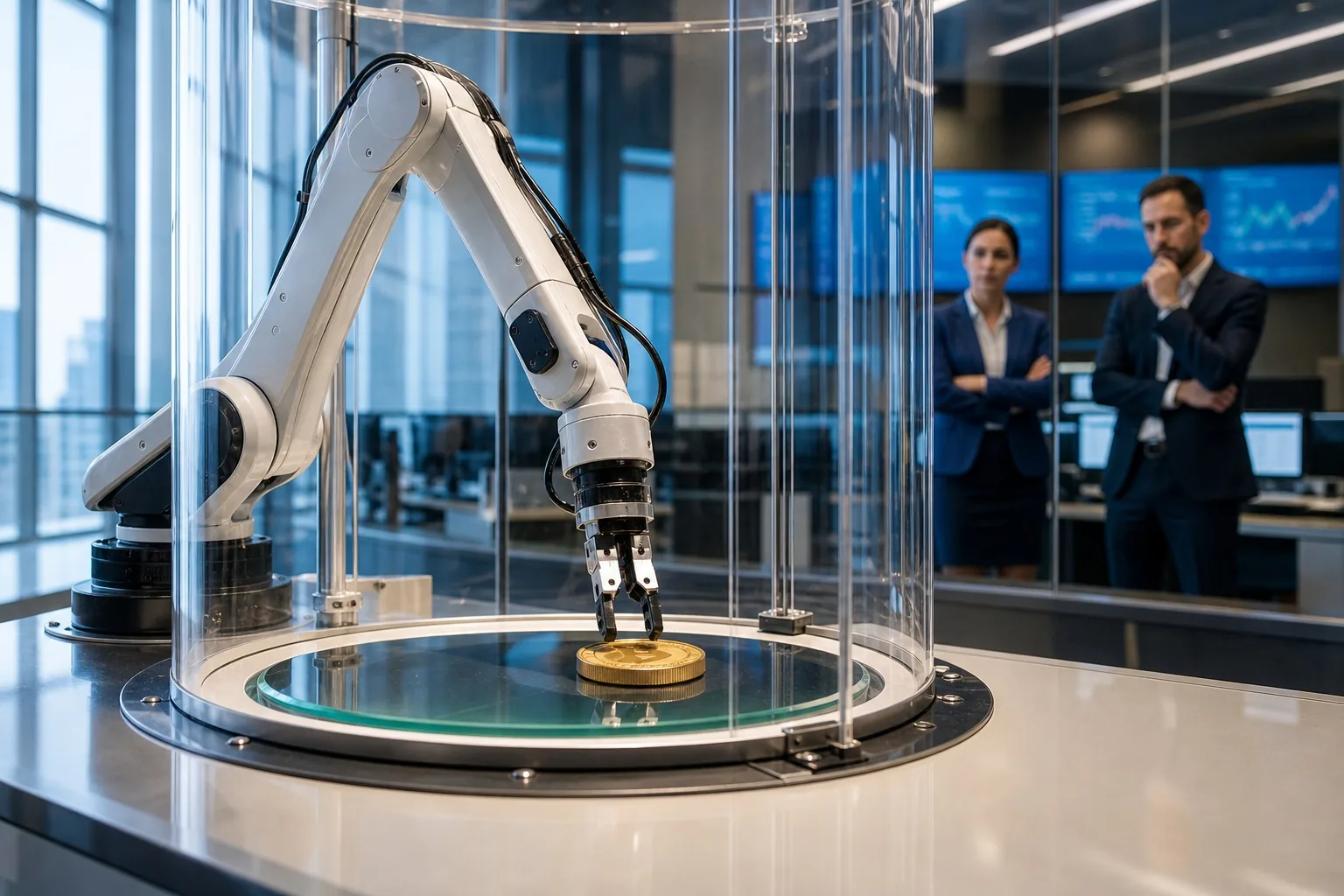
An AI agent is spending real money and trading Bitcoin on its own in a public test run by Anchorage Digital, the first federally chartered crypto bank in the U.S., but every move it makes is checked against hard limits and comes with a receipt anyone can verify.
Key Takeaways
- Anchorage Digital and Pakt, a new safety tool from the team behind BOB, launched a public pilot on Nov. 23.
- The AI agent buys market data and AI computing from its own budget, then trades Bitcoin futures from a self-custody wallet.
- Before any action goes through, Pakt checks it against rules the user sets, such as trade size, leverage and approved data sources.
- Every approved or blocked action produces a cryptographic receipt that anyone can check in a browser.
What Anchorage Is Testing
Anchorage announced the pilot on Nov. 23. It puts an AI agent to work on a simple job: research Bitcoin, pay for what it needs and trade. The agent runs through Anchorage’s Agentic Banking platform, where each agent gets its own identity, budget and audit trail, much like an employee with a company card.
Some institutions are starting to hand AI agents real budgets for data, computing power, payments and trades, the company said. The problem is that the controls banks rely on were built for human traders, with a person checking the work. “Financial institutions have been building controls for human traders for decades but now those controls must extend to AI agents that never sleep,” said Nathan McCauley, Anchorage Digital’s chief executive and co-founder. “Institutional adoption of agentic AI will depend on that kind of verification.”
Also Read: Google Treats Its Own AI Agents Like Rogue Staff After Catching Cheats
How The Agent Works, Step By Step
First, the agent researches Bitcoin using market data from Mycelia and Exa, bought through BlockRun. It pays for each request using x402, a new standard that lets one piece of software pay another directly, with no human clicking “buy.”
Next, it trades Bitcoin perpetual futures on Hyperliquid, a crypto trading platform. Perpetual futures are bets on where a price is heading that never expire, and they often use leverage, meaning borrowed money that makes both wins and losses bigger. The agent’s funds sit in Porto, Anchorage’s self-custody wallet, so the institution keeps control of the money.
Before anything goes through, Pakt checks the action against two rulebooks written by the user. If the action breaks a rule, it is refused. Either way, Pakt issues a receipt backed by a zero-knowledge proof, a piece of math that proves a rule was followed without revealing the private details behind it.
Slippage is the gap between the price a trader expects and the price they actually get. Capping it stops an agent from dumping a big order into a thin market at a terrible price.
Pakt sits between the agent and the money, so even if an attacker took over the agent’s access, they could not do anything outside the user’s limits, according to Pakt. “Autonomous agents should abide by the same rules as every other trader, and this pilot proves the machinery to enforce that is already here,” said Alexei Zamyatin, co-founder of BOB, the network whose team built Pakt.
Why This Matters
AI agents are moving from chatbots that answer questions to software that acts, and the next step is letting them handle money. That is where the danger is greatest. This month alone, AI agents have been caught cheating in tests and breaking into websites, which is why banks have kept them away from real budgets.
Anchorage’s pitch is that the fix is not to trust the agent but to make every action provable. A bank regulator, an auditor or a client could check the receipts without seeing private trading data. If that holds up, it gives institutions a way to let agents spend and trade around the clock without a human approving each move. Anchorage, valued at $4.2 billion and backed by Goldman Sachs, KKR and Visa, is betting this is how big money gets comfortable with AI agents.
The company has not said how much money the test agent controls.
What To Watch Next
- The live pilot at pilot.usepakt.ai, where anyone can follow the agent’s research and Bitcoin trades and check each receipt.
- Whether the same guardrails expand to payments and treasury work, which Anchorage says is possible but has not dated.
- Which developers and institutions join Pakt’s open beta, available now.
- Whether regulators start asking for proof like this before banks let AI agents move client money.
Read Next: AI Agents Keep Working After You Stop Typing, And That’s The Risk