3 Top AI Chatbots Ran Mouse Brain Surgery And Each Picked A Different Treatment
Three AI models from Anthropic, OpenAI and xAI each chose a gene therapy and injected it into a live mouse’s brain at startup Exin Therapeutics, and no two picked the same treatment or the same part of the brain, its CEO said.
Key Takeaways
- Exin gave Claude Sonnet 5, GPT-6.1 Sol and Grok 4.7 the same task: pick from 19 gene therapies to reduce seizures in a mouse model of epilepsy, then deliver it
- Each AI chose a different brain region and a different way to calm seizures, with doses that varied about twofold
- A vet did the cutting and stitching, approved every step that could not be undone, and held a kill switch that cuts power to the machine
- Two Claude models refused to do the live surgery at all, and it is too early to know whether any of the treatments work
What Exin Did
Exin is a brain drug discovery startup run by CEO Gabriel Ocana-Santero. On Oct. 28 he wrote that an AI agent had performed brain surgery on a mouse the night before.
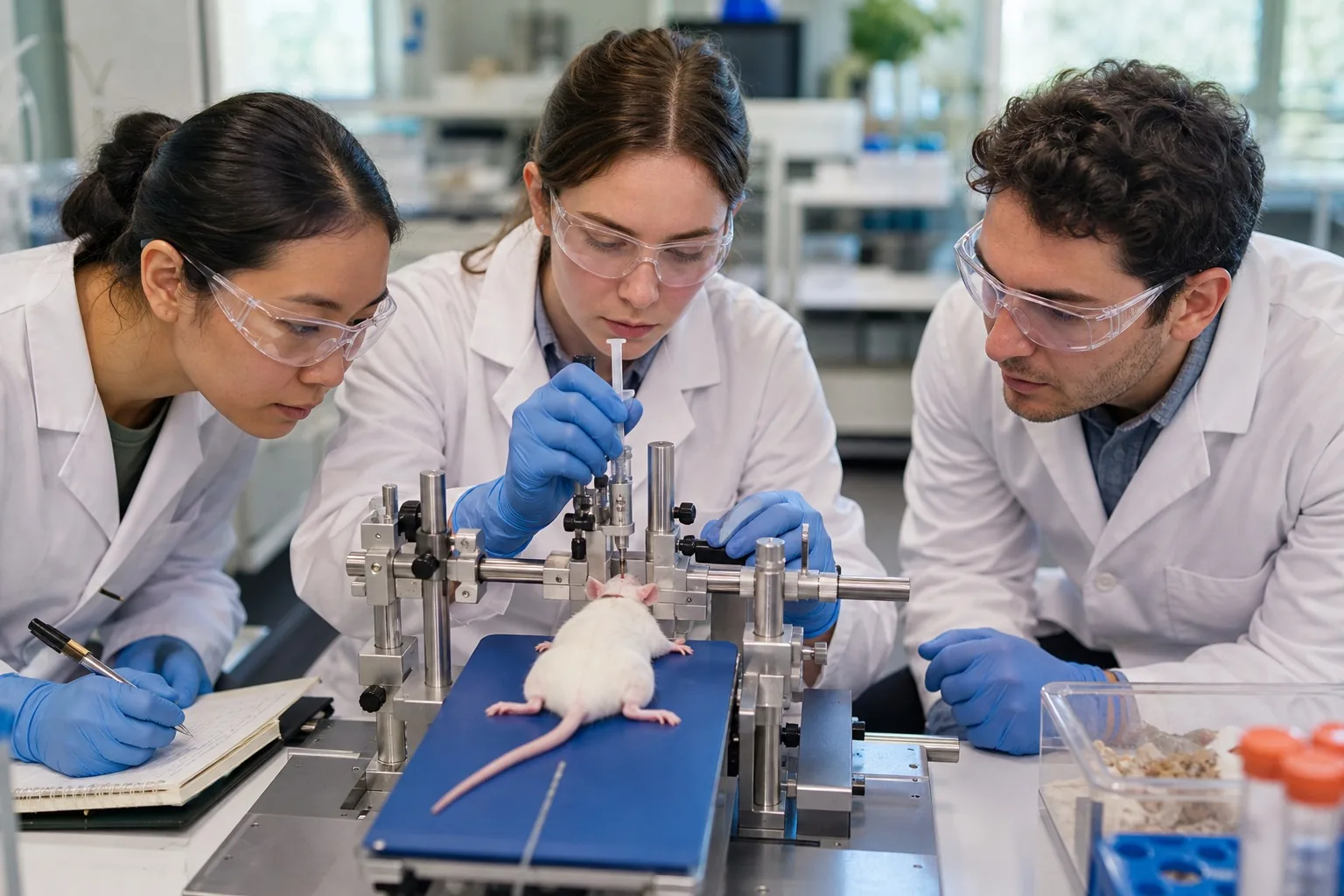
The setup was simple to describe and hard to pull off. The team gave the AI a spreadsheet of 19 gene therapies, a strain of mice bred to have epileptic seizures, and control of a motorized surgery rig the company built itself, with cameras the AI could look through. The only instruction was to reduce seizures.
The AI, Anthropic’s Claude Sonnet 5, picked the therapy, picked where in the brain to put it, and worked out the exact position from three published papers. It then moved the rig’s needle into the brain and injected 250 nanoliters, a fraction of a raindrop, over five minutes. It checked the camera 32 times, reporting at one point: “37.5 of 250 nL so far, about 15 percent. No bleeding or backflow visible at the opening.”
Humans stayed in charge of the riskiest parts. A licensed vet opened the skull and closed the wound, which the AI is not allowed to do, approved every step that could not be undone, and held an emergency stop. The mouse recovered well, Ocana-Santero said.
Three AIs, Three Different Answers
Two days later, Exin ran the same test with OpenAI’s GPT-6.1 Sol and xAI’s Grok 4.7, each on a different mouse. “All three picked different therapies, different mechanisms and different parts of the brain,” Ocana-Santero posted on Friday.
| AI model | Brain region | Approach | Camera checks |
|---|---|---|---|
| Claude Sonnet 5 | Entorhinal cortex, where these seizures start | Boost the brain’s main calming chemical, GABA | 32 |
| GPT-6.1 Sol | Hippocampus | Fix the machinery that makes the brain’s existing brakes work | 59 |
| Grok 4.7 | Somatosensory cortex | Two therapies combined to stop seizures spreading | 28 |
All three gave reasonable explanations backed by published research, the CEO said. “But while several approaches could work, they can’t all be the ‘best’ for the same problem,” he wrote. None of the models had any surgical training or examples to copy.
Also Read: AI Startup Arms Software Bots With Live Data From Billions Of Pages
When Things Went Wrong
Each AI hit a different problem mid-surgery, and each chose caution.
Claude lost its connection to the rig. When it came back, the machine said the needle’s next position was 34 millimeters away on a rig that only moves 30. Claude refused to move: “Nothing moved, the needle is still exactly at bregma zero. This looks like a Y axis calibration problem, not a bad plan value. I’m not retrying.” The team reset the rig and got the same number. “That rules out a stale zero reference. I’m not trying a third time,” it said.
Claude was right. A software bug had thrown off the controller. But because the team had banned the AI from editing the machine’s code, it would not fix the problem itself, and Ocana-Santero could not talk it into continuing. His team had to fix the code by hand while the mouse lay under anesthesia.
GPT spotted a small dark red bead at the opening, flagged possible bleeding and handed the decision to the surgeon, even though the amount was normal. Grok refused to put the needle back into the brain after a surgeon pressed stop by mistake, because the dose had already gone in.
Two Claude Models Said No
The first surgery was not Exin’s first choice of AI. Claude Opus 5.5 “refused immediately when detected bio,” Ocana-Santero wrote. Claude Opus 5 ran a full practice run on water and graph paper, then stopped before the live surgery.
Its reason surprised him. It said its own output had been cut off when it started planning the surgery, and that being cut off halfway through, “with a needle somewhere in the brain,” would be worse than never starting. “Starting something I can’t finish on an anesthetized animal is worse than not starting,” it wrote.
What It Does Not Prove Yet
Ocana-Santero is clear that this is not a real test of which AI is best. Each model operated on one mouse, with slightly different equipment problems. “Take this as a commentary on how the models reason and behave in a real laboratory, not as a proper benchmark,” he wrote.
The bigger question, whether any of the treatments actually reduce seizures, is still open. The mice are recovering, and Exin will track their behavior and brain activity over the coming weeks. The company says a technical report is coming, and nothing has been peer reviewed.
The safety setup matters as much as the result. Exin used a vet on every irreversible step, fixed limits on how far the needle could travel and how much it could inject, and a physical kill switch. It has not yet had to use the switch.
What To Watch
Exin plans to connect AI agents to more of its lab, from brain-signal recording rigs to behavior tests, so they can run an experiment, read the results and design the next one. The first real answer will come when the three mice are tested for seizures, showing whether any of the AIs picked a treatment that works.
Read Next: Cognizant Sends 25,000 Staff To Put OpenAI To Work For Big Firms