OpenAI Confirms First In-House Humanoid Robot as SoftBank Eyes $6B 1X Stake
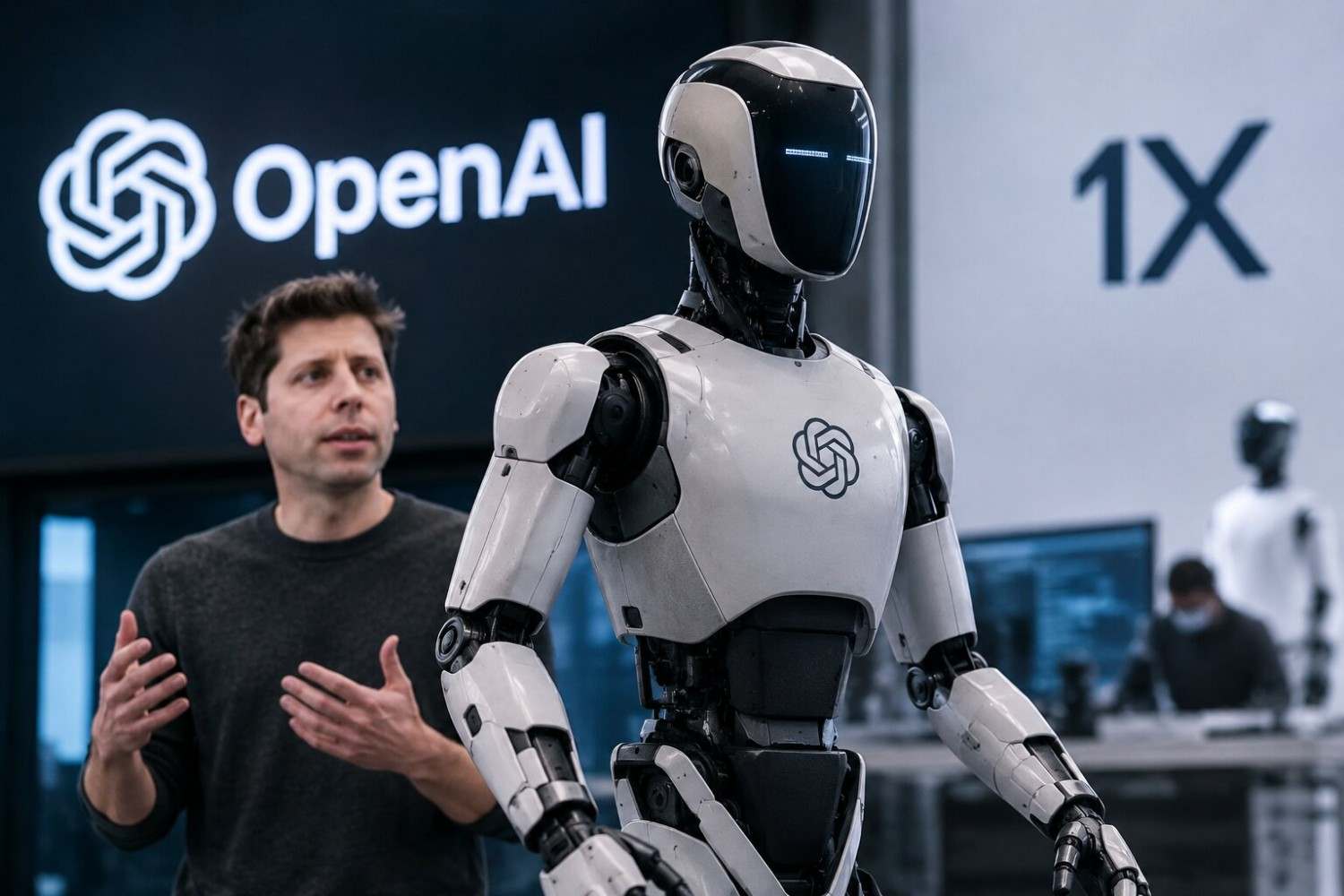
OpenAI is building its own humanoid robot in-house, CEO Sam Altman confirmed in early September, even as SoftBank negotiates a majority stake in OpenAI-backed humanoid maker 1X at a $6 billion valuation.
Altman told Forbes he expects these machines to become common household devices, a target that requires OpenAI to test its models on hardware it controls end to end, not just license software to partners.
SoftBank taking majority control of 1X at a $6 billion valuation would give the Japanese conglomerate deep exposure to humanoid robotics at the exact moment OpenAI is standing up a competing internal effort.
Dual Bets On Humanoid Hardware
OpenAI has backed 1X as an external partner while now also pursuing its own robot program, a dual-track strategy that mirrors how it has funded and competed with other AI labs. SoftBank’s reported talks to take majority control of 1X would give the Japanese conglomerate deeper exposure to the space just as OpenAI builds a competing internal effort.
Also Read: Anthropic Ends Fable Data Retention Flaw in 5.1 Release
Why OpenAI Is Taking Hardware In-House
Building hardware directly gives OpenAI control over the data loop between physical robots and its models, a gap that pure software licensing to partners like 1X cannot close. The confirmation marks a shift from OpenAI’s earlier posture, which leaned on partnerships rather than an internal hardware division. When a company moves from writing checks to building factories, believe the build.
Timelines, Terms And The Open Questions
Neither OpenAI nor SoftBank has disclosed financial terms for a completed 1X transaction. OpenAI has not detailed a timeline or budget for its own hardware program.
The overlap between OpenAI’s internal build and SoftBank’s external buy will test whether the company treats humanoid robotics as a research bet or a product line, and whether the physical constraints of manufacturing, power and cost-per-unit of inference are priced into either deal.
Read Next: Google’s Lyria 3.5 Becomes First AI Music Model on Gemini