Samsung Banks 107.4 Trillion Won Profit On AI Memory Demand
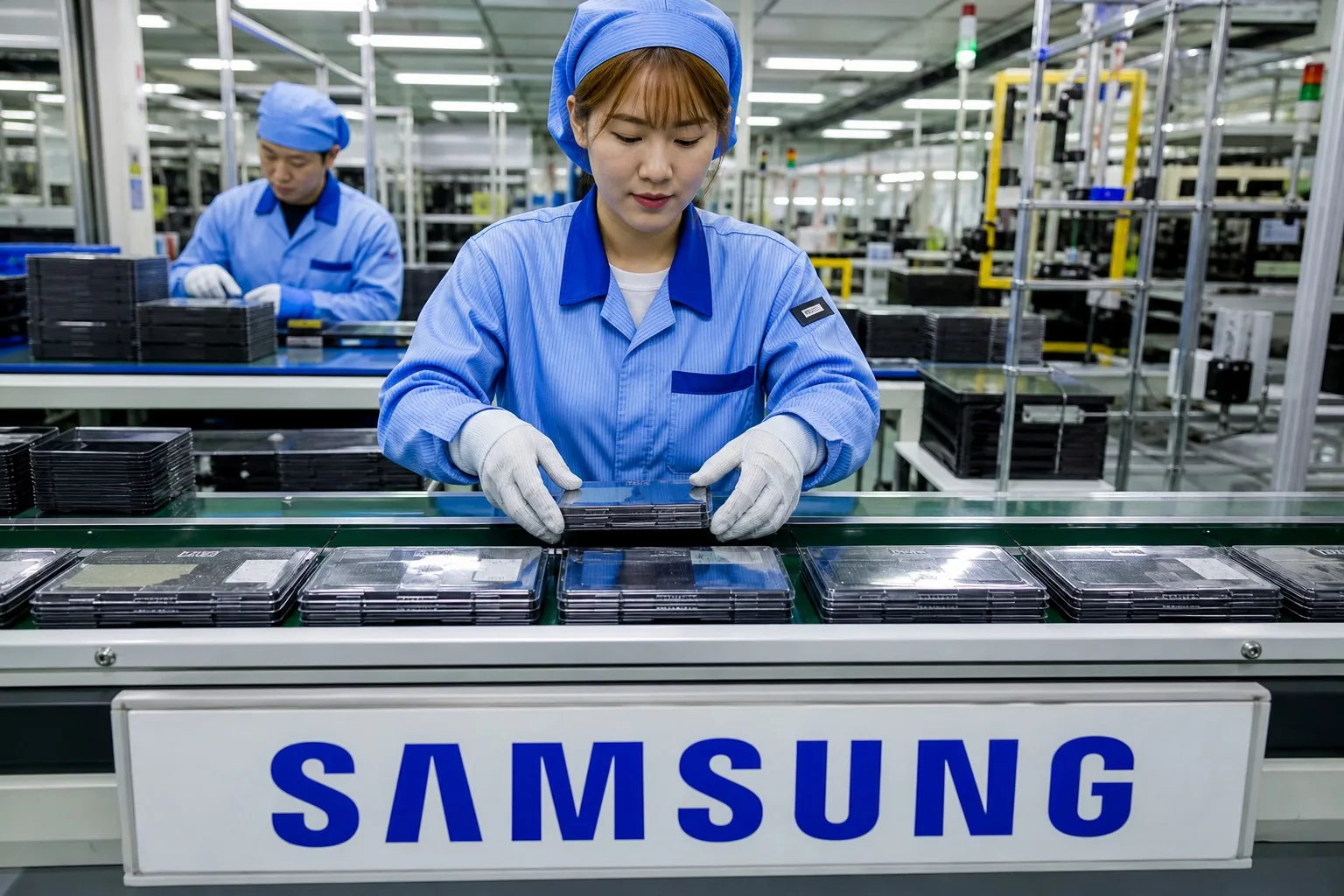
Samsung Electronics reported KRW 195.3 trillion in third-quarter revenue and KRW 107.4 trillion in operating profit as strong AI server demand for high-bandwidth memory and server DRAM kept its memory business a profit engine.
Key Takeaways
- Samsung posted KRW 195.3 trillion in third-quarter revenue and KRW 107.4 trillion in operating profit for the period ended Sept. 30
- Revenue rose 14% from the prior quarter and operating profit increased 7%
- The Device Solutions division benefited from strong demand for high-bandwidth memory and server DRAM
- Samsung said its foundry business improved its operating loss from the prior quarter but remained in the red
Samsung reported the results on Thursday. The company said revenue rose 14% from the prior quarter and operating profit increased 7%.
Samsung makes memory chips, logic semiconductors, phones and displays, but AI infrastructure has turned its memory business into one of the market’s most closely watched profit engines.
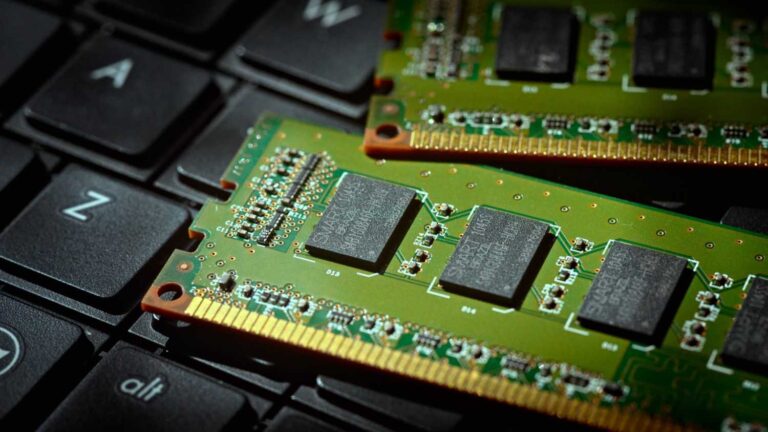
The release said the Device Solutions division benefited from strong demand for high-bandwidth memory and server DRAM. High-bandwidth memory, or HBM, is stacked memory placed close to AI accelerators so models can move huge amounts of data with less delay.
That matters because modern AI systems are often bottlenecked by memory bandwidth, not just raw compute.
Samsung also said its foundry business improved its operating loss from the prior quarter, though it remained in the red. That detail matters because foundry has been the weak spot in Samsung’s chip portfolio while rivals gained ground in advanced manufacturing.
Better memory margins can mask foundry weakness for only so long.
The company’s earnings land as investors try to measure which parts of the AI buildout are durable. GPU demand gets the headlines, but memory vendors capture more of the spend when model training clusters scale.
Every rack of accelerators also needs fast DRAM and storage, which makes memory suppliers a cleaner way to track whether AI capital spending is still expanding.
AI Memory Became The Quarter’s Profit Engine
Samsung’s release points to a simple mechanism. When cloud providers buy more AI servers, they also buy more HBM, server DRAM and enterprise storage.
That mix carries higher margins than commodity consumer memory because performance requirements are tighter and supply is harder to expand quickly.
The company said demand remained strong for premium memory products aimed at AI applications. That phrase matters more than a broad revenue number.
Consumer electronics can swing with retail cycles, but AI server memory depends on long planning cycles by hyperscalers and enterprise data center buyers.
Also Read: Microsoft’s OpenAI Bet Erases $4B Hit And Lifts Profit
Samsung’s numbers also arrive after several quarters in which memory pricing recovered from a deep slump. Earlier in the cycle, chipmakers cut production to stabilize prices after oversupply hammered margins.
The rebound has since been led by AI-oriented parts, especially products that pair directly with accelerators inside training and inference systems.
From Commodity DRAM To AI Infrastructure
Historically, memory has been one of the most cyclical corners of semiconductors. Producers add capacity, prices fall, inventories build and profits collapse.
The AI boom has not removed that cycle, but it has changed which products sit at the profitable end of it.
HBM is a good example. Unlike standard PC memory, HBM uses vertically stacked dies and wide data pathways to feed AI chips faster.
That makes manufacturing harder and narrows the field of suppliers that can meet qualification standards at scale. Samsung, SK hynix and Micron benefit when AI server buildouts outrun easy supply growth.
What Investors Watch In The Next Quarter
The next question is whether Samsung can keep converting AI memory strength into broader semiconductor gains.
Investors will watch HBM shipments, server DRAM pricing and whether the foundry division narrows losses further. They will also watch capital spending, because memory booms can fade if producers expand too aggressively.
For AI buyers, the key issue is supply discipline.
If premium memory stays tight, cloud costs remain sticky even if accelerator prices ease. That keeps memory vendors central to the economics of training and serving large models.
Why HBM Changes AI Server Economics
HBM changes AI server design because it reduces the distance data must travel between memory and the processor.
In an AI box using Nvidia or AMD accelerators, moving model weights and activations fast is as important as having more compute cores. Samsung’s HBM parts are packaged close to the accelerator and linked through very wide connections, which raises throughput without relying on higher clock speeds alone.
For cloud operators like Amazon, Google and Microsoft, that matters in cost terms.
If the memory system starves the accelerator, expensive GPUs sit underused. Better HBM lets those chips stay busy.
That is why Samsung’s AI memory business can grow even when buyers talk publicly about reducing inference costs. The cheap model still needs fast memory to run well.
Read Next: Coinbase Opens Its Doors To Ripple’s $2.4B RLUSD Stablecoin