Anthropic’s Claude Joins 6 Drug Firms Hunting A Cure For Rare Muscle Disease
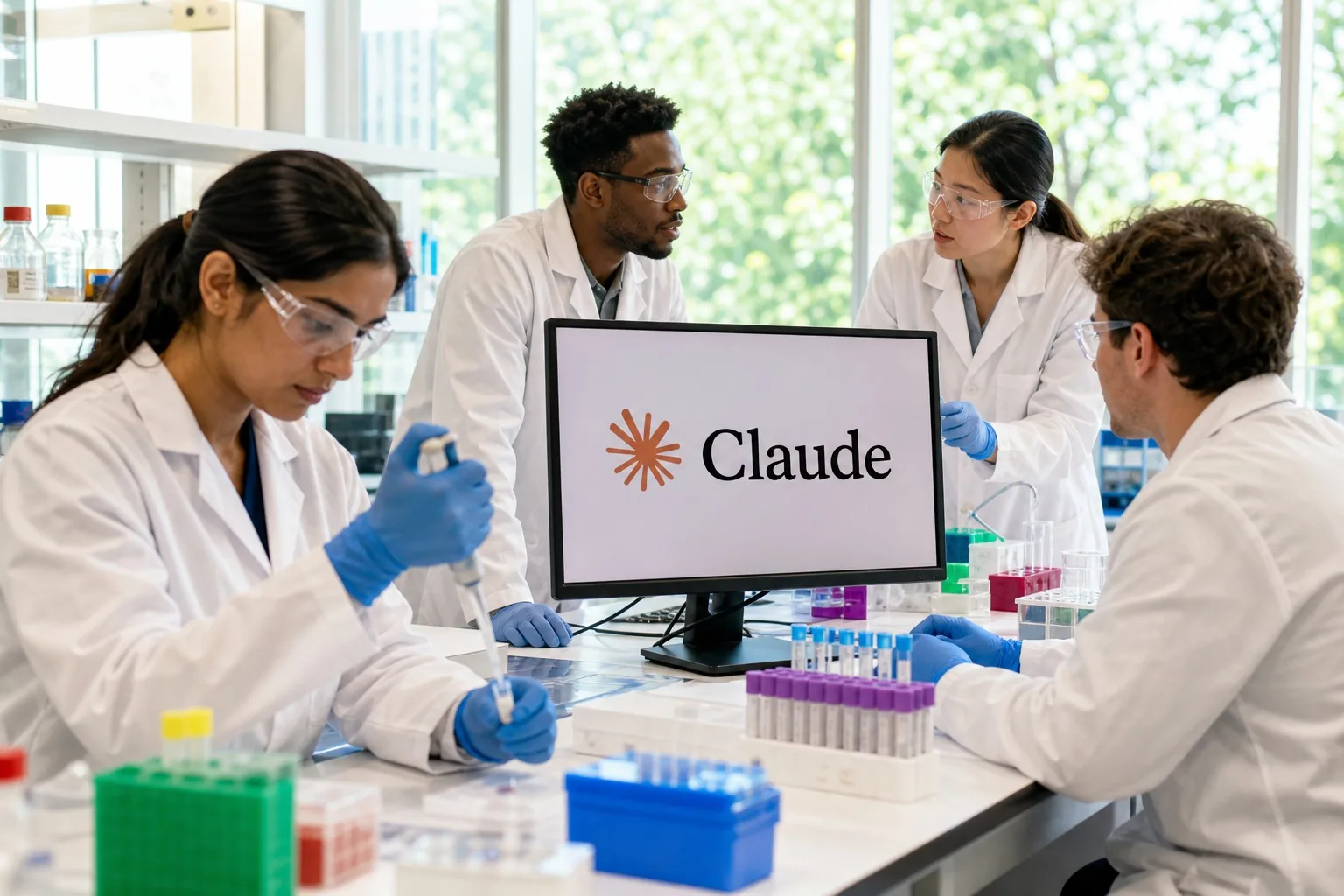
Anthropic is teaming up with six drug companies, including Bristol Myers Squibb, to use its Claude AI in the hunt for treatments for a rare muscle-wasting disease that strikes children.
Key Takeaways
- Anthropic said it is working with six medicine developers and launched Anthropic Drug Discovery programs targeting rare childhood muscular dystrophy
- Partners named include BigHat Biosciences, Bristol Myers Squibb, Divergence Labs, Enveda, Generate Biomedicines and The Column Group
- Anthropic described Claude handling much of the scientific and operational work in its internal programs
- Anthropic did not disclose commercial terms, equity stakes, revenue or whether Claude-assisted work entered formal clinical testing
The company said its life sciences team has been in research partnerships with BigHat Biosciences, Bristol Myers Squibb, Divergence Labs, Enveda, Generate Biomedicines and The Column Group, and a separate research post described Claude handling much of the scientific and operational work in its internal programs.
Anthropic Drug Discovery Moves Past Pilots
Until now Anthropic’s work emphasized model capability claims, safety research and benchmarks. Tuesday’s update ties Claude to named drug developers and specific disease programs instead of lab demos.
The post outlines where Anthropic thinks models can help, including Anthropic Drug Discovery target selection, molecule design, manufacturing optimization, clinical trial paperwork, trial design and administration.
Those are distinct bottlenecks with different failure modes, so Anthropic is testing Claude across the full chain rather than a single chemistry task.
This approach matters because many model vendors pitch narrow gains, faster literature review or early molecule ranking, while Anthropic argues that useful automation can come from stringing together many medium-value tasks, particularly documentation and coordination that slow real programs and complicate Drug Discovery timelines.
Also Read: Anthropic’s Hidden Voice Feature Spotted In Claude, No Launch Date Set
From Safety Lab To Wet Lab Work
The push follows a year in which labs have been hunting enterprise markets that can absorb large inference bills.
Investor scrutiny earlier Tuesday examined Anthropic’s economics after public filings and outside analysis highlighted how much revenue must be squeezed from each megawatt of compute.
Drug development offers a market where slow, expensive work is expected. Trial filings taking weeks and thousands of expert hours can justify higher AI spend than consumer chatbot tasks, but raise the bar for reliability because medicine work is audited, regulated and cumulative.
Anthropic said it began internal programs partly to reveal where its models fail inside real workflows.
Internal programs create direct exposure to missed steps, bad assumptions and weak citations that are harder to hide in partner case studies.
Claude Faces A Longer Test In Medicine
Claude will now be judged less by demos and more by whether it remains useful across long timelines and handoffs between biology, chemistry, operations, manufacturing and regulators. Small errors at one stage can compound months later.
Anthropic did not disclose commercial terms, equity stakes or revenue from the six partnerships, nor whether any Claude-assisted work has entered formal clinical testing.
Near-term proof points are likely to be concrete outputs, molecules advanced into preclinical work, trial documents drafted with Claude, or partner claims about cycle-time reductions in specific programs. Without those, the announcement marks a strategic shift but not yet a validated one.
How Claude Fits Real Drug Pipelines
Anthropic’s work matters most for biotech teams that lose time between scientific insight and formal execution.
Claude is not running lab equipment. It’s being used for planning, drafting, comparison and decision support that sit between scientists, operators and regulators.
Companies like Generate Biomedicines or Enveda can use Claude to compare prior findings, draft structured experiment plans, summarize contradictory evidence and turn results into human-reviewable documents.
Bristol Myers Squibb faces similar coordination pain at a different scale.
What changes from earlier AI drug claims is scope, with many vendors pitching better molecule generators, while Anthropic frames Claude as a general worker across whole programs, including filings and operational tasks, a riskier but potentially larger labor-saving proposition for Drug Discovery efforts.
Anthropic’s emphasis on coordination and documentation signals a bet that cumulative gains across tasks will move the needle in Drug Discovery, not just isolated chemistry wins. The company’s internal programs aim to find those compounding improvements and surface where Claude still falls short.
Read Next: SEC Puts 3 Firms On Public List For Tokenized Stock Trading