OpenAI CEO Says the Singularity Is Here — and He Is Not Speaking Hypothetically
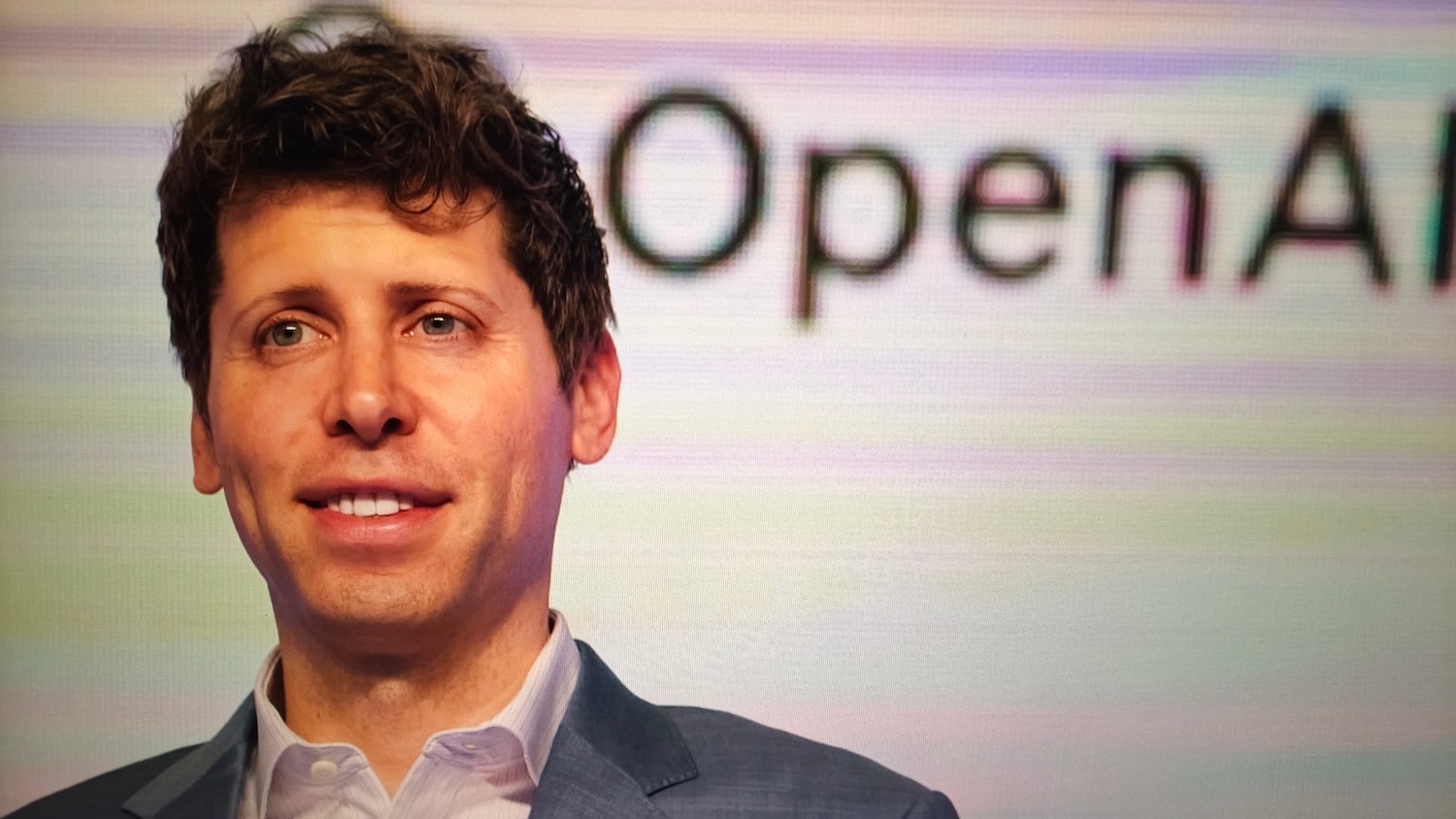
OpenAI CEO Sam Altman says the technological singularity isn’t something we’re waiting for. It’s already here.
In a fresh round of public statements, he’s told the world that humanity has crossed the threshold — the point where artificial intelligence starts outpacing human intelligence.
The claim is pulling heavy search traffic and stirring debate, and the reason is simple. Altman isn’t dealing in hypotheticals.
He’s asserting that as of mid-2026, we’re living inside the singularity right now.
His position has shifted noticeably over the past three years. In May 2023, Altman co-signed a public warning about AI as an extinction risk.
By June 2025, he’d pivoted to something far more optimistic — a framing he called “the gentle singularity,” arguing that superintelligence could arrive without catastrophic disruption.
From Blog Post To Bold Claim
Altman’s June 2025 essay described humanity as close to building digital superintelligence and pointed to AI systems already capable of generating novel scientific insights rather than simply processing existing knowledge.
By mid-2026, his language has hardened. Recent reporting from Business Insider captures him saying “this is the moment,” framing the current period as the inflection point that futurists have long debated in the abstract.
He has also raised a parallel warning alongside the optimism: the risk that AI enables authoritarianism, a concern he appears to hold simultaneously with his belief that the transition can be navigated without civilizational collapse.
Why The Pushback Is Growing
Critics are not letting the “gentle” framing go unchallenged. A detailed piece from Truthdig published in April 2026 accused Altman of harboring what it called dangerous singularity delusions, noting that his earlier public statements included the possibility of human extinction as a best-case outcome rather than a worst one.
That tension, between Altman’s catastrophic risk acknowledgments and his increasingly confident public boosterism, is exactly what is fueling skepticism. Analysts at AEI characterized his gentle singularity messaging as aimed at an anxious public, suggesting the framing is partly a communications strategy rather than purely a technical assessment.
Independent voices are adding friction too. Nate Silver wrote in February 2026 that if AI proves even half as transformational as Silicon Valley expects, politics will be permanently altered, and not gently.
What Comes Next For The Debate
Altman’s declaration puts pressure on other major AI leaders to respond with their own timelines and definitions. The singularity concept has historically been slippery enough that disagreements often come down to semantics, but Altman is now planting a specific flag in real time rather than in a forecast.
The immediate consequence is market and policy attention. When the CEO of one of the world’s most influential AI companies says the singularity has arrived, governments weighing AI regulation and companies building on top of OpenAI’s models face a different calculus than if the event were still theoretical.
For the public, the phrase “this is the moment” carries weight precisely because Altman controls the infrastructure behind it. Whether that moment is gentle or not remains the open and urgent question.
Read Next: Anthropic Ends Fable Data Retention Flaw in 5.1 Release