AT&T Hands Workers Faster Legal Answers With OpenAI Tool
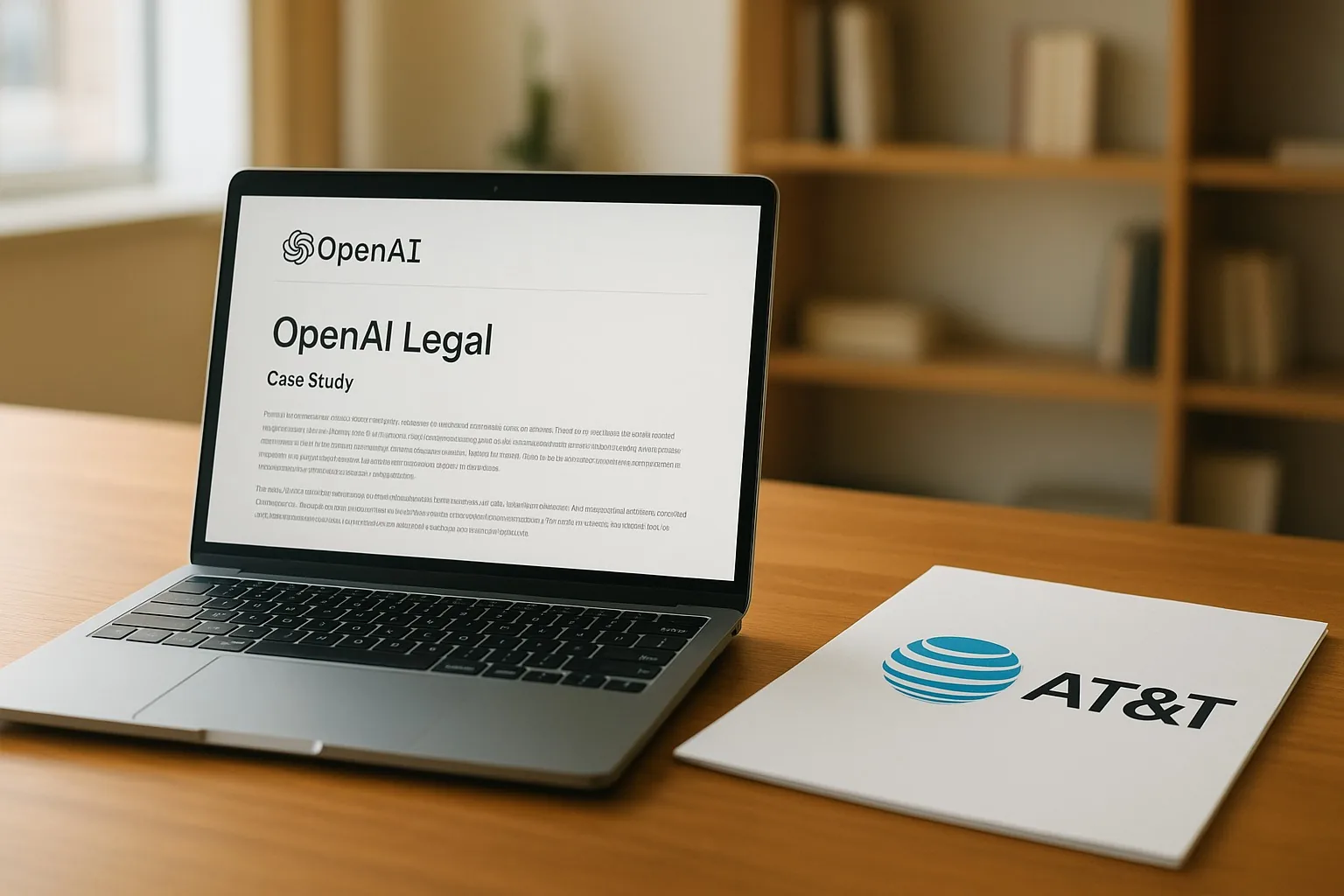
AT&T said its LegalEdge team is using OpenAI tools to speed legal intake and surface approved guidance so employees can find and apply internal legal knowledge faster at scale.
Key Takeaways
- AT&T said its LegalEdge team uses OpenAI tools to speed legal intake and make internal legal knowledge easier to find and apply
- OpenAI published a case study about AT&T’s use of its technology in LegalEdge
- LegalEdge focuses on intake triage and surfacing approved guidance rather than acting as a free-form assistant
- AT&T did not publish contract value or model details, and OpenAI did not say how much of the workflow is automated
AT&T said on Wednesday its LegalEdge team is using OpenAI Tool to speed legal intake and make internal legal knowledge easier for employees to find and apply at scale, and OpenAI said AT&T is using its technology in LegalEdge to scale legal judgment and knowledge access.
OpenAI published the case study on Wednesday.
ATandT OpenAI Legal Targets Triage First
The AT&T OpenAI legal use case is less about replacing lawyers than about sorting demand. Large carriers process huge volumes of internal legal requests across contracts, privacy, marketing and compliance, and legal departments spend significant time routing requests, locating old guidance and determining whether a question needs a specialist.
That intake layer is repetitive and often slow.
A system like LegalEdge can reduce that drag by retrieving internal policies, playbooks and prior decisions. Retrieval matters more than generation in this setting because the first problem is usually not writing new text but finding the right approved answer and putting it in front of the right person.
From Pilot Demos To Embedded Enterprise Use
AT&T’s deployment shows the broader shift from pilot demos to embedding AI into specific legal workflows rather than standalone chatbots.
LegalEdge is focused on intake triage and surfacing approved guidance with an OpenAI Tool where employees need it, rather than acting as a free-form assistant.
This matters for procurement and risk controls, because legal teams need permission controls, source traceability and ways to limit hallucinations, confident but false outputs, to decide whether a system can touch internal policy work.
Also Read: OpenAI, TurbineOne Team Up On AI Tools Built To Work With No Network
What LegalEdge Must Get Right
At AT&T, in-house legal support includes contract questions, marketing reviews, privacy checks and policy interpretation, the backlog AI can help sort. LegalEdge is framed as a triage and retrieval layer that pulls approved clauses and prior decisions to surface to employees, reducing time spent routing and searching.
The hard part is trust.
If an AI assistant surfaces the wrong clause or misses an exception, employees may act on bad guidance, so successful legal AI systems usually focus on bounded tasks, approved sources and escalation rules rather than broad free-form autonomy.
Also Read: OpenAI Lands In Google Cloud So Big Firms Can Buy It On One Bill
Where The OpenAI Tool Deployment Could Spread
AT&T did not publish contract value or model details, and OpenAI did not say how much of the workflow is automated. Even so, the deployment illustrates where enterprise spending is going.
Buyers want tools attached to specific work queues with measurable cycle-time gains.
For OpenAI, legal operations is also a sticky category, once a company organizes internal policies, matter types and review paths around one assistant, switching becomes painful, making legal a stronger long-term software foothold than many novelty chatbot features.
Why Retrieval Beats Drafting In Legal Work
The key technical layer in AT&T OpenAI legal work is likely retrieval, not just text generation. Retrieval systems search an approved document set, rank relevant passages and feed them into the model before it answers, giving the model current company rules instead of relying only on training data.
For legal operations leaders, that changes risk and usefulness.
A retrieval-based tool tied to AT&T materials can cite the playbook it used and route edge cases to counsel, a narrower product but the difference between a demo and a tool people will use daily.
Read Next: IBM Backs New AI Cost Cutter As Monthly Bills Keep Climbing