Developers Are Getting $1B Of AI Training For Free As Meta Floods Hugging Face
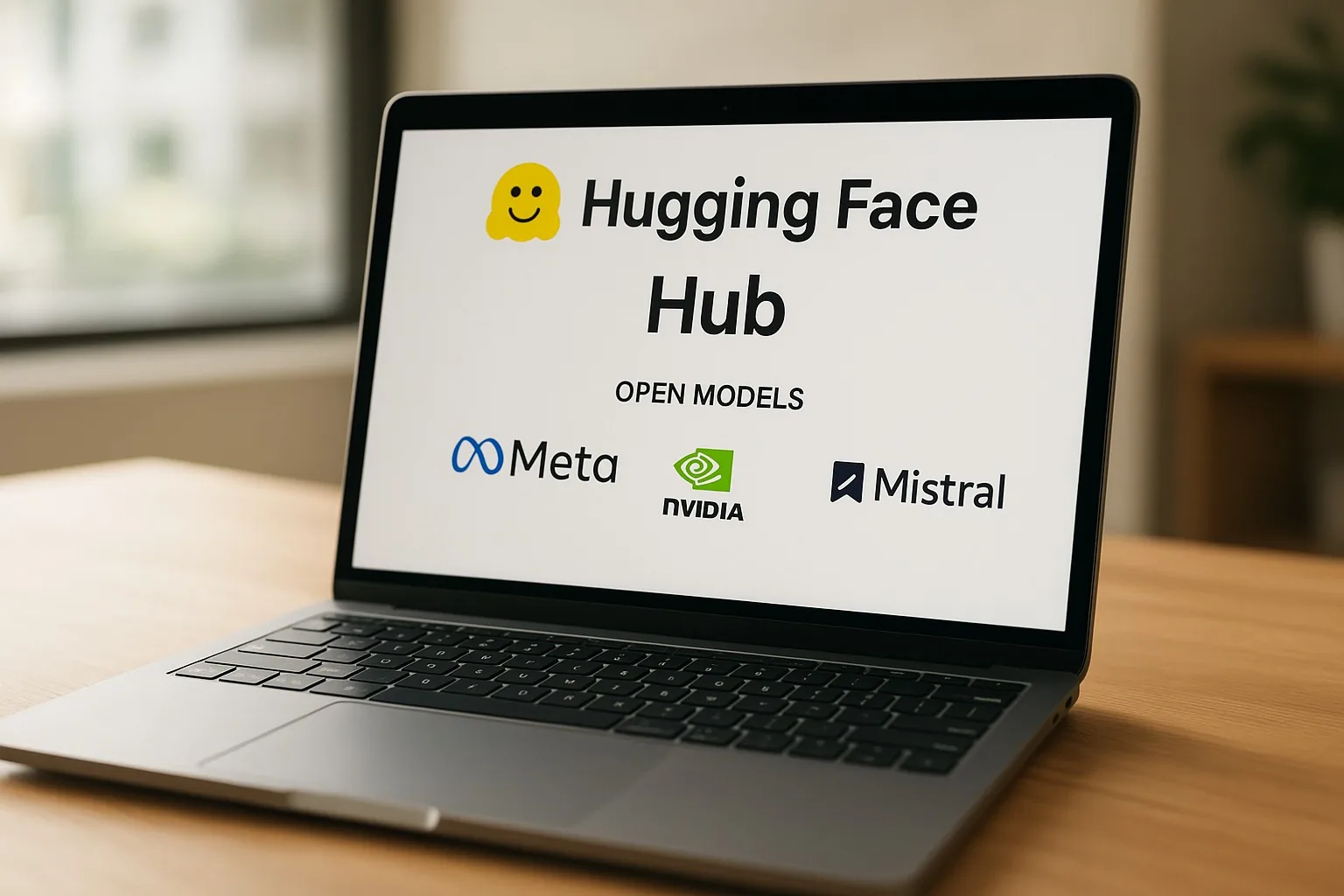
Hugging Face compute has reached close to $1 billion in shared training value after Meta, Nvidia, Alibaba, DeepSeek, Moonshot, Mistral and about 30 other labs uploaded open models over the past year.
Key Takeaways
- Thom Wolf estimated on X that Hugging Face compute reached close to $1 billion based on training costs embedded in Hub models
- Meta, Mistral, DeepSeek, Moonshot, Nvidia and Alibaba uploaded open models to the Hugging Face Hub over the past year
- Published model weights remain free to download, letting outsiders skip most of the original training bill
- Open releases create reusable assets that let startups fine-tune released base models instead of funding full pretraining runs
Hugging Face co-founder Thom Wolf put the estimate on X on Sunday and described it as rough math based on training costs embedded in models shared on the Hub.
He also said those releases remain free to download, turning a private training bill into a public input for developers.
The claim is informal but tangible. Training a frontier model consumes vast GPU time, storage bandwidth and engineering labor, and publishing model weights lets outsiders skip most of that original bill.
That shift changes who can build. A startup can fine-tune a released base model instead of funding a full pretraining run, a university lab can test alignment or efficiency methods on a strong system without waiting for paid API access, and a government team can audit behavior on local hardware.
Hugging Face compute is a useful frame because it shifts attention from downloads to sunk capital. Meta, Mistral and DeepSeek may publish for varied reasons, but every open release creates a reusable asset for everyone else.
When labs upload weights to the Hugging Face Hub, they’re not just publishing results. They’re seeding a common starting point for thousands of later products and experiments.
From Code Sharing To Weight Sharing
Open-source AI didn’t always deliver trained artifacts.
Earlier releases often shipped papers, code and partial checkpoints that helped inspection but not reuse. Over the past two years, labs including Meta and Mistral normalized releasing large models with usable licenses and downloadable weights, reversing that pattern and making completed trained systems broadly available.
The result is cumulative.
Each major open release leaves an asset that later teams can fine-tune, compress or adapt. That means the value of Hugging Face compute compounds over time even when no single release dominates.
Why Open Weights Cut Future Bills
If more labs publish near-frontier checkpoints, Hugging Face compute becomes a larger subsidy for the next wave of builders.
If labs retreat toward API-only access, that shared capital stops expanding and the market tilts back toward rented intelligence.
A model from Meta or Mistral can cost millions of dollars in GPU time before it reaches Hugging Face. Once those weights are public, a startup does not need to repeat the full pretraining job.
It can run a much smaller fine-tuning pass on its own data, or deploy the released model directly.
That is why Wolf’s estimate matters more than a download count, it points to compute someone else already paid for.
For Nvidia, the effect runs both ways. Open releases drive demand for large GPU clusters because labs still need huge training runs.
They also spread the benefits of that spending far beyond the original buyer. For DeepSeek and Moonshot, the reward is distribution, a model on the Hub can become a default building block in other companies’ products even if the original lab never sells API access.
The economics here are physical as much as financial. Capacity, supply and power determine whether a pretraining run is feasible.
The per-inference cost depends on how many downstream deployments share that sunk cost.
Where a lab’s public messaging favors exclusivity but its capital spending builds large clusters, the spending is the stronger signal of intent, hardware commitments expand usable capacity and thus the pool of models that can be released or repurposed. Open weights therefore act like shared infrastructure, they lower the marginal cost for countless experiments while amplifying the leverage of whoever can afford the initial, capital-intensive run.
Read Next: AMEC Eyes Korean Power Chip Wins As AI Server Racks Face Supply Risk In Trials