Satya Nadella Bets Big: Maia Chip To Run Microsoft’s AI At Gigawatt Scale By 2027
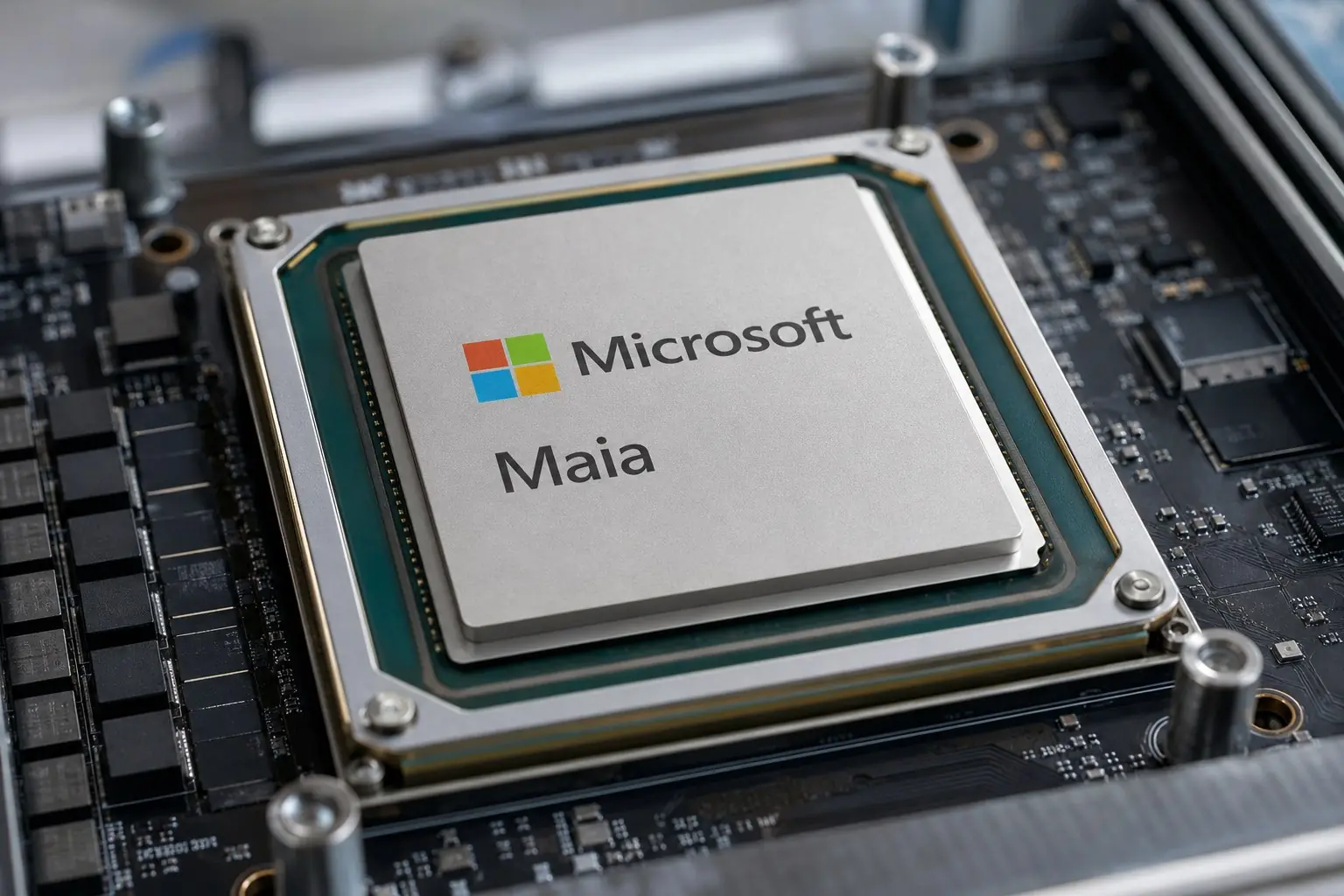
Microsoft will deploy its Maia Chip at multi-gigawatt scale starting next year, CEO Satya Nadella said Monday, making the company’s in-house silicon its primary inference chip at that scale.
Key Takeaways
- Microsoft plans to deploy Maia chips at multi-gigawatt scale starting in 2027, Satya Nadella said
- Maia will become Microsoft’s primary inference silicon across its data center fleet at that scale
- Microsoft first showed Maia 100 in November 2023 for large language model training and inference in Azure data centers
- Nadella provided no unit cost, capital expenditure figure or customer-facing product tied to the rollout
Satya Nadella termed it “our biggest bet yet on our own silicon.”
He said the Maia family would become the primary inference silicon across Microsoft’s data center fleet, the stage of AI processing where a trained model generates answers from new data rather than learning from scratch.
Microsoft has disclosed Maia as a training and inference chip project since 2023 but had not previously committed to a specific capacity target this large or set a start date for the scale-up.
The roadmap matters because capacity, power availability and cost per unit of inference, not simply chip supply, will determine whether the deployment can reach multi-gigawatt scale.
Why Microsoft Wants Its Own Maia Chip
Microsoft (MSFT), the Redmond-based software and cloud computing company that runs the Azure platform, has spent years buying Nvidia graphics processing units to run AI workloads for customers including OpenAI.
A gigawatt is enough electricity to power roughly 750,000 U.S. homes, and data centers increasingly measure AI buildouts in gigawatts rather than chip counts because power, not silicon supply alone, has become the binding constraint.
Running multi-gigawatt fleets of custom chips instead of merchant GPUs changes Microsoft’s cost structure directly, since it no longer pays a third-party margin on every inference chip at that scale.
The key question is whether the in-house processor can deliver enough inference capacity per watt to offset the cost and complexity of operating a separate silicon supply chain.
Also Read: Karpathy Warns AI Capability Gap Turned Into A Sharp Funnel Since April
Nadella’s post gave no unit cost, no capital expenditure figure and no customer-facing product tied to the rollout. The disclosure came without an accompanying blog post or filing, which is typical for Microsoft’s social-first product teasers ahead of a fuller unveiling at an investor or developer event.
From Azure Maia 100 To A Gigawatt Roadmap
Microsoft first showed Maia 100 publicly in November 2023 as a chip built for large language model training and inference inside Azure data centers.
The chip was designed with semiconductor foundry partner Taiwan Semiconductor Manufacturing Company and positioned as a way to cut dependence on Nvidia GPUs, which have faced multiyear order backlogs during the AI buildout.
Microsoft has not disclosed unit shipment numbers for Maia to date, and Monday’s post is the first time the company has attached a multi-gigawatt figure to the chip family’s future deployment. At that scale, the economics will depend on power delivery, packaging capacity and the cost of each unit of inference.
The scale-up fits a pattern among the largest AI compute buyers. Google (GOOGL), Amazon and Meta have each built custom AI chips, Tensor Processing Units, Trainium and MTIA respectively, to reduce GPU dependence and capture more margin on inference at scale.
What Happens Next For Microsoft’s Maia Bet
Nadella gave “next calendar year” as the start date for scaling, meaning 2027, without specifying which Maia generation will ship at gigawatt volume.
Investors will look for capital spending guidance tied to the plan on Microsoft’s next earnings call, and for any disclosure of which cloud customers will run workloads on Maia rather than Nvidia hardware.
The scale of the commitment, if it holds, would make Microsoft one of the largest deployers of non-Nvidia AI silicon globally.
Until Microsoft provides capital spending and unit-cost details, the spending, not the social post, will be the clearer measure of how quickly the Maia Chip moves from strategy to fleet-scale infrastructure.
Read Next: First Market-Neutral Fund Lands On Solana Backed By $1B USDGO Stablecoin