MetaMask’s Agent Wallet Lets AI Bots Trade On Aave: Kulechov Confirms Rollout
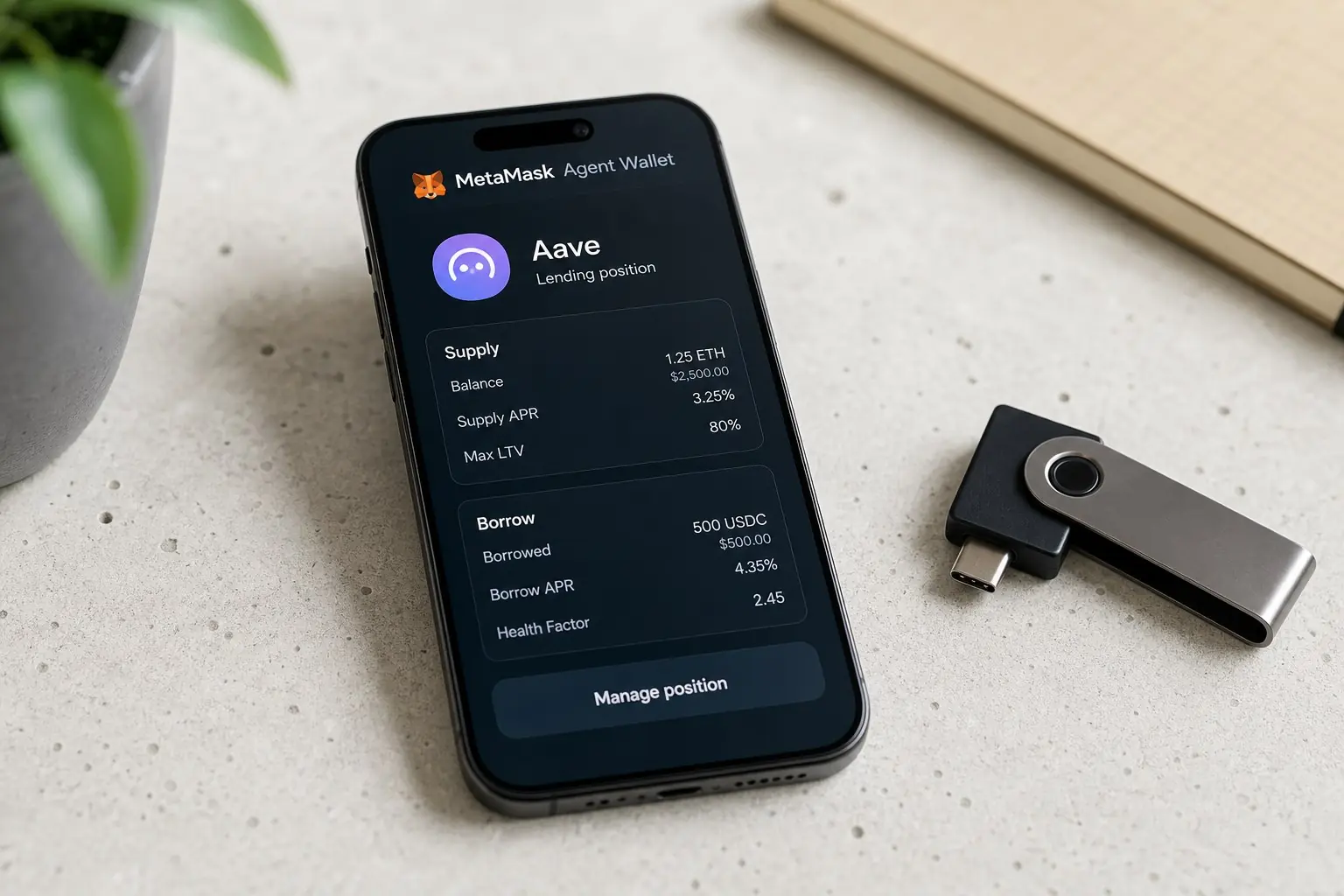
MetaMask’s Agent Wallet now supports Aave MCP, giving AI agents direct access to Aave’s lending markets, Aave founder Stani Kulechov announced Friday.
Key Takeaways
- MetaMask’s Agent Wallet now supports Aave MCP, according to Aave founder Stani Kulechov
- AI agents can query lending rates, check collateral positions, and execute supply or borrow transactions through Aave
- MetaMask’s Agent Wallet gives AI agents permissioned control to execute predefined actions such as rebalancing lending positions
- Kulechov’s post did not specify transaction limits, permission scopes, or the integration’s availability for users
MCP, or Model Context Protocol, lets AI models call external tools and data sources in a structured way rather than through custom code for every integration.
In Aave, an agent inside MetaMask’s wallet can query lending rates, check collateral positions, and execute supply or borrow transactions without a human clicking through the interface.
Aave is a decentralized lending protocol where users deposit cryptocurrency to earn interest or borrow against it as collateral, governed by smart contracts rather than a bank.
It is one of the largest protocols in decentralized finance, the umbrella term for financial services built on blockchains without traditional intermediaries.
Data from DefiLlama shows Aave remains among the top lending platforms by value locked, the total of all deposits held in its contracts.
Also Read: Google Debuts Universal Gemini Agent: ‘A Single Agent For Work’
From Manual DeFi To Agent-Run Positions
MetaMask’s Agent Wallet lets AI agents hold permissioned control over a user’s wallet to execute predefined actions, such as rebalancing a lending position when rates shift.
Pairing it with Aave MCP means an agent could, in principle, monitor borrowing rates across Aave’s markets and adjust a position automatically.
MetaMask, developed by Consensys, is the most widely used self-custody wallet in Ethereum (Ethereum (ETH))’s ecosystem, making it a high-leverage integration point for any protocol chasing agentic adoption. This fits a broader pattern of DeFi protocols building agent-facing infrastructure rather than only human-facing apps.
The Open Questions Around Agent-Controlled Lending
Kulechov’s post did not specify transaction limits, permission scopes, or whether the integration is live for all users or in limited rollout.
Agent-controlled DeFi positions raise the same custody and error-handling questions that have followed automated trading bots for years, now applied to lending markets with real collateral at stake.
Watch for Aave’s own documentation or a MetaMask product post detailing guardrails on what agents can execute without human confirmation.
Read Next: Vance Freezes Green Cards At Microsoft, Adobe, No AI Exemption In Sight