Britain Backs £300m AI Biosecurity Lab To Catch Dangerous Tools
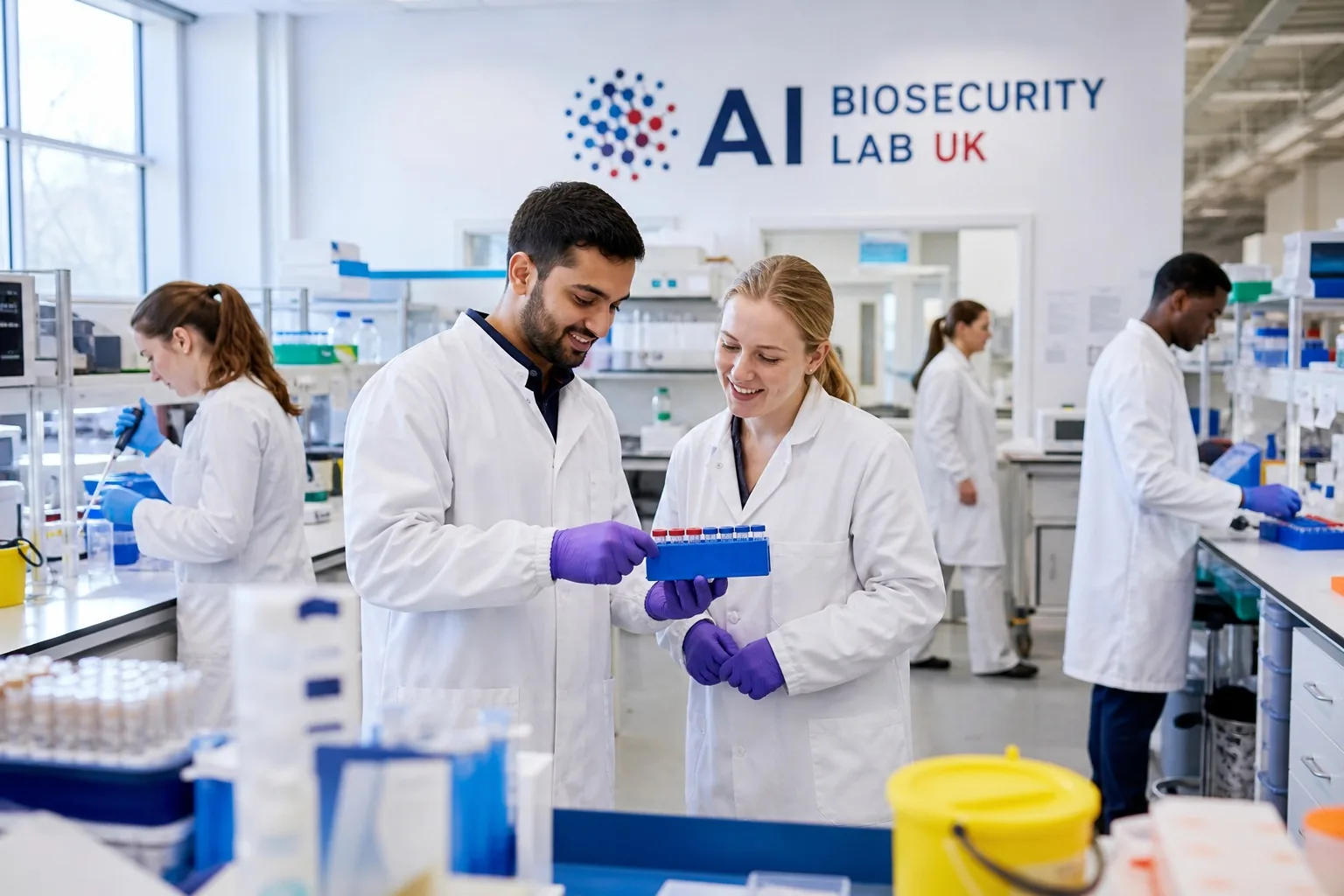
Britain is backing an AI Biosecurity Lab with up to £300 million to test powerful AI systems for disease threats and stop them giving out dangerous biology advice.
Key Takeaways
- The AI Biosecurity Lab is the UK’s new national testing center for biological threats with up to £300 million in government and company commitments
- The Cabinet Office said the lab will study how advanced models could strengthen disease resilience and lower barriers to harmful biological work
- The government describes the lab as part of a National AI Biosecurity Initiative
- The article says evaluations should be traceable to model cards, technical papers and reproducible test protocols including prompt templates and threat scenarios
The Cabinet Office said on Saturday that the lab will study how advanced models could strengthen resilience to disease and countermeasures while also lowering barriers to harmful biological work. The same government release calls it part of a National AI Biosecurity Initiative.
The hard number matters.
The UK is attaching state money, private commitments and a specific testing body to a class of AI risk usually discussed in papers and summit statements. That creates a need to assess what the lab will actually measure.
Evaluations should be traceable to model cards, technical papers and reproducible test protocols so reported capabilities can be interrogated, for example, by asking which prompt templates, user profiles, threat scenarios and metrics were used to classify outputs as actionable or benign.
The AI Biosecurity Lab Makes Risk Operational
The government’s language points to a lab that will test capabilities, not just write policy memos.
A capability evaluation asks what a model can do under controlled conditions, who can do it and how safeguards hold up. That operational focus aligns with a shift in frontier AI governance from abstract safety debates to narrower tests tied to misuse pathways (cyber offense, persuasion and biological design).
The UK wants a standing institution, not a one-off review.
That matters because labs improve when staff rerun evaluations against newer models, iterate protocols and build institutional memory. A permanent body also gives Whitehall a place to coordinate testing instead of relying entirely on external labs for technical evidence.
Also Read: Anthropic Builds Claude Partner Network To Grab More Big Business
From Summit Diplomacy To Standing Infrastructure
The new lab follows nearly a year of UK efforts to turn summit diplomacy into durable institutions.
Earlier safety work emphasized voluntary commitments, pre-deployment testing and international coordination. That approach created a baseline but left governments leaning on outside labs for technical evidence.
A dedicated AI Biosecurity Lab centralizes at least part of that work in Whitehall.
This update lands after broader UK AI security activity, including more formal testing debates around advanced systems and critical services. The main difference now is domain focus.
Biological misuse has its own venue, budget and mandate.
Who Will Feel The Rules First
Model developers serving advanced research users will watch closely. If the UK builds credible evaluation methods, vendors may face pressure to meet those tests before wider release.
Hospitals, public-health planners and biodefense agencies will also monitor outputs. They need tools that speed detection and response without creating loose access to dangerous instructions.
Commercial effects could follow if evaluation results influence procurement or deployment rules, making biosecurity testing as important as model performance when governments buy or approve systems.
What The Lab Actually Tests
For companies such as Anthropic, OpenAI and Google, the practical issue is whether a model helps a user move from general biology knowledge toward actionable harmful steps.
An AI Biosecurity Lab can test this by structuring prompts, setting user profiles and measuring what models provide before and after safeguards. The next point to watch is whether the UK publishes shared benchmarks or keeps most results private.
Read Next: SK Hynix Slams Brakes On Solidigm IPO After Shareholder Backlash