Nvidia’s Jensen Huang Names Memory as AI’s Biggest Bottleneck, and It Is Not the GPU
Nvidia CEO Jensen Huang says memory is now AI’s biggest constraint, a diagnosis that could deepen the company’s grip on the global AI hardware market.

Reporting on Nvidia, the dominant supplier of AI chips, covering earnings, product launches, export rules and its growing investment portfolio.
Nvidia CEO Jensen Huang says memory is now AI’s biggest constraint, a diagnosis that could deepen the company’s grip on the global AI hardware market.
Nvidia stock fell 5% after plans to help fund OpenAI’s $250 billion buildout, raising investor concerns over circular financing risk.
Safe Superintelligence gains a $5 billion Nvidia investment, giving the frontier lab preferential GPU access and reshaping AI competition.
Nvidia has made a substantial investment in Safe Superintelligence and will supply the lab with next-gen Vera Rubin AI systems, Bloomberg reported July 27.
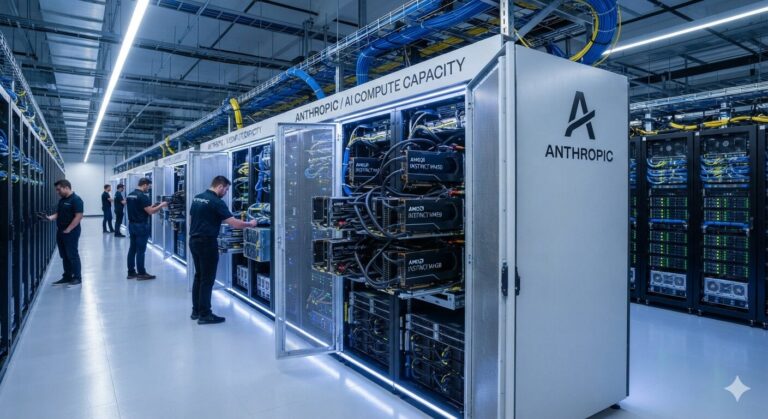
AI Compute War: AMD committed up to $5 billion to deploy two gigawatts of MI450 GPUs for Anthropic. Here is what the deal means for the AI compute market.
Nvidia Locks $500B in SK Hynix HBM supply, securing memory needed to scale AI GPU production amid tight global chip capacity constraints.
Nvidia will invest $1 billion in South Korea’s Naver to fund a new AI data center, expanding a separate accord with SK Group as the AI infrastructure race.
AMD Helios rack debuts with 1,152 MI450 GPUs, challenging Nvidia’s hyperscale AI dominance with integrated data center infrastructure.

NVIDIA Vera Rubin enters gigascale production with 72-GPU racks at CoreWeave and Google Cloud, lifting AI token throughput 40x for inference.

AMD Helios: AMD launched Helios, its first rack-scale AI system, with Microsoft, Meta, OpenAI and Oracle as customers, directly challenging Nvidia’s grip on AI.