Nvidia And TCV Pump Fresh Cash Into AI Video Startup Higgsfield
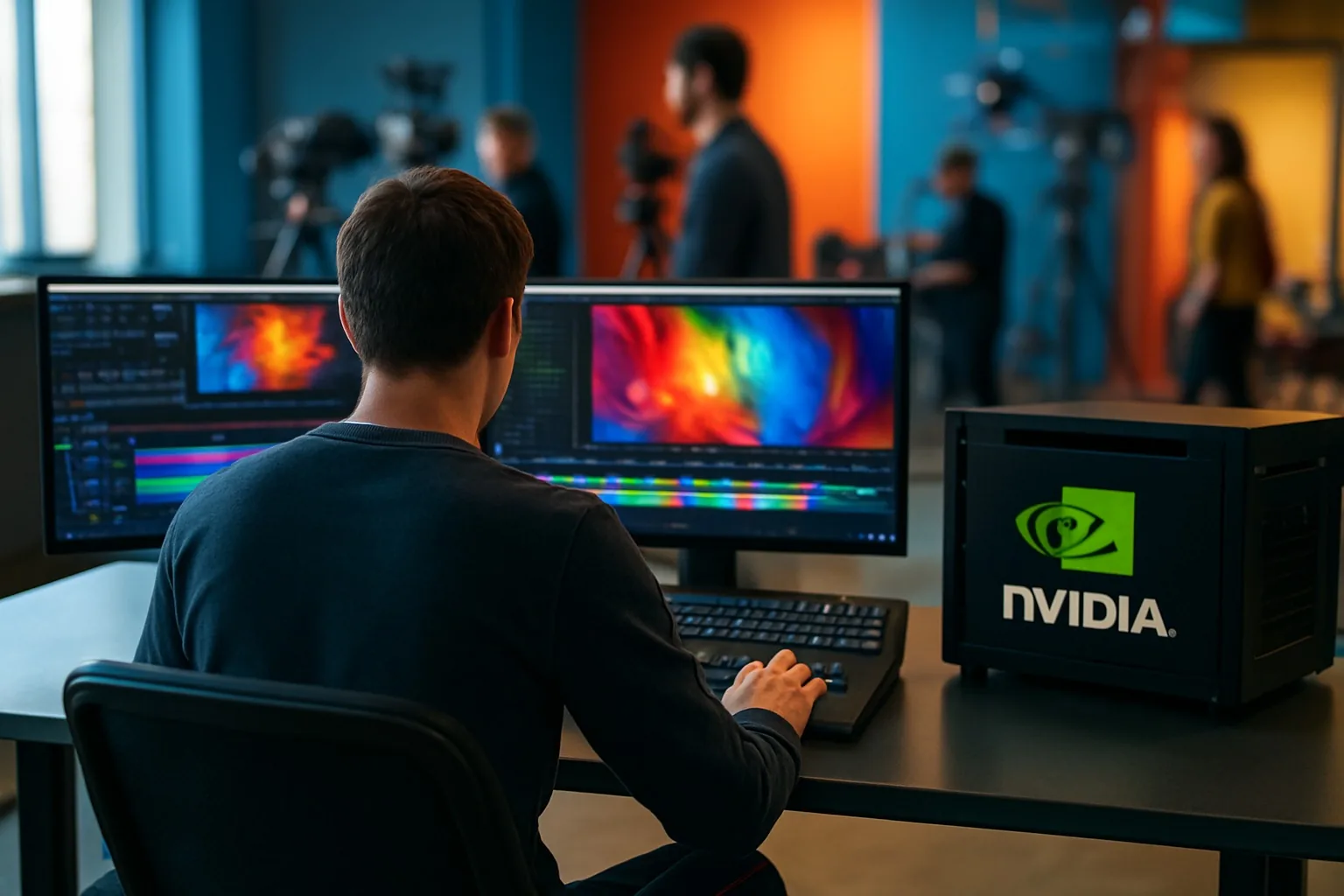
Higgsfield, an AI video startup that builds video creation tools, said its latest funding round grew with new investments from software investor TCV and chip company Nvidia, bringing money and access to computing power.
Key Takeaways
- Higgsfield Series B grew after Higgsfield said it added new investment from TCV and NVIDIA
- The company builds AI tools for video creation, where training and inference costs rise fast because models must generate many frames
- An NVIDIA blog highlighted the chipmaker’s widening footprint in Kazakhstan after CEO Jensen Huang visited during the country’s national AI Month
- TCV brings growth-stage software experience while NVIDIA connects the company to hardware and optimization expertise
Higgsfield said the extension brings in both investors, though it did not disclose the size of the new financing in the release, and the company builds AI tools for video creation, a category where training and inference costs can rise fast because models must generate many frames rather than a single image or text answer.
A separate NVIDIA blog published Friday highlighted the chipmaker’s widening footprint in Kazakhstan, where CEO Jensen Huang visited during the country’s national AI Month and where local compute buildout is accelerating.
TCV And NVIDIA Signal Support For AI Video Startup
Funding matters more for an AI video startup than in many lighter software categories. Video models consume large amounts of compute during both training and generation, and users expect sharper motion, better consistency and faster export times with each release.
That creates a difficult business equation, as startups must spend heavily before subscription revenue or enterprise deals are proven.
Backing from NVIDIA is useful not only for capital but also for supply relationships and technical alignment with the dominant AI hardware stack. TCV and NVIDIA together add both operational and growth-stage credibility.
TCV brings growth-stage software experience while NVIDIA connects the company to hardware and optimization expertise.
TCV and NVIDIA are signaling belief in Higgsfield’s path from lab project to a scaled media software company, and their involvement may affect partnerships, procurement and product priorities.
Also Read: Software Firm Ties Itself To 1 Nvidia Ecosystem For Faster AI Rollouts
From Image Novelty To Video Infrastructure
Generative AI startups first won attention with still images and short demos, but video is harder, because a useful system must keep characters, lighting and camera motion coherent across many frames while avoiding flicker and timing errors. That is why the funding extension matters beyond one cap table.
Investors are still writing checks into AI video despite a harsher market for expensive model companies.
The AI video startup category has also split between consumer creation tools and firms building editing, ad production or studio workflows for business customers. NVIDIA’s presence pushes Higgsfield toward the infrastructure side of that divide, where model quality and compute efficiency matter as much as distribution.
NVIDIA’s Check Carries More Than Money
The release tied Huang’s Kazakhstan visit to the investment, placing Higgsfield inside a broader regional AI push.
That matters because AI ecosystems are no longer just about a startup and its venture backers. They depend on power, chips, cloud access and local policy support.
For Higgsfield, NVIDIA’s involvement can help with optimization on the hardware buyers already want.
For NVIDIA, the investment gives it another foothold in software that can drive demand for high-end GPUs. TCV and NVIDIA together may push Higgsfield toward infrastructure and enterprise packaging rather than pure consumer experimentation.
The open question is whether Higgsfield uses the money to expand model capability, distribution or enterprise packaging first.
In AI video, doing all three at once burns cash quickly.
Why AI Video Needs Deeper Capital
Higgsfield sits in a segment where capital intensity is not a side issue. A text model can often serve millions of small requests with compact outputs.
A video model must generate and rank sequences of images, motion transitions and effects, then often rerun parts for edits. That means more GPU time per AI video startup customer and higher serving costs every time product quality rises.
NVIDIA’s participation matters because it links financing to the hardware layer that sets those costs.
TCV matters because later-stage investors usually care about repeatable software revenue, not just model demos. Put together, the Higgsfield Series B extension suggests the company is trying to prove both technical ambition and business durability.
For creators and enterprise media teams, the next thing to watch is product packaging.
If Higgsfield can turn expensive video generation into predictable subscriptions or workflow tools, it has a path beyond hype. If not, even strong backers will not erase the cost problem.
Read Next: Drug Research Startup Bags $215M To Build U.S. Chemistry Labs