Google DeepMind Crisis, Hassabis Stripped of Power in Devastating Shake-up
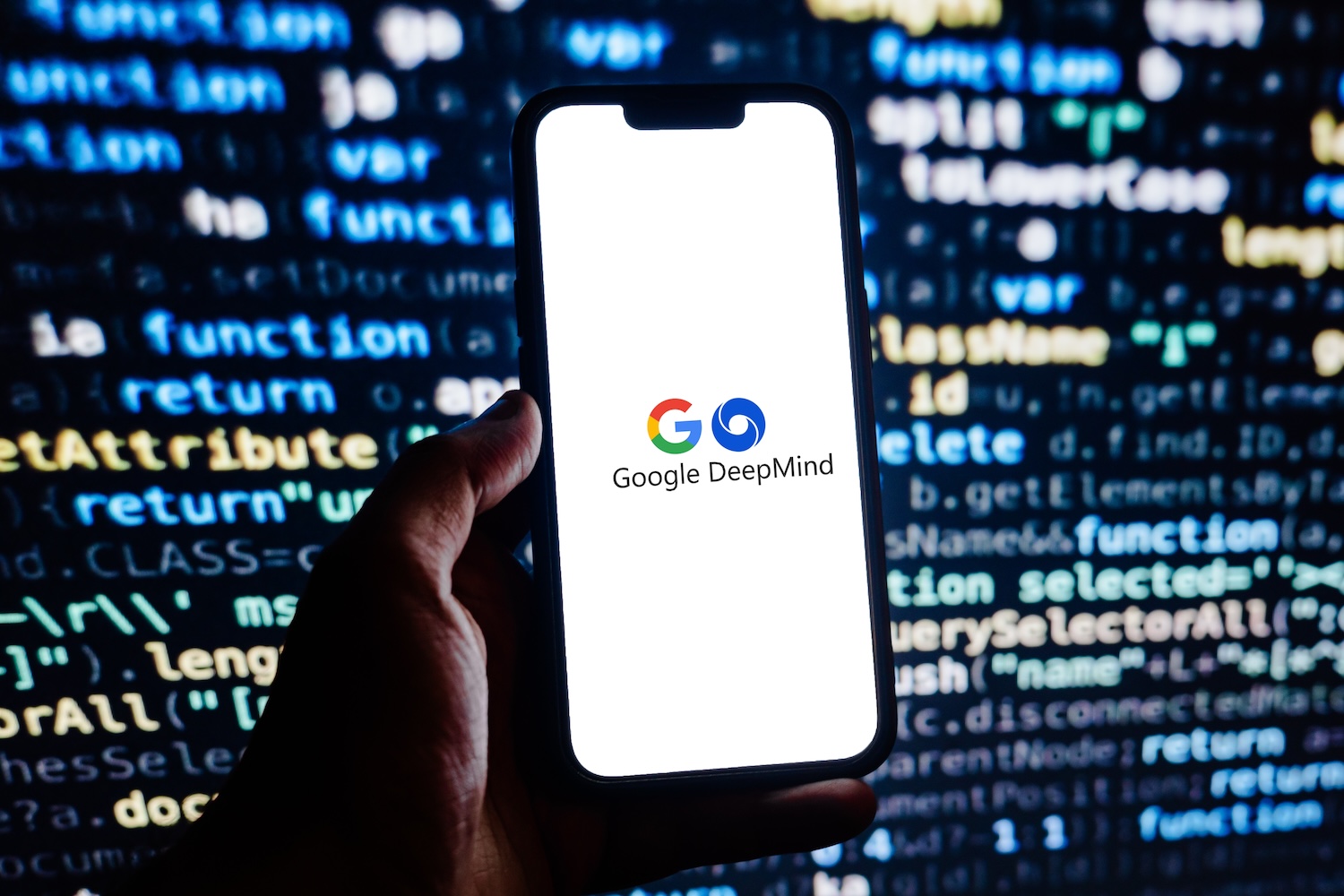
Alphabet stripped Demis Hassabis of day-to-day management of Google DeepMind on Wednesday, in the most significant restructuring of the company’s AI division since DeepMind merged with Google Brain in 2023. Hassabis, who co-founded DeepMind in 2010 and led the combined entity since, will shift to a research-focused role.
The overhaul comes as the flagship version of Google’s Gemini model remains unreleased despite a previously announced timeline.
Key Takeaways
- Demis Hassabis co-founded DeepMind in 2010 and sold it to Google in 2014 for roughly $500 million
- Hassabis shared the 2024 Nobel Prize in Chemistry for AlphaFold, a protein-structure prediction system
- The flagship version of Google’s Gemini model remains unreleased despite a previously announced timeline
- Google has not said who assumes Hassabis’s former operational responsibilities following the restructuring
The news was first reported by Reuters, which also noted that Hassabis will retain a significant research role and that the company has not framed the move as a demotion. For Google DeepMind’s own account of its research mission and leadership structure, see the Google DeepMind website.
Google DeepMind Leadership Restructure Lands At A Critical Moment
The Google DeepMind leadership change is not a routine rotation.
Hassabis had simultaneously held the roles of CEO of DeepMind, head of Google’s broader AI research function, and the public face of the company’s safety commitments. Losing day-to-day authority over all three strips the organization of a singular, integrated command structure at precisely the moment it faces the most competitive pressure it has ever encountered.
The restructuring comes one week after Alphabet (GOOG) reported earnings that, according to Stratechery’s Ben Thompson, confirmed what he called “the Anthropic hedge”, the idea that Google’s most important AI bet may now sit outside its own walls.
That framing matters here. A management overhaul at the internal AI division, happening in the same earnings cycle, suggests the reorganization is at least partly a response to strategic pressure rather than a planned transition.
From Nobel Prize To Narrowed Mandate
Hassabis is one of the most credentialed figures in AI research.
He shared the 2024 Nobel Prize in Chemistry for AlphaFold, the protein-structure prediction system that the lab built and which reshaped structural biology. He co-founded DeepMind in London in 2010, sold it to Google in 2014 for roughly $500 million, and then spent nearly a decade building it into an organization that produced AlphaGo, AlphaZero, Gemini, and a portfolio of scientific AI tools that have appeared in peer-reviewed journals across medicine, mathematics, and materials science.
The Google Brain merger in 2023 put Hassabis in charge of an organization with thousands of researchers and billions in compute budget.
That scale may be exactly what the restructuring is about. Managing a research lab of dozens is a different task from running a 3,000-person engineering and research operation while simultaneously serving as the external face of AI safety for one of the world’s largest companies.
Also Read: Anthropic Ends Fable Data Retention Flaw in 5.1 Release
Sources cited by Reuters said Hassabis will retain a significant research role, and the company has not framed the move as a demotion.
Why The Gemini Delay Makes This More Than A Personnel Story
The timing of this leadership overhaul is inseparable from the product pipeline. The flagship version of Gemini, Google’s top-tier multimodal model, had been expected to ship by mid-year.
It has not. That delay places Google behind OpenAI, which has shipped GPT-5 and several successive variants this year, and behind Anthropic, whose Claude Opus 4 series has taken benchmark leadership in several reasoning categories.
A leadership change in the middle of a delayed flagship release does not on its own explain either the delay or the product gap, but it does tell investors and researchers that the organizational layer responsible for delivery is being restructured, not defended. In corporate terms, that is a meaningful signal.
Frontier benchmark competition is now running on roughly 90-day cycles. Google DeepMind‘s Gemini has not shipped its flagship update within that window, while OpenAI has released GPT-5 and successive variants and Anthropic’s Claude Opus 4 has taken reasoning benchmark leads.
The gap between announcement and independent confirmation has widened across all major labs this year, making management continuity at the research level more consequential than it was two years ago.
What The Research-Role Pivot Means For AI Safety Commitments
Hassabis built a public record as the operational leader most associated with the lab’s safety commitments, arguing consistently that advanced AI requires serious safety infrastructure before deployment. His move into a narrower research mandate raises a structural question: when the person most publicly associated with a lab’s safety posture loses operational control, it becomes less clear who owns the tradeoff decisions between capability and caution in day-to-day product work.
Google has not said who assumes Hassabis’s former operational responsibilities.
Until that is public, the Google DeepMind leadership picture is incomplete. The identity of the new operational lead will determine whether this restructuring concentrates safety authority in a new pair of hands or diffuses it across a broader committee structure.
The latter outcome is the one that the AI safety research community will watch most carefully. Committee governance of safety decisions at a frontier lab is slower than individual mandate governance, and slower is not better when the capability frontier is moving at its current pace.
Read Next: SpaceX Capex Hits $18.4 Billion: Analysts Modeled $13 Billion, Investors Did the Math