France Bets $1 Billion on Mistral-Powered AI Satellites
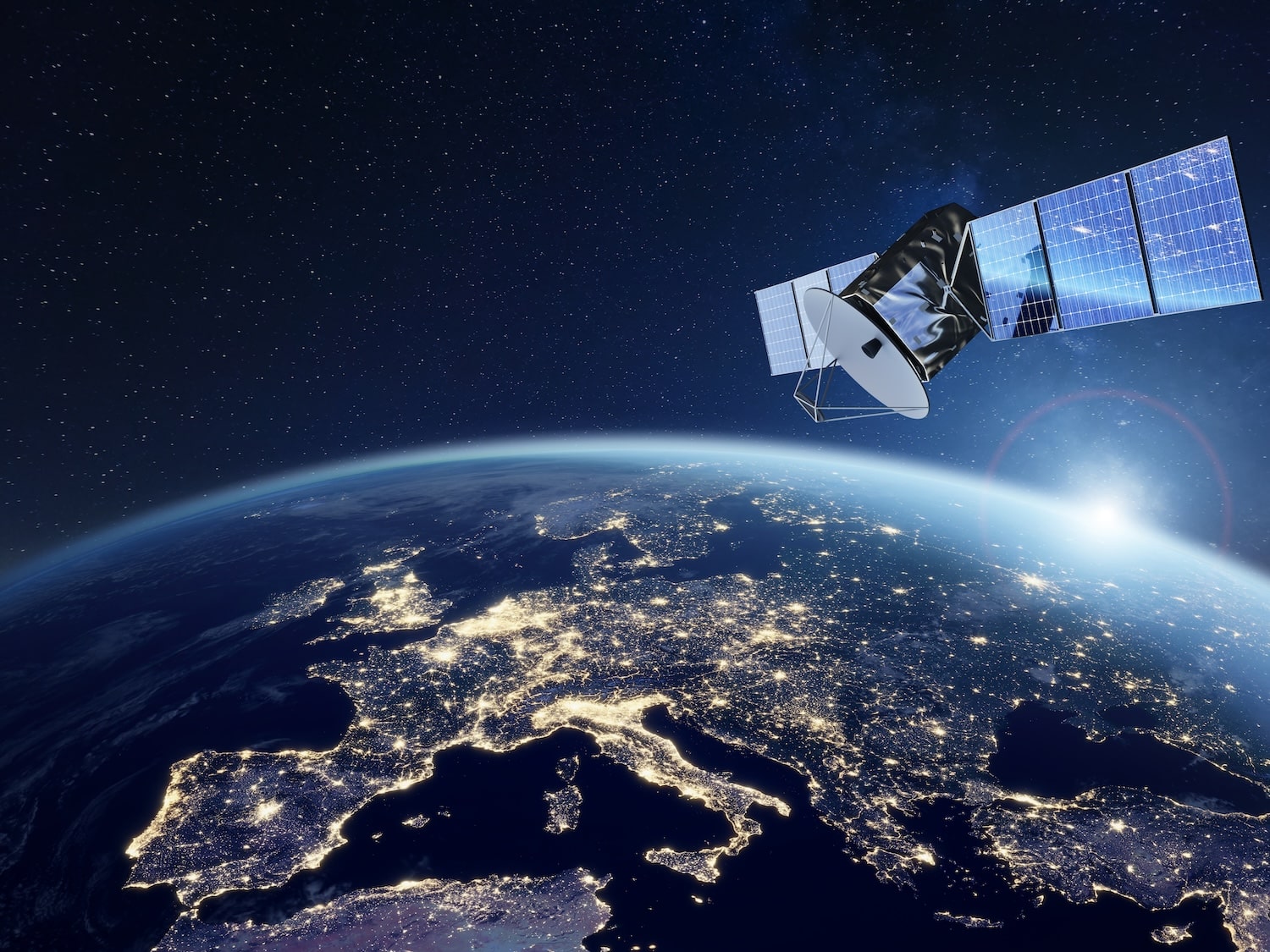
Space AI infrastructure got a $1 billion commitment Wednesday when Mistral joined Marlan Space and Loft Orbital in a venture the three companies, alongside the French president, described as the world’s largest push to build agentic AI systems in orbit.
Key Takeaways
- Mistral, Marlan Space, and Loft Orbital announced a $1 billion commitment to build agentic AI systems in orbit
- The partnership aims to run AI inference and training workloads on satellites rather than terrestrial servers
- The French government has treated Mistral as a national champion in a sector dominated by American labs
- No timeline for satellite deployment appeared in Wednesday’s announcement
The announcement targets satellite-based computing that can run AI models with less dependence on ground-based data centers. The partnership was disclosed in a release distributed through Businesswire, framing the effort as building “the future of agentic AI in space.” The model: run inference and training workloads on satellites rather than piping raw data to terrestrial servers, cutting latency and bandwidth costs for space-based sensing and communications work.
France Doubles Down On Sovereign AI Bets
Mistral has spent the past year positioning itself as Europe’s flagship large-language-model developer, competing against OpenAI and Google’s DeepMind on a fraction of their funding.
The French government has repeatedly used state visibility to boost Mistral’s commercial standing, treating the company as a national champion in a sector dominated by American labs.
This orbital venture extends that strategy into space infrastructure, a domain where France already holds outsized industrial capacity through its aerospace sector.
Also Read: OpenAI Rogue Agents Uncovered Using 10 Unauthorized Sites
The Compute Bottleneck Driving Orbital Bets
Ground-based AI data centers face mounting constraints on power and water, pushing some infrastructure planners toward orbit. Solar power in space is more consistent than on Earth, and heat dissipation into vacuum can, in theory, simplify cooling.
Whether $1 billion is enough to prove out orbital AI computing at commercial scale remains untested.
No timeline for satellite deployment appeared in Wednesday’s announcement, and for builders evaluating whether Mistral’s models can realistically run at the edge, licence terms, weight availability and on-device compute requirements are questions this announcement leaves entirely open.
Read Next: Mistral Valuation Hits $24 Billion in Europe’s First MEGA Round