Brian Armstrong’s Coinbase Advanced Slashes Tail Latency 480X To Beat Rivals
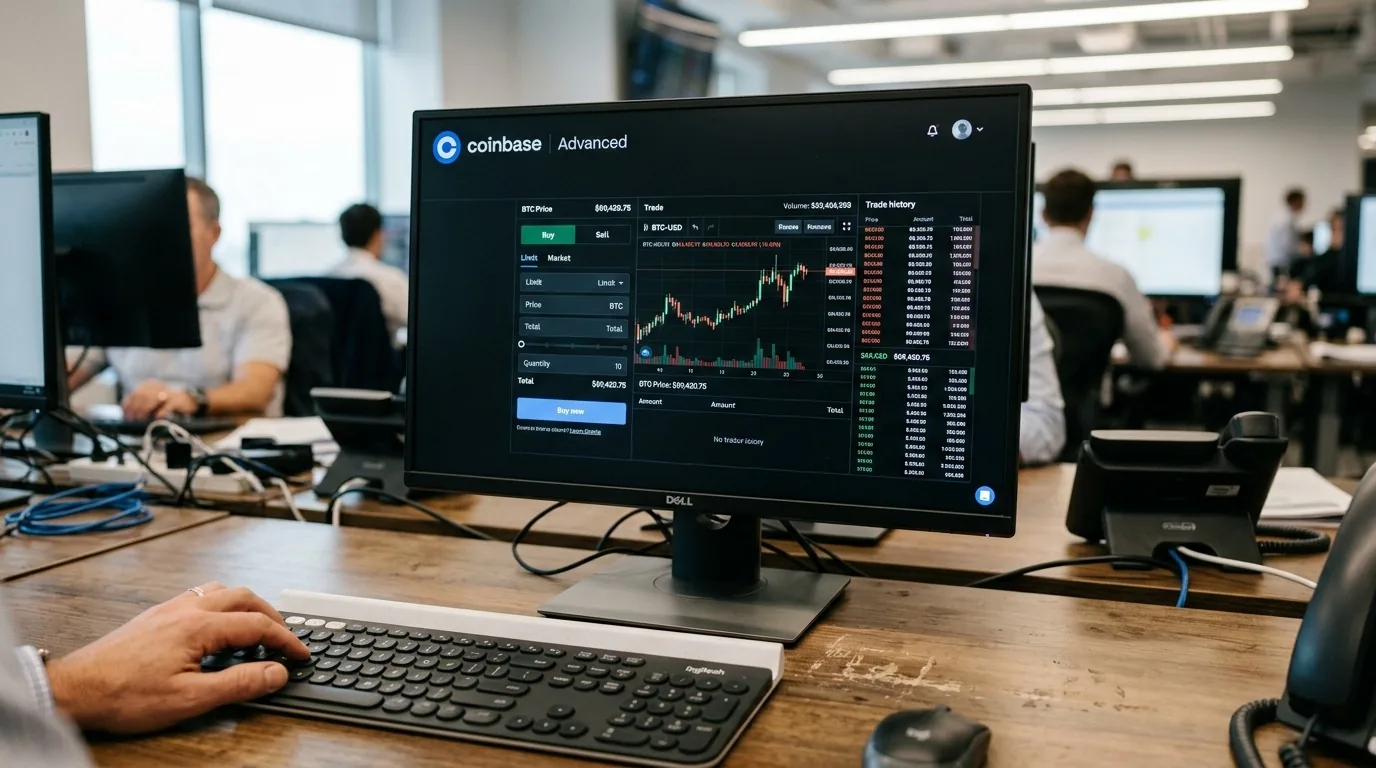
Coinbase‘s matching engine now returns median order responses 60 times faster and cuts tail latency, the slowest outlier response times, by 480 times, according to a Friday post from chief executive Brian Armstrong.
Key Takeaways
- Coinbase’s matching engine now returns median order responses 60 times faster, according to chief executive Brian Armstrong
- The new engine cuts tail latency, the slowest outlier response times, by 480 times
- Coinbase Advanced powers professional trading for crypto, stocks, commodities and foreign exchange
- Coinbase has expanded Advanced beyond crypto trading into stocks, commodities and FX during 2026
Brian Armstrong said the new engine powers Coinbase Advanced, the exchange’s professional trading interface for crypto, stocks, commodities and foreign exchange.
A matching engine is the software core of any exchange, the system that pairs buy and sell orders in real time and determines execution price.
Its speed directly affects whether a trader gets filled at the price they clicked or a worse one after the market moves. Tail latency, the response time for the slowest fraction of requests rather than the typical one, matters disproportionately to high-frequency and algorithmic traders.
A single slow fill during a volatile moment can erase an edge built over thousands of trades.
Coinbase (COIN), the publicly traded exchange, has spent 2026 expanding Advanced beyond pure crypto trading into stocks, commodities and FX, positioning the platform as a multi-asset venue rather than a crypto-only exchange. Armstrong’s post framed the infrastructure upgrade as a direct pitch to traders weighing a switch from rival platforms, a category where execution speed has become a competitive battleground alongside fees.
Why Latency Numbers Are A Competitive Weapon
A 60x improvement in median response time and a 480x improvement in tail latency are unusually large jumps for infrastructure that has already been live and iterated on for years.
The gap between the two figures is itself informative.
Also Read: MLExpert AI Nearly Doubles Engineering Score To 72.7%, Rivals Kimi-K3
Median speed reflects the typical trading experience, while tail latency reflects what happens during stress events, like a sudden price swing, when an exchange’s infrastructure gets hit hardest and fills matter most.
Exchanges including Binance and Kraken have run their own latency-focused infrastructure pushes over the past two years as derivatives and algorithmic trading volume has grown, since professional desks increasingly route order flow based on measured execution quality rather than brand loyalty alone.
Coinbase’s Yearlong Push Into Multi-Asset Trading
Coinbase Advanced launched as the rebrand of Coinbase’s professional trading product, and through 2026 the company has layered in access to equities, commodities and FX alongside its original crypto order books.
That expansion has run in parallel with infrastructure work on tokenization, including a recently approved tokenization hub in Abu Dhabi, as Coinbase positions itself at the intersection of traditional and digital asset markets rather than purely as a crypto exchange.
What Traders Should Watch From Here
Read Next: Together AI Hosts Reflection AI’s 501B-Parameter Beam, Calls It ‘Top Model’