Anthropic Pits Claude Against Scorpion Venom Before Weeks Of Lab Work
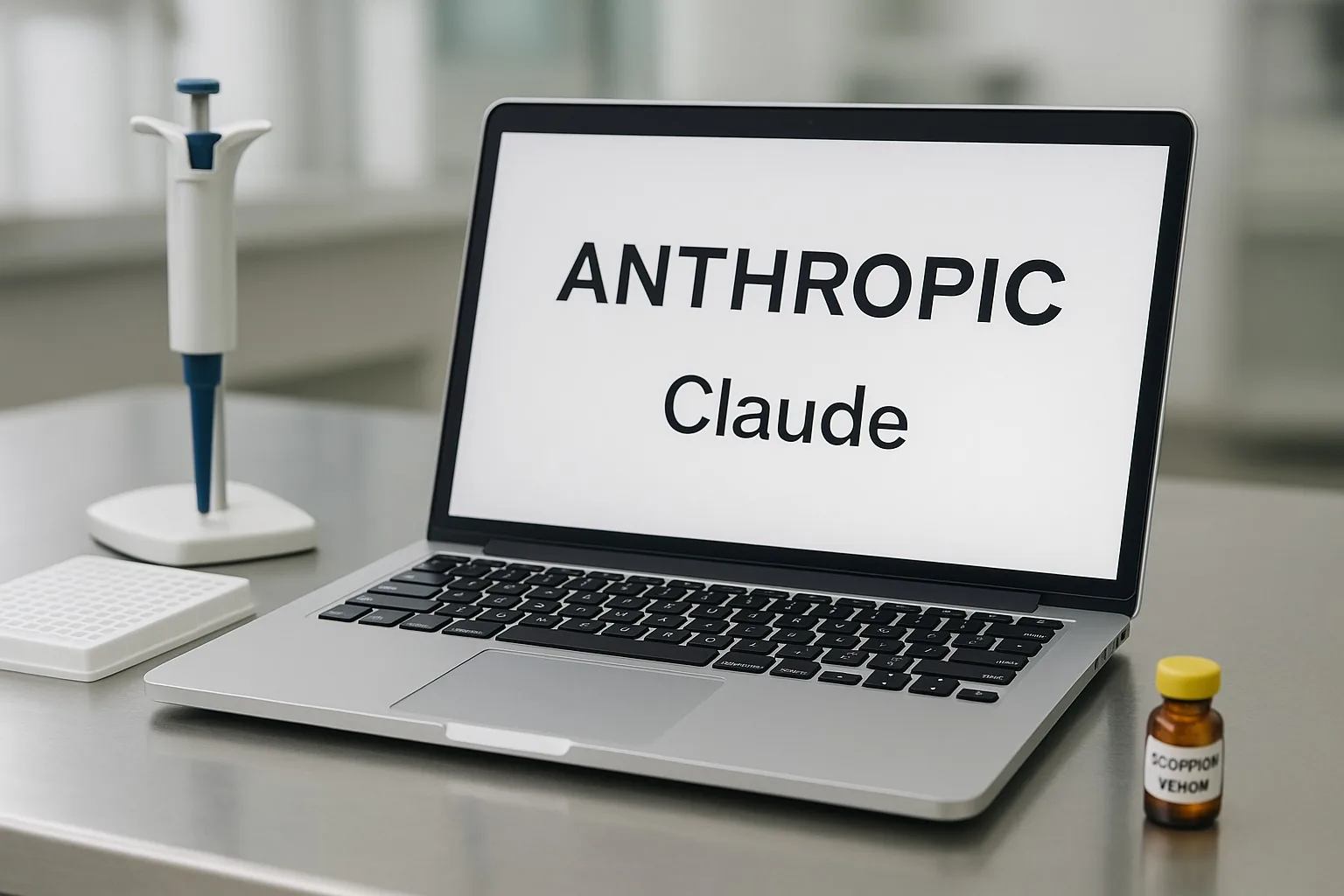
Anthropic published research showing Claude helped design candidate protein binders against scorpion neurotoxins, testing whether the language model can narrow molecular search spaces before costly lab synthesis and assays.
Key Takeaways
- Anthropic published research showing Claude helped design candidate protein binders against scorpion neurotoxins
- Anthropic framed the work around designing binders for venom toxins Against Scorpion and linked it to binder evaluation and experimental screening
- The research tests whether a general reasoning model can narrow molecular search spaces before costly lab synthesis and assays
- Anthropic presented Claude as part of a workflow where model suggestions meet experimental screening rather than a closed answer machine
Anthropic published the work on its research site and framed it around designing binders for venom toxins. The company develops Claude, a family of large language models best known for enterprise writing and coding work.
In biology, protein binders are small engineered molecules built to attach to a target protein with enough strength and selectivity to block or redirect its behavior.
Protein Binders Push Claude Past Chat
The main news is not that Claude suddenly invented a drug. It is that Anthropic is testing whether a general reasoning model can help narrow a huge search space Against Scorpion before human scientists spend weeks on synthesis and assays.
Biology has too many possible amino acid combinations for brute force search to work well.
That is where model reasoning matters. A system can rank candidates, compare structural tradeoffs and suggest edits that human teams then test.
Even modest gains are valuable because wet lab cycles are slow. One bad batch can cost days.
One smarter shortlist can save a program.
Anthropic has spent much of the past year showing Claude in software and business tasks. This project pushes in a harder direction, since molecular design creates a stricter pass-fail loop than office work because physical experiments can reject plausible-sounding ideas immediately.
Anthropic also linked the work to binder evaluation and experimental screening in its research post.
Also Read: OpenAI Snaps Up Orchestra BIO To Cut Weeks-Long Drug Research Delays
From Coding Copilot To Bench Science
The move follows a wider shift in AI labs toward domain work with measurable outcomes. OpenAI moved into life sciences operations in an Oct. 20 post, while drug companies keep looking for systems that cut early-stage search costs without adding black-box risk. Drug discovery pipelines often fail long before clinical trials.
A binder that looks promising on a screen may not fold properly, attach strongly enough or survive manufacturing.
That is why biology teams still rely on iterative testing. AI is not replacing that loop, it is trying to improve the starting point for each loop.
Anthropic did not present Claude as a closed answer machine but as part of a workflow where model suggestions meet experimental screening.
Also Read: ChatGPT, Gemini And 8 More As Artprice Takes On AI Over Cultural Data Rights
How Protein Binders Narrow The Search Against Scorpion
A toxin has a shape and charge pattern. A binder must present a complementary surface that attaches tightly without sticking to the wrong target.
Claude can help by generating or refining candidate sequences that researchers then score with specialized modeling tools and wet lab tests.
For biotech teams, the gain is not magic discovery but fewer wasted rounds. Anthropic’s toxin example uses a target where binding quality can be checked against clear biochemical behavior, which makes it a useful proving ground.
If protein binders designed with Claude keep surviving real assays, labs could use models earlier in antibody discovery, enzyme engineering and antidote research.
The next question is reproducibility. Readers should watch whether Anthropic or outside groups publish hit rates, affinity data and failure cases, because those figures will show whether protein binders are becoming a practical lab tool or staying a strong demo.
Read Next: Nebius Gives Away $10M In GPU Credits To Win Over Europe’s AI Builders