Anthropic Cleans Up $627M Stock Mess Before Debut
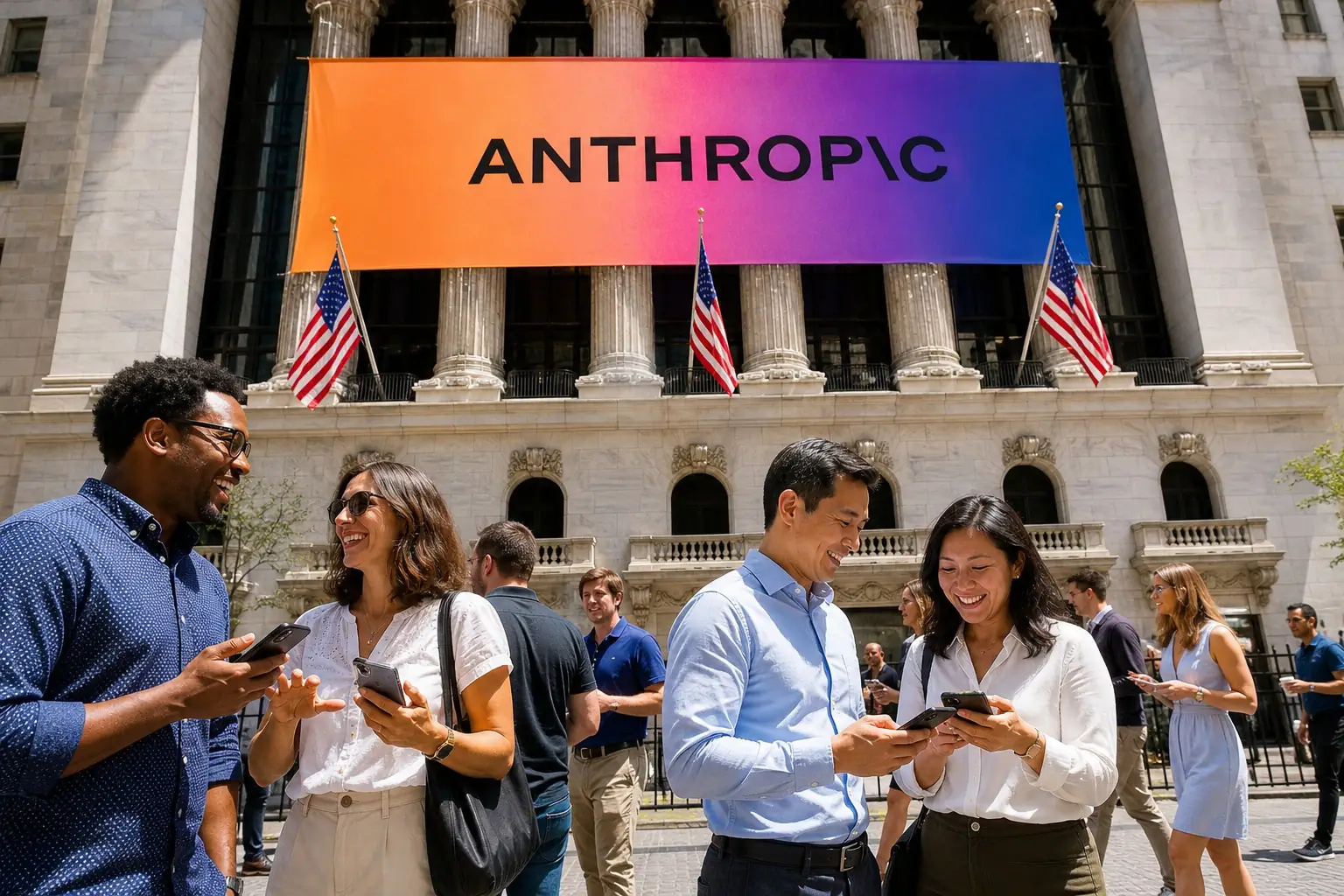
Anthropic, the AI company behind Claude, spent about $627 million to buy 4,453,900 shares the U.S. government had seized and quickly sold them on, clearing a headache before its stock market debut.
Key Takeaways
- Anthropic share buyback bought 4,453,900 forfeited Series B shares from the U.S. government in October 2025 for about $627 million
- The company paid $140.9676 per share and closed the resale contemporaneously
- Anthropic resold those shares to nine accredited investors at the same price
- The filing does not name the former holders, the legal proceedings, or the nine investors who bought the block
The company said in its S-1 that it paid $140.9676 per share for the stock and closed the resale contemporaneously. Anthropic builds large language models and sells them through Claude, enterprise software, and cloud partnerships.
The disclosure matters because it shows the U.S. government briefly held a material equity stake in one of the most valuable private AI companies, then exited before Anthropic’s public listing.
The filing does not name the former holders, the legal proceedings, or the nine investors who bought the block.
A second SEC filing paragraph makes clear Anthropic was not a party to those legal cases. That narrows the fact pattern to a forced transfer of stock from outside holders, not a settlement involving Anthropic itself.
For public market investors, the arithmetic is key.
A 4,453,900-share block bought at $140.9676 per share equals roughly $627 million at the transaction price, and any implied current value depends entirely on the IPO pricing above the October 2025 level. Anthropic Bought the block and passed it through at cost, which locked in no gain for the company and denied the government any post-sale upside.
The structure suggests an administrative cap-table cleanup rather than an opportunistic arbitrage.
By removing legally encumbered shares, Anthropic eliminated a potential overhang tied to court proceedings and placed the preferred stock with investors able to hold pre-IPO restricted securities.
The S-1 frames a business operating at exceptional scale, describing its products, partnerships, and market position. The filing does not mark that reissued block to current valuation.
Also Read: Anthropic Slashes Claude Prices 40% For Government Buyers
For a valuation anchored to this transfer to make sense, two things must be true.
The IPO pricing must exceed the $140.9676-per-share October 2025 benchmark, and the market must accept revenue and growth assumptions consistent with whatever implied multiple the IPO assigns. Absent both, treating the $627 million transfer as indicative of current value conflates a historical transaction with forward-looking enterprise worth.
A Government Holder Rarely Sits In A Startup Cap Table
Private AI companies often have crowded cap tables filled with founders, employees, venture firms, and strategic partners.
A government stake created through asset forfeiture is unusual because it inserts a noncommercial holder into a company that may be preparing financing rounds, employee tenders, or an IPO.
That can complicate voting, resale limits, and disclosure timing. It also creates an odd mismatch.
The government is not trying to maximize strategic influence in Anthropic, it is trying to dispose of an asset cleanly.
In the last two years, AI financing has shifted toward giant structured deals, secondary sales, and compute-linked funding, and Anthropic has been central to that shift as investors race to secure exposure before public listings.
Anthropic share buyback mechanics in this case were simple on paper but unusual in context. The government held Series B preferred shares that had been forfeited in legal proceedings.
Anthropic bought those exact shares at $140.9676 each, then resold them to nine accredited investors at the same price.
Series B preferred stock sits above common stock in the capital stack. In a company like Anthropic, preferred holders usually get special terms on liquidation, conversion, or voting.
When Anthropic Bought the block, it could remove the government as an awkward holder and place the shares with investors used to private-company restrictions.
For the U.S. government, the deal converted a private startup asset into cash without waiting for an IPO. For Anthropic, the benefit was cap-table cleanup before listing.
For the nine buyers, the reward was access to a late-stage AI company at a fixed private price before public markets set a new one.
The main thing to watch next is Anthropic’s final IPO pricing, because that will show how much upside this $627 million block captured after the resale.
Read Next: U.S. Grabs 72% Of AI Chips And Servers As China Gets 10%