OpenAI Slashes AI Bills With GPT 6.1 Terra As Claude Loses
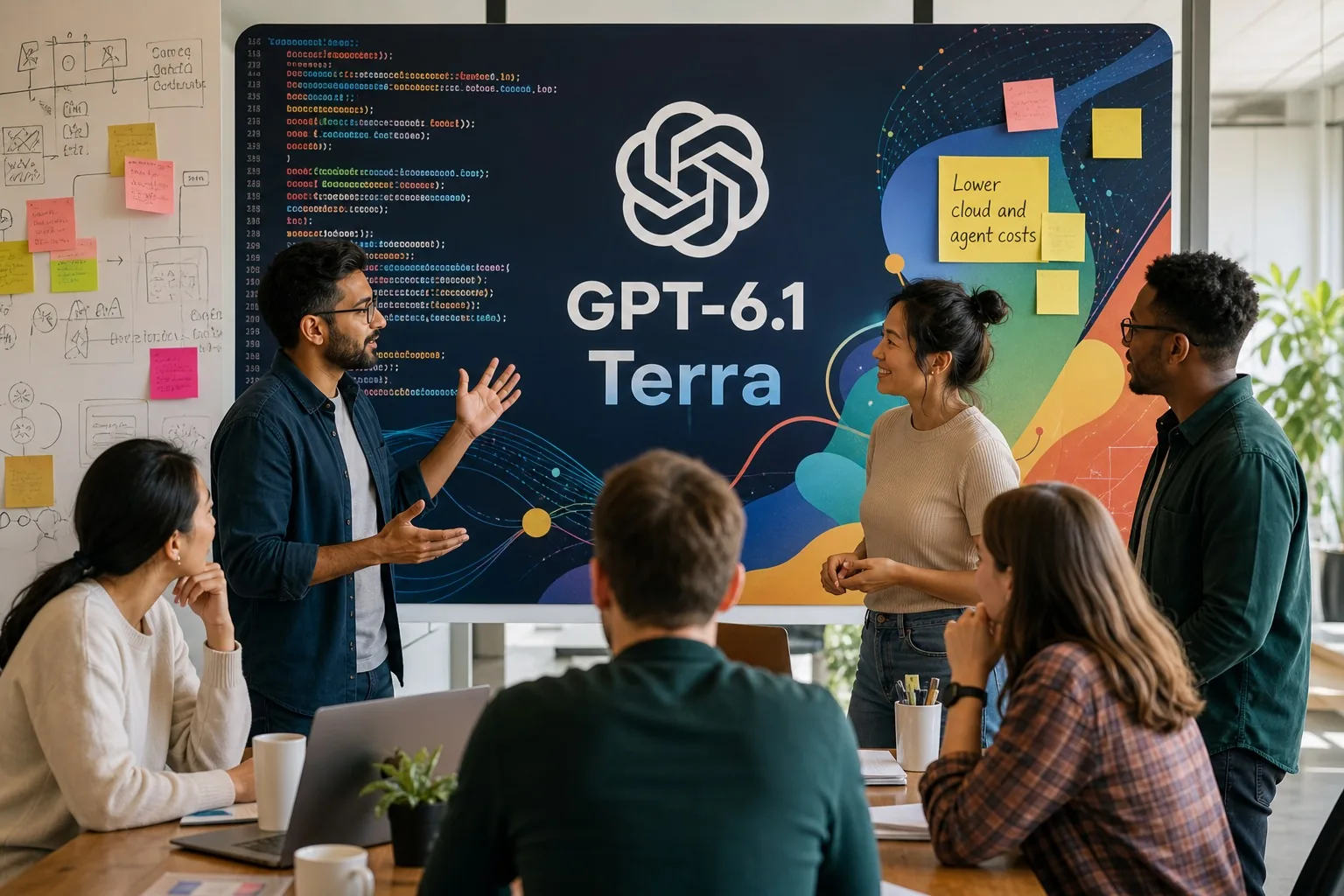
OpenAI launched GPT-6.1 Terra, a cheaper version of its chatbot brain, saying it uses over three times less text and costs one-fourth as much as rival Claude Opus 5.5.
Key Takeaways
- GPT-6.1 Terra arrived Monday and is positioned as a lower-cost frontier model
- OpenAI says it is over three times as token-efficient as Claude Opus 5.5 and priced at one-fourth the cost per token
- TestingCatalog said it combines visual reasoning, computer use and clearer language output and appears in ChatGPT Work and the Codex changelog
- Monday’s release follows the earlier GPT-5.6 Terra generation and keeps Terra as the lab’s lower-cost line
TestingCatalog posted that GPT-6.1 Terra combines visual reasoning, computer use and clearer language output, while Artificial Analysis posted that it is the first Terra-class release since GPT-5.6. The release puts price and efficiency at the center of the model race, where labs now compete on cost per useful answer, not just benchmark rankings.
TestingCatalog also said GPT-6.1 Terra appears in ChatGPT Work and the latest Codex changelog.
That matters because Codex is the company’s coding toolchain, where token bills rise fast when agents reread tools, files and long histories.
GPT-6.1 Terra Targets Agent Bills
The pitch is less about chatbot novelty and more about operating math. Enterprise buyers now run models inside coding agents, finance copilots and support systems that may call a model dozens of times for one task.
A token is a chunk of text that a model reads or writes.
Lower token cost and higher token efficiency mean a company can process the same workload with fewer dollars and, in some cases, lower latency. If the claim holds in production, GPT-6.1 Terra could pressure rivals on the most painful line item in enterprise AI budgets.
The company framed the model around detailed visual reasoning and precise computer use.
That places GPT-6.1 Terra in the growing class of models built for agent workflows, where the system must inspect a screen, choose an action and continue through a multistep task.
Also Read: Sports Shop Fanatics Lifts MLB Shopping 10% With OpenAI Outfits
From GPT-5.6 To A Cheaper Tier
Monday’s release follows the earlier GPT-5.6 Terra generation, which established Terra as the lab’s lower-cost line rather than its top-end family. The change matters because buyers no longer choose only between the smartest and the cheapest model.
They want one that can automate real work without exploding usage bills.
That shift has sharpened as Anthropic, Google and the lab chase the same corporate budgets. The contest is moving from headline capability toward total task cost, especially in coding and office workflows where long context windows can turn a small unit price into a large monthly invoice.
Where The Company Needs Proof Fast
The immediate question is whether the comparisons survive independent testing.
Model vendors often publish best-case figures under narrow settings, while real workloads include retries, tool calls and long prompts.
A second question is positioning inside the firm’s own stack. If GPT-6.1 Terra is good enough for most agent tasks, customers may trade down from pricier models.
That can win volume while trimming revenue per call, which is a familiar software tension once a premium line gets a cheaper sibling.
How Terra Changes OpenAI’s Pricing Battle
OpenAI’s use of “token-efficient” matters more than a simple price cut. Anthropic and OpenAI both bill by tokens, but enterprise buyers care about cost per finished task, not cost per million characters. A model that reaches the right answer in fewer tokens can be cheaper even before unit pricing changes.
That is why GPT-6.1 Terra was compared directly with Claude Opus 5.5 instead of through a broad affordability claim.
The mention of visual reasoning and computer use also matters for software teams using Codex and ChatGPT Work. In those products, a model does not just draft text.
It reads screenshots, interprets interface state and decides the next step.
That type of agent loop can multiply token usage because each step may require fresh context. If GPT-6.1 Terra reduces token consumption per step, the company gains a stronger pitch to developers building persistent agents, not just people opening a chat window a few times a day.
Read Next: OpenAI And PixVerse Give Brands A Playbook To Tame AI Video