Anthropic Builds Claude Partner Network To Grab More Big Business
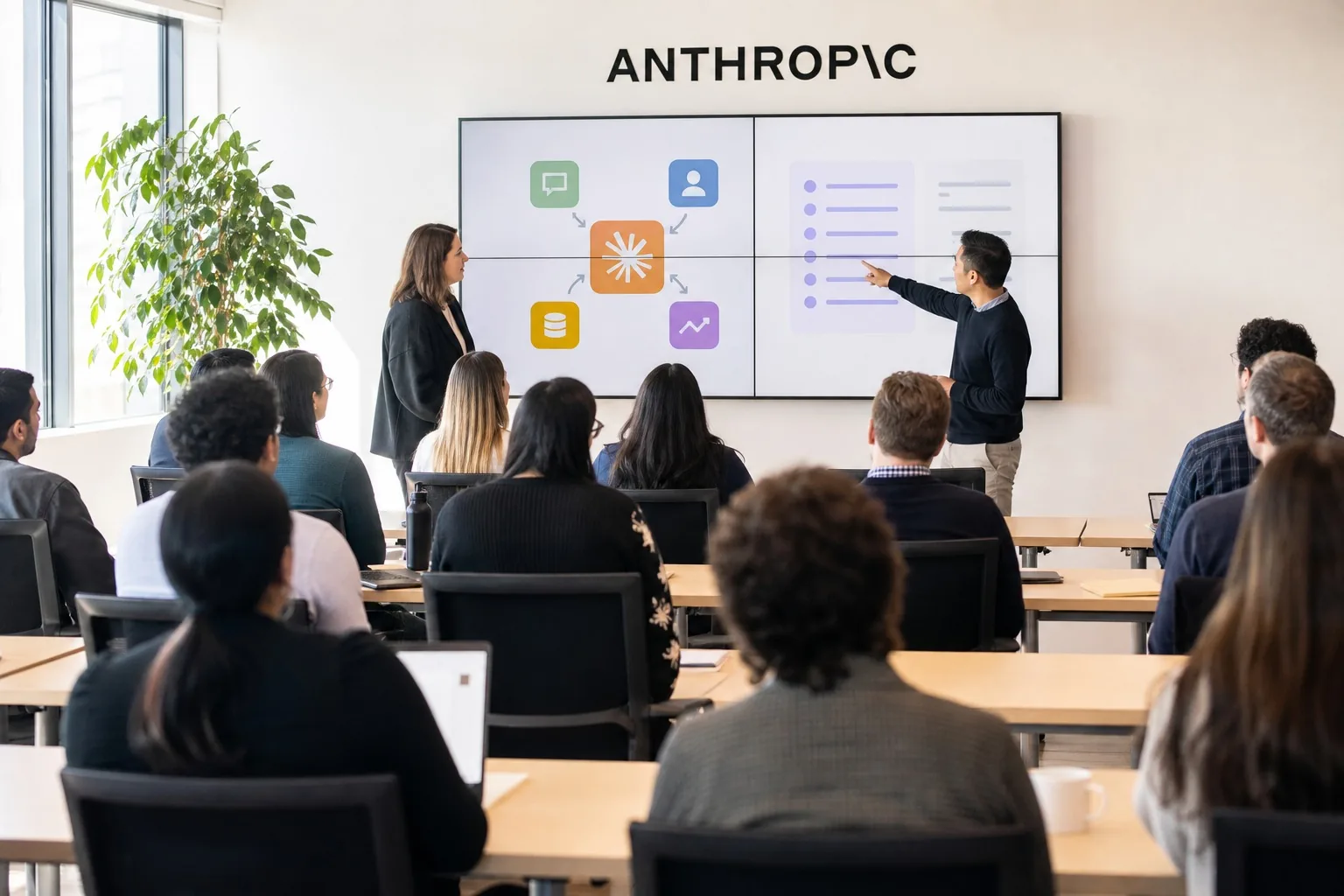
Alloy, a business consulting firm, joined Anthropic‘s Claude Partner Network to get training and support that can help more big companies set up the Claude chatbot at work.
Key Takeaways
- Alloy joined Anthropic’s Claude Partner Network and gained access to training, certification and technical resources
- Anthropic uses the Claude Partner Network to train firms that help customers put Claude into production
- Artizent reached Select tier in the Claude Partner Network, suggesting Anthropic is building a broader services bench
- The Partner Network lets Anthropic certify outside firms to do implementation work under a shared playbook instead of staffing every account itself
Alloy said it had joined the Claude Partner Network, the channel Anthropic uses to train firms that help customers put Claude into production. The release lists three benefits, training, certification and technical support.
Anthropic sells Claude models and tools to businesses that want AI systems for writing, coding, search and workflow automation.
Claude Partner Network Shifts Sales To Services
The Claude Partner Network shows how AI labs are moving beyond model access alone. Winning an enterprise contract often depends on the work after the sale, when a model must connect to file stores, ticketing tools and internal approval systems.
That is where a services partner like Alloy fits.
A consulting firm can scope a use case, connect Claude to company data, test outputs and manage rollout. The model provider keeps the platform relationship, while the partner handles the last mile that often decides whether a contract grows or stalls.
Another company, Artizent, said Thursday it reached Select tier in the same network.
That suggests Anthropic is building out a broader services bench, not making a one-off addition.
From Model Access To Deployment Work
Only months ago, many enterprise AI deals centered on model access, API credits and short proofs of concept. The harder part came later, when a chatbot had to reach internal tools, follow policy and return answers a company would trust.
That shift created an opening for system integrators and boutique AI advisers.
Across the market, enterprise launches have centered less on raw model size and more on governance, connectors and deployment controls. Anthropic has leaned into that pattern with Claude-focused integrations, security controls and a clearer services channel.
For buyers, that changes procurement.
A bank or retailer can choose Claude and a prequalified implementation partner together, instead of stitching the stack alone. That can shorten sales cycles because technical due diligence starts earlier.
The Lead Up To Anthropic’s Services Push
The new partner slot follows a broader turn across enterprise AI.
Labs spent much of 2025 competing on benchmark scores and API pricing. By 2026, the harder contest had shifted to deployment, security and workflow fit inside existing software estates.
That backdrop matters because enterprise AI projects fail less from model weakness than from integration drag.
A company may like a demo, then stall when legal, identity, logging and data access rules collide with the pilot. Partner networks give labs a way to spread that work across outside firms instead of hiring every implementation team themselves.
Also Read: X-Team Wins Select Status In Anthropic's Claude Partner Network Services Track
How Claude Partner Network Changes The Claude Sale
The Claude Partner Network gives Anthropic a way to scale without staffing every customer account itself.
Instead of sending internal engineers into each project, Anthropic can certify outside firms to do implementation work under a shared playbook.
That can widen Claude’s reach in the midmarket, where customers may want help but cannot support a large custom engagement. It also gives firms like Alloy a sharper pitch against rivals that resell multiple model vendors without a formal lab relationship.
The next thing to watch is whether Anthropic starts separating partners by specialization, such as regulated industries, coding deployments or customer support agents.
If that happens, the Claude Partner Network stops being a badge program and starts looking more like a route-to-market system.
Why Alloy Gains From Anthropic Training
The Claude Partner Network is a distribution layer, not a model feature. Anthropic builds Claude, but most companies do not buy a model like off-the-shelf software.
They need help connecting Claude to files, databases, identity systems and approval rules already inside the business.
Training and certification matter for that reason. When Anthropic trains Alloy, it is teaching a third party how to set prompts, permissions and evaluation steps in a repeatable way.
Certification then gives procurement teams a simple signal that Alloy has passed Anthropic’s own bar. Technical resources matter because they give Alloy faster answers when a client hits a problem inside Claude integrations or API behavior.
For consulting firms, the gain is commercial as much as technical.
An Alloy seller can enter a buyer meeting with Anthropic’s backing, not just a claim of general AI expertise. For Anthropic, the upside is scale.
One lab can hire only so many deployment engineers, but a partner network can multiply that capacity without putting every implementation on its payroll.
Read Next: AI Firm Walls Off New Work Bot In Phone App For 2 Paid Plans