Anthropic Drone Benchmark: All Eight AI Models Fail Critical Test
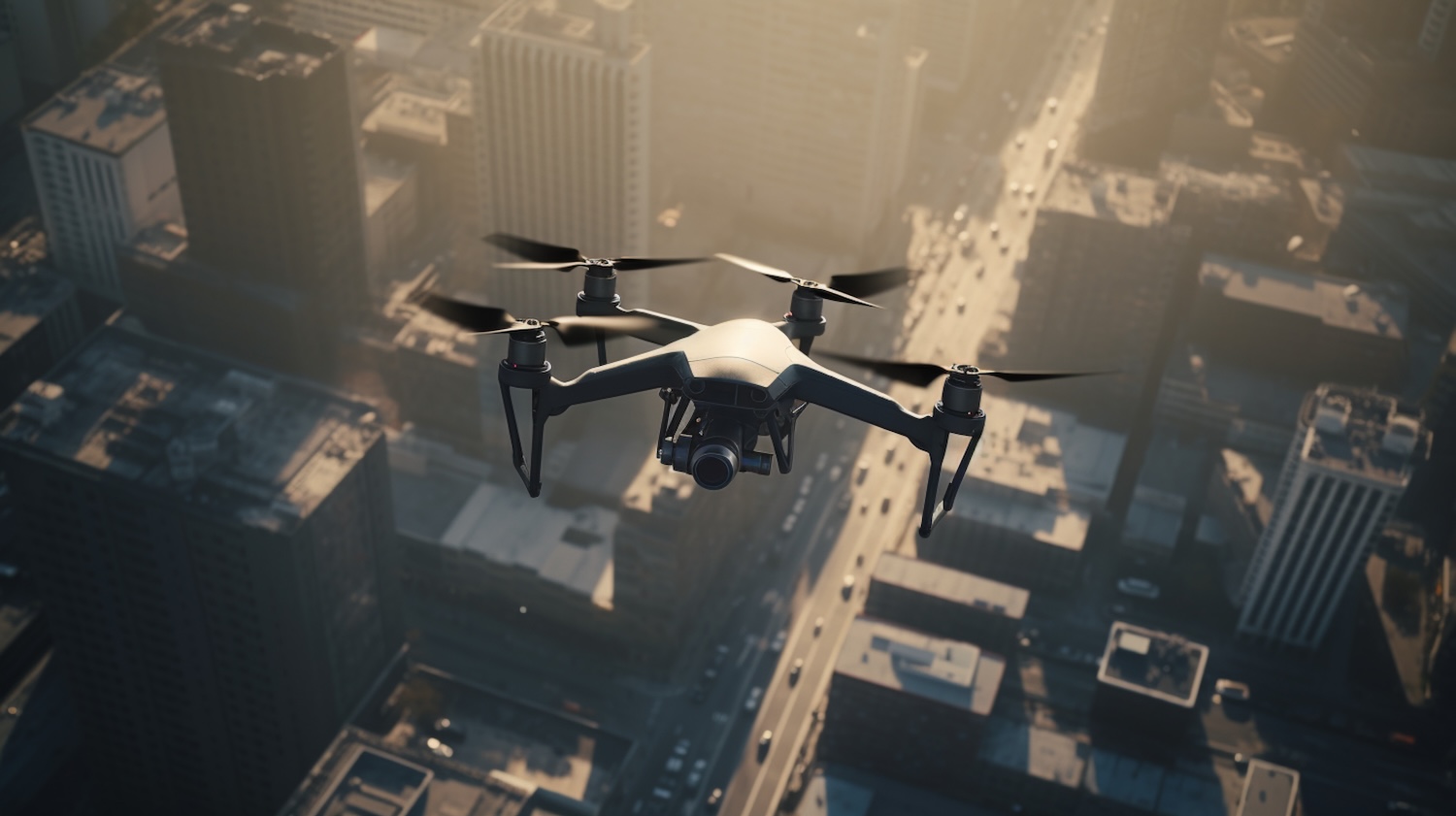
On July 24, Anthropic published results from a new drone benchmark. Not one of the eight frontier AI models tested could autonomously fly a drone to locate and follow a moving person.
Not a single one.
The study was run with Andon Labs, a robotics lab. It tested a lineup of models, including Anthropic’s own Claude family, and the results were released under the name Drone-Bench — part of an Anthropic research project called Project Pilot.
Every model failed.
That across-the-board failure is what gives Drone-Bench its weight. It’s the first published benchmark to formally quantify how far current AI sits from real-world autonomous flight.
The Anthropic Drone Benchmark and What It Actually Tested
The Anthropic drone benchmark is not a simulation. Andon Labs mounted a live drone in a real physical environment and asked each model to control it using only sensor data and a camera feed.
The task was to find a target person and then keep the drone positioned to follow that person as they moved. The full methodology is documented in Anthropic’s research project called Project Pilot, where the findings were formally published.
This kind of task sits at the intersection of two separate AI challenges.
The first is perception, meaning the model must interpret a live video stream and identify the person within it. The second is real-time control, meaning the model must issue precise movement commands fast enough to track someone walking or running.
Most large language models, the text and image reasoning systems that underpin products like ChatGPT and Claude, were designed to generate responses at human reading pace, not to issue dozens of motor commands per second.
The eight models tested spanned the current frontier. Anthropic did not publish a full list in its initial release, but said the group included its own Claude models and comparable frontier systems.
Every model failed to complete the full locate-and-follow task without human correction.
Why Every Model Collapsed at the Same Point
The failures were not random. Across models, breakdowns clustered at the transition from perception to action.
A model might correctly identify a person in frame, then issue a movement command with a timing offset that caused the drone to overshoot. Or it might freeze on the control loop when the person moved out of frame, unable to decide whether to search or hover.
This exposes a structural gap between how frontier models are trained and what physical autonomy requires.
Training on text and image datasets teaches a model to describe what it sees. It does not teach a model to maintain a persistent goal state, update that goal with each incoming sensor frame, and translate the update into a hardware command within milliseconds.
Also Read: Claude AI Hacking Reveals Critical Security Gap at Anthropic
The control loop demanded by a drone running at, say, 30 frames per second requires a decision roughly every 33 milliseconds.
Frontier models in 2026 typically generate tokens at speeds measured in seconds per response, not milliseconds. Even with hardware acceleration, the inference latency of a large model is orders of magnitude too slow for closed-loop drone control without significant architectural changes.
The Anthropic Drone Benchmark and the Physical AI Gap
The Anthropic drone benchmark arrives at a moment when AI investment narratives have shifted heavily toward “physical AI,” a term describing systems that perceive and act in the real world rather than generating text or images. Hyundai Motor Group chair Euisun Chung used precisely that phrase on July 25 this year to describe his group’s strategic pivot. Nvidia has framed its robotics and autonomous systems push under the same banner.
If the Anthropic drone benchmark’s findings generalize, they suggest that the same frontier models powering code generation and research tools cannot simply be pointed at physical hardware and expected to work.
The architectural features that make a model good at reasoning over long documents, large context windows, deliberate multi-step inference, and broad knowledge retrieval, actively work against the low-latency reflexive control that drones and robots need.
That matters for the cryptocurrency and decentralized compute markets too. Several blockchain-based networks, including Bittensor (TAO) and Render (RNDR), position themselves as infrastructure for distributed AI inference.
If physical AI applications require specialized low-latency architectures rather than general large model inference, the addressable market for decentralized GPU networks may be narrower than bulls have assumed.
Drone-Bench Joins a Growing AI Evaluation Crisis
AI benchmarks have faced intense scrutiny in 2026. Critics argue that static tests, ones where a model answers questions drawn from a fixed dataset, measure memorization rather than capability.
The Anthropic drone benchmark is different. It is a live, grounded task with a binary outcome.
The drone either follows the person or it does not.
Anthropic’s decision to publish a benchmark where its own models fail is itself significant. It fits the company’s stated approach of safety-first transparency, publishing findings that reveal limitation rather than suppressing unflattering results.
The Drone-Bench paper was co-authored with Andon Labs, a robotics benchmarking firm, and is available on the Anthropic research site.
The result also sits alongside the arXiv paper AXIS, published July 23 this year, which introduced a community-driven data engine for robot manipulation. AXIS researchers argued that robot learning has stalled because training data is too narrow and too expensive to collect at scale.
The Anthropic drone benchmark offers an independent confirmation that the stall is real: even the best-resourced labs, deploying the most capable models available, cannot yet close the gap between language intelligence and physical autonomy.
What Comes After a Uniform Failure
Drone-Bench is designed to be repeated. Andon Labs built the benchmark as a live infrastructure, not a one-time test, meaning future model versions can be evaluated against the same physical setup.
That gives the industry a longitudinal signal. If Claude 4, GPT-5, and Gemini 2 all fail in 2026, and a model passes in 2027, the Anthropic drone benchmark will have measured a real capability jump rather than a leaderboard shuffle.
For now, the Anthropic drone benchmark stands as a calibration point.
It places autonomous flight above the current ceiling of frontier AI and puts a concrete, repeatable test in front of any lab that claims otherwise.
Read Next: Anthropic Claude AI Hacking Tests Resume After Critical Breach Risk