Samsung Locks 80% Of 2027 Chip Supply As AI Memory Demand Soars
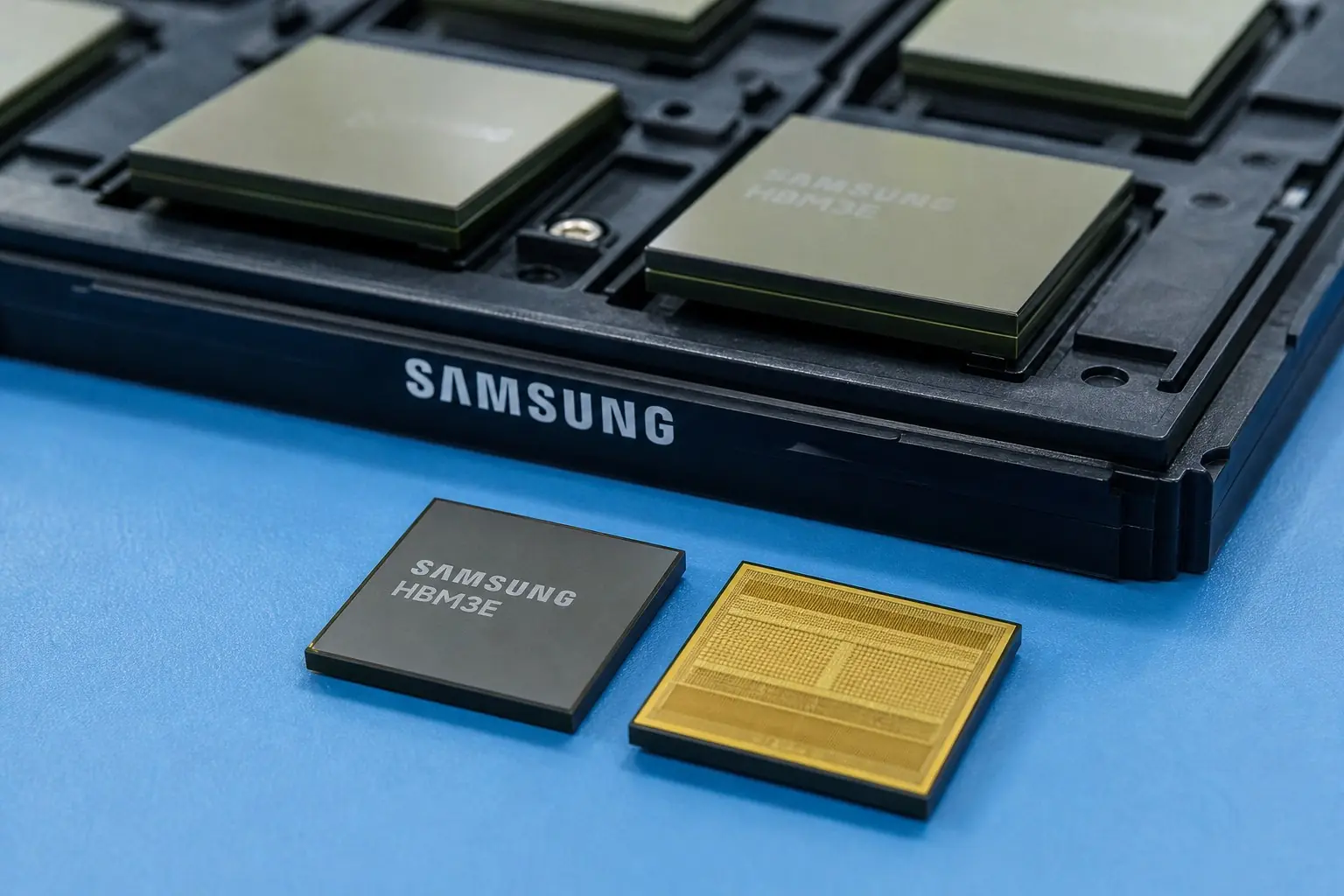
Samsung Electronics has committed 80% of its 2027 Chip Supply under long-term contracts, an industry account disclosed Thursday citing Korean media reports.
Key Takeaways
- Samsung Electronics committed 80% of its 2027 chip supply under long-term contracts, according to Korean media reports cited by jukan05
- The agreements span Samsung’s memory business and were secured roughly a year ahead of delivery
- Samsung, SK Hynix and Micron supply the overwhelming majority of HBM used in AI accelerators worldwide
- Demand from hyperscalers has outpaced memory fabrication capacity for much of the past 18 months
The agreements span Samsung’s memory business and were secured roughly a year ahead of delivery, an unusually high lock-in rate for a market that has historically sold most volume on shorter contracts or spot pricing.
According to jukan05, the arrangement covers supply volume for next year across Samsung’s chip lines in an exclusive post.
The disclosure centers on high-bandwidth memory, a stacked chip design that sits directly next to AI processors like those from Nvidia (NVDA) and moves data to them far faster than conventional memory.
HBM has been a bottleneck constraining AI server output through 2026 because memory availability, power and cost per unit of inference determine how many systems operators can deploy.
Why 2027 Chip Supply Lock-In Is Unusual
Long-term contracts shift risk from buyers to sellers. A chipmaker committing 80% of future output to fixed agreements forgoes the chance to sell into a spot-market spike, but gains certainty that factories stay fully booked regardless of demand swings.
Also Read: Sovereign UK AI Behavox Locks $8M GPU Investment With Civo
That tradeoff makes sense only if Samsung expects demand to remain at or above current levels for years, the dynamic AI infrastructure buildouts have created across the memory sector since 2025.
The binding constraint is fabrication capacity, booked output carries more weight than broad demand claims.
How Memory Became The AI Boom’s Choke Point
Samsung, alongside SK Hynix and Micron, supplies the overwhelming majority of HBM used in AI accelerators worldwide. Demand from hyperscalers building data centers for large language model training and inference has outpaced memory fabrication capacity for much of the past 18 months, pushing lead times out and prices up.
What An 80% Lock-In Means Going Forward
If the figure holds, spot buyers seeking memory chips in 2027 will face a drastically smaller pool of available supply, likely pushing prices higher for anyone outside existing contracts.
That scarcity would raise AI server costs for companies without long-term agreements. For operators, the calculation is not just component pricing, but power and cost per unit of inference.
Read Next: Nvidia Bets $1B On US Science As AI Chip Dominance Funds Research Push