Mistral Lands Microsoft Billions, But Europe’s AI Independence Is Complicated

Microsoft agreed to spend billions of dollars funding Mistral AI‘s computing infrastructure across Europe, in a deal that will also expand distribution of Mistral’s models through Microsoft’s cloud platform — marking a pivotal moment in the European AI infrastructure race. The agreement positions the two companies as deep partners in the race to build sovereign AI capacity on the continent, at a moment when European governments and enterprises are under mounting pressure to reduce reliance on U.S.-only AI infrastructure.
The Microsoft Mistral Deal and What It Actually Covers
The deal has two distinct components, according to reporting on the agreement.
The first is a capital commitment from Microsoft to build or expand compute infrastructure in Europe that Mistral will use to train and serve its models. The second is a distribution arrangement that would route Mistral’s European AI models through Microsoft’s Azure cloud platform, giving enterprise customers access to Mistral’s technology alongside Microsoft’s own offerings.
For more detail on the arrangement, Microsoft has outlined elements of its AI infrastructure partnerships on the Microsoft Azure blog.
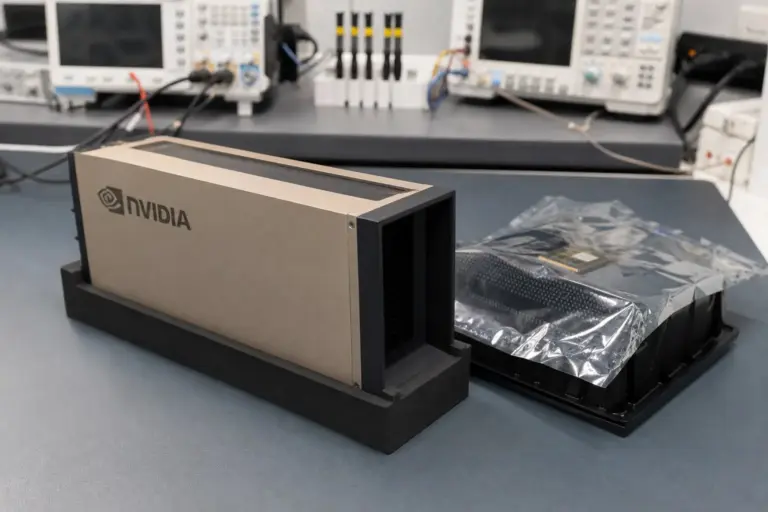
Compute infrastructure in this context means the physical data centers, GPU clusters, and networking equipment required to run large AI models at scale. Training a frontier AI model can require tens of thousands of specialized chips running continuously for weeks.
Inference, the process of generating outputs for end users, adds an ongoing and growing demand on top of that. Funding that infrastructure for a partner is a significant financial commitment, and it ties Mistral’s capacity directly to Microsoft’s hardware footprint.
Why Europe Became the Battlefield for European AI Sovereignty
European AI sovereignty has become one of the defining policy and commercial themes of 2026.
Governments from France to Germany have pushed for AI infrastructure that sits within European data protection frameworks, free from the extraterritorial reach of U.S. law. Mistral, founded in Paris in 2023, has positioned itself explicitly as the European AI answer to American frontier labs.
For Microsoft, the logic is equally clear.
Azure’s European presence is already substantial, but the deal allows it to offer a locally developed, locally compliant AI model alongside its own products. That matters to regulated industries such as banking, healthcare, and government procurement, where data residency and model provenance increasingly determine purchasing decisions.
The deal also deepens a pattern that has reshaped the AI industry over the past two years.
Also Read: Anthropic Ends Fable Data Retention Flaw in 5.1 Release
Rather than competing with frontier model developers outright, hyperscalers have found it more efficient to fund them, embed them within their cloud ecosystems, and share in the resulting enterprise revenue. Microsoft’s relationship with OpenAI follows the same architecture, though at a far larger scale.
The Mistral arrangement extends that playbook to a European AI champion, giving Microsoft a foothold in deals where a U.S.-origin model might be a disqualifier.
From Open-Weight Pioneer to Infrastructure Anchor
Mistral built its early reputation on open-weight models, releasing several versions of its technology for free download and modification. That approach earned it developer loyalty across Europe and gave it credibility as an alternative to proprietary American systems.
The company later introduced commercial models and a cloud API, but the open-weight heritage remains central to its identity and its appeal to governments that want to inspect and audit the systems they deploy.
The compute funding from Microsoft does not appear to change Mistral’s model release strategy. It does, however, give Mistral access to infrastructure at a scale that would otherwise require years of capital-raising to assemble independently.
For a company that competes with organizations spending tens of billions annually on compute, that acceleration is strategically significant.
Mistral was valued at roughly $6 billion in a funding round in mid-2025. The new deal does not appear to involve an equity component, making it a commercial infrastructure arrangement rather than a direct investment.
That distinction matters for European AI regulators who have watched American tech companies accumulate stakes in frontier AI labs with growing concern.
What Comes Next for the European AI Compute Race
The Microsoft Mistral deal lands as the EU AI Act begins its phased implementation and as European cloud providers scramble to offer compliant alternatives to U.S. hyperscalers. Microsoft’s willingness to fund a competitor’s infrastructure, rather than simply acquiring it, reflects a calculated bet that the European AI market will remain politically sensitive enough to reward local champions.
For Mistral, the immediate benefit is capacity.
More compute means larger models, faster inference, and the ability to serve enterprise customers at the reliability levels those customers demand. Whether the distribution component accelerates Mistral’s commercial revenue will become clearer as the terms of the Azure integration are disclosed.
Read Next: NEAR Protocol Makes a Breakthrough With Quantum-Safe Mainnet Signing