
Can €10 Billion Close Europe’s AI Compute Gap? Brussels Just Placed the Bet
The European Union has committed €10 billion to building seven AI Gigafactories across member states — the bloc’s most ambitious infrastructure bet yet on closing the AI compute gap with the United States and China.
Confirmed on July 30, the plan blends public and private funding to deliver hyperscale AI training and inference capacity by 2028.
Germany’s digital minister pushed to accelerate that timeline the same day, pointing to the security risks of leaning on non-European AI providers.
The European Commission‘s announcement marks a turning point in how the bloc approaches technological sovereignty.
For full details of the initiative as reported, see Fathom News coverage of the EU AI Gigafactories commitment.
Germany’s digital minister singled out the Hugging Face breach in late June as a catalyst — underscoring the urgency behind the seven-site build-out.
Why AI Gigafactories Are Different From Ordinary Data Centers
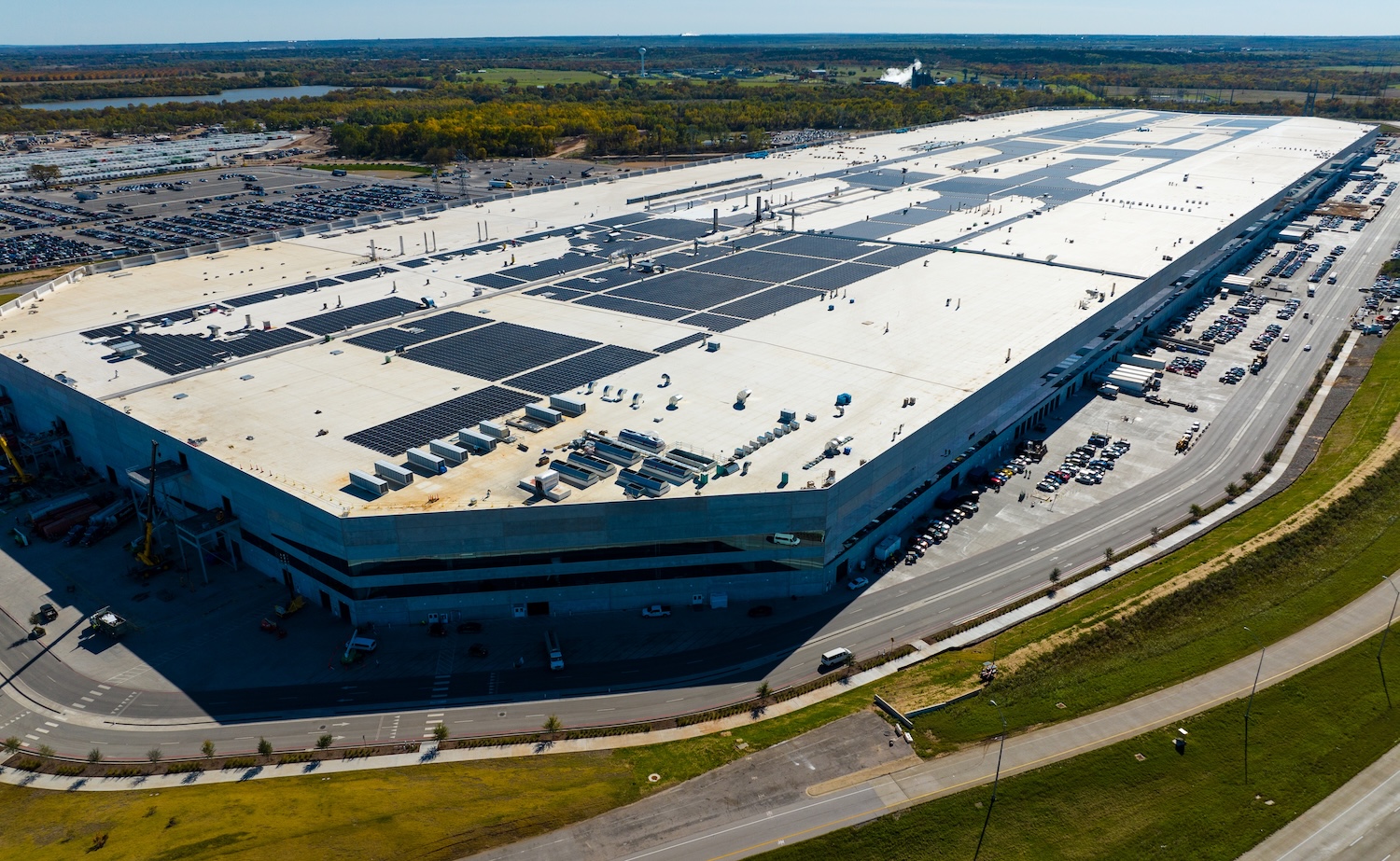
An AI gigafactory is not simply a large data center. The term describes a facility purpose-built to run dense clusters of AI accelerators, typically tens of thousands of GPUs or specialized AI chips, at continuous high utilization.
Standard enterprise data centers are designed around moderate, intermittent compute loads. These facilities require far greater power density per rack, specialized cooling systems, and ultra-low-latency networking between chips.
The distinction matters for cost and logistics.
A hyperscale AI training facility can draw 200 to 500 megawatts of power, roughly equivalent to a small city’s baseline electricity demand. Siting, permitting, and grid connection for facilities at that scale take years in Europe, where planning regulations are stricter than in the United States.
The EU’s seven-site structure spreads that burden across member states, but it also introduces coordination risk that a single large campus would avoid.
Europe’s Long Road To AI Self-Sufficiency
The push for European AI infrastructure predates this announcement by several years. The EU launched its first dedicated AI strategy in 2018, and the European High Performance Computing Joint Undertaking began funding supercomputing sites before AI training demand exploded in 2023.
Those earlier investments, while significant, were oriented toward scientific research rather than the commercial-scale AI inference and training now consuming vast compute budgets at American and Chinese firms.
The Hugging Face breach in late June accelerated European concerns. Germany’s digital minister specifically cited that incident on July 30 in urging faster AI self-sufficiency, pointing to the security implications of European companies running sensitive AI workloads on infrastructure controlled by non-European providers.
France and Germany have separately funded national AI champions, but cross-border compute pooling has remained underdeveloped. The €10 billion program is the first attempt to treat European AI compute as a shared sovereign asset rather than a collection of national projects.
The €10 Billion Math And What The AI Gigafactories Actually Buy
Ten billion euros is a large number that requires context. Nvidia’s current GB200 NVL72 rack system, the dense GPU cluster used by hyperscalers for frontier AI training, costs approximately $3 million per rack unit.
A serious frontier training facility requires thousands of such units. Simple arithmetic puts a single US-style frontier training campus at $5 to $10 billion on hardware alone, before power infrastructure, buildings, or networking.
Seven sites sharing €10 billion therefore works out to roughly €1.4 billion per site.
At current hardware prices, that buys meaningful inference capacity and mid-scale training capability, but it falls short of what Microsoft, Google, or Meta deploy at a single hyperscale campus. Meta’s future AI data center lease obligations now exceed a quarter trillion dollars, according to its most recent earnings filings.
The EU’s €10 billion is a credible start, not a competitive endpoint.
The gap is not simply financial. European electricity grids are less uniform than the US grid, and permitting timelines for large industrial facilities vary significantly between member states.
One of these facilities in Germany faces different regulatory hurdles than one in Poland or Spain. The seven-site structure hedges against any single country becoming a bottleneck, but it also means no single site will achieve the scale economies of a US or Chinese hyperscale campus in the near term.
Also Read: Who Is Actually Paying for the AI Data Center Boom?
The Answer Stays Murky
What Europe Gains Even If Its AI Gigafactories Fall Short Of Parity
The case for this program does not depend on matching American or Chinese capacity dollar for dollar. Sovereign AI compute gives European firms a place to train and run models on data that cannot legally or practically leave the bloc.
European data protection law, including the General Data Protection Regulation, creates genuine compliance friction for training AI on European personal data using US-based infrastructure. Domestic AI Gigafactories remove that friction.
There is also a strategic argument independent of regulation.
The German minister’s remarks on July 30 pointed to the OpenAI-Hugging Face breach as evidence that reliance on external AI providers creates security exposure. A European AI stack, from training clusters to deployed models, reduces the attack surface for state-level adversaries targeting critical infrastructure.
That argument resonates across the EU’s defense and intelligence community, regardless of whether European models reach frontier performance levels.
The program’s real benchmark is not whether Europe builds a model that outperforms GPT-5.6. It is whether European governments, hospitals, financial institutions, and defense agencies can run capable AI systems without routing sensitive workloads through infrastructure they do not control.
Read Next: Why Did Nvidia’s $250B OpenAI Deal Sink NVDA Stock 5%?
Investors Read the Terms