
Dyson Sphere Candidate Stars Get 3 Stunning JWST Revelations
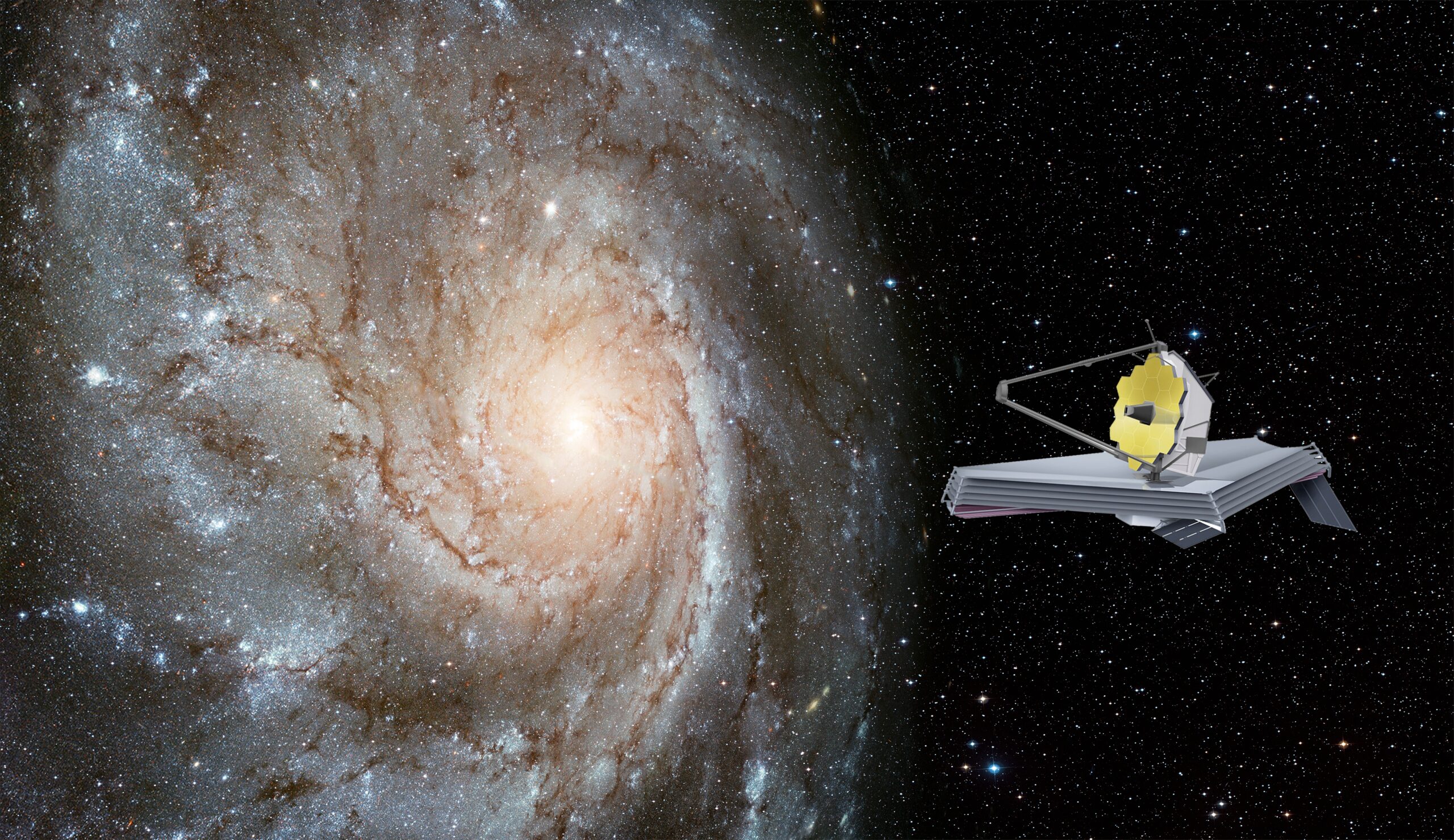
The James Webb Space Telescope has now directly examined two stars previously identified as potential Dyson sphere candidates, marking the first time humanity’s most powerful observatory has trained its instruments on objects that machine-learning surveys flagged as anomalously bright in the infrared.
The results did not confirm alien megastructures, but they did not close the book either. The findings are sharpening the methodology astronomers will use to hunt for the next round of candidates.
Also Read: Core Scientific’s AMD Pact Reaches 2.5GW, Finding That Power Is the Next Question
The broader moment matters because AI-driven searches are now genuinely steering where the world’s most expensive telescope points.
What The Machines Found First
The candidate stars were surfaced through an AI-assisted sweep of large stellar catalogs, a technique that looks for excess infrared emission, the thermal signature a partially built Dyson sphere would theoretically leak as waste heat. Science Alert reported the JWST follow-up results within the last day, noting the telescope’s infrared sensitivity is precisely suited to testing these anomalies.
Machine-learning pipelines can scan millions of stellar records in hours, flagging the fraction of a percent of stars whose light curves and spectral signatures look statistically odd. Human astronomers then vet the shortlist.
That division of labor is new, and it is already producing telescope time.
Why Black Holes Entered The Conversation
Separately, a gathering of more than two dozen researchers at MIT examined whether advanced civilizations might build Dyson sphere analogs around black holes rather than ordinary stars. The energy argument is striking, because black holes release enormous power through accretion disks, surrounding plasma, and relativistic jets, potentially dwarfing what any star alone could offer.
A parallel paper proposed that waste heat from such structures would be detectable by telescopes already in operation, meaning the search does not require new hardware. astrobiology.com published related theoretical work suggesting extraterrestrial AI could be the builder, framing Dyson sphere detection as a proxy for detecting machine intelligence rather than biological life.
Red dwarfs also keep appearing in the literature as prime targets because their long lifespans make them practical energy sources for megastructures operating on geological timescales.
The Stakes For The Search Method
The JWST results, whatever their final interpretation, validate a loop that researchers have been building, where AI flags, humans verify, flagship telescope observes. Each pass refines which infrared signatures are natural dust shells or binary star interactions and which remain genuinely unexplained.
The sun produces roughly 10 to the power of 33 ergs per second, a figure researchers cite to illustrate why even a partial Dyson sphere would be an almost incomprehensible engineering project. Yet the same scale makes the waste heat signal large enough that current instruments could theoretically see it across interstellar distances.
Tech leaders including Sam Altman and Elon Musk have both floated Dyson sphere concepts in the context of powering AI infrastructure, lending the once-fringe idea a strange cultural currency. But the astronomers steering JWST are operating on a more immediate timeline, asking not whether humanity will build one, but whether the telescope can rule out that someone else already has.
Read Next: OpenAI CEO Says the Singularity Is Here, and He Is Not Speaking Hypothetically